Tips & Tricks
What Is RG in Bowling? Low, Medium and High RG Explained
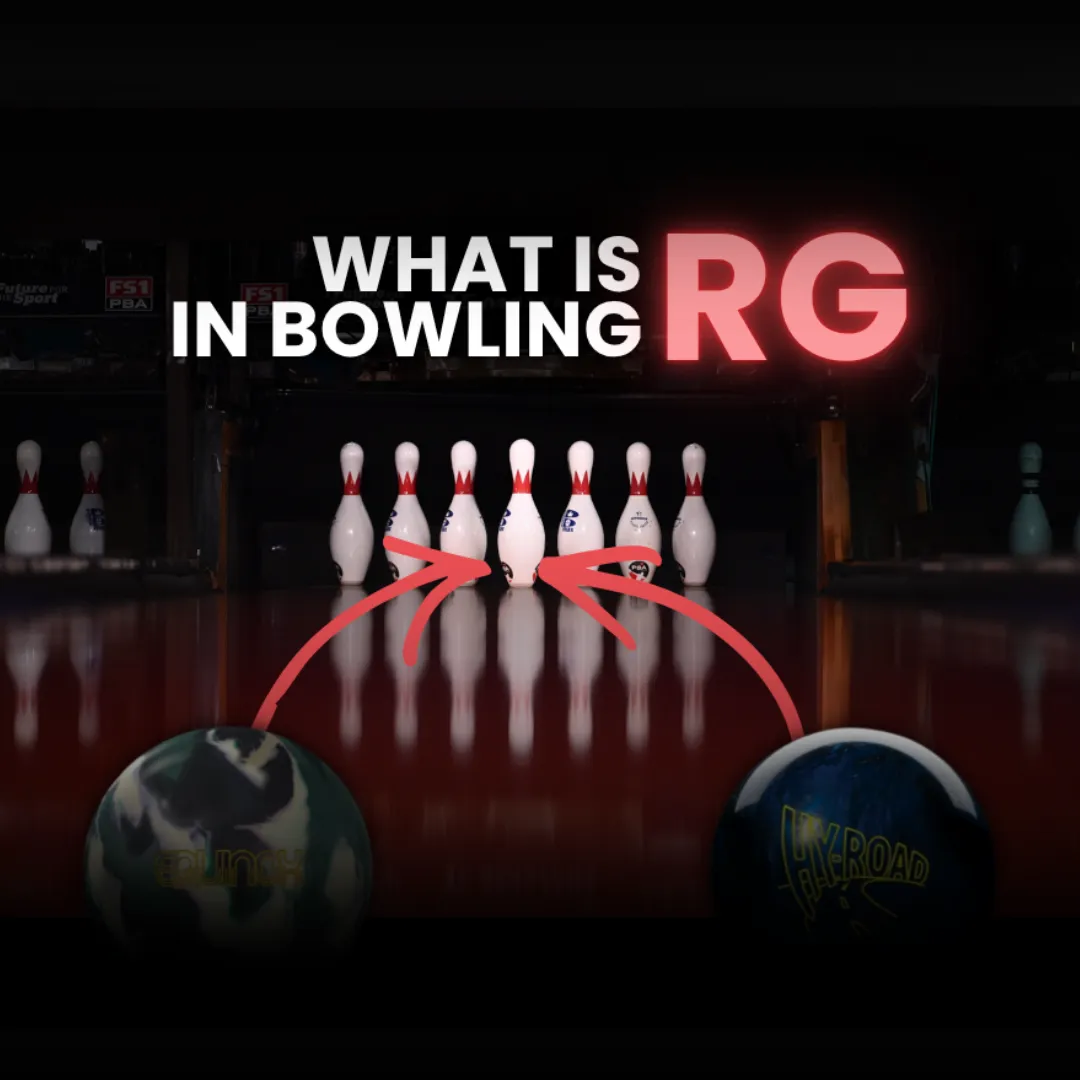
When you're buying a new bowling ball or reading bowling ball reviews, you'llalways come across a stat called RG, or Radius of Gyration. But what exactlydoes that mean - and why on earth should you care? RG in bowling means Radius of Gyration. It tells you howquickly a bowling ball revs up, which affects how early or late it hooks onthe lane. RG in bowling means Radius of Gyration. Low RG balls start up sooner, medium RG balls create a balanced shape, andhigh RG balls push farther down the lane before changing direction. Understanding RG helps you read bowling ball specs with more confidence, matcha ball to the lane condition, and build a smarter bowling ball arsenal. In this guide, we go into details and explain what RG means in bowling, how low, medium, and highRG differ, and when to use each one. Some links in this article are affiliate links, which means we may earn asmall commission if you make a purchase at no extra cost to you. This helpsus keep our content free and accessible. What Does RG Mean in Bowling? RG, or Radius of Gyration, refers to how mass is distributed inside a bowlingball. More specifically, it shows how far that mass sits from the center ofthe core. It is measured in inches and usually falls between 2.46 and 2.80. RG tells you how quickly a bowling ball revs up and transitions from skid tohook. In a low RG ball, more of the mass sits closer to the center of the core. In ahigh RG ball, more of the mass sits farther away from the center. A simple way to understand this is to think about a figure skater. When theskater pulls the arms in, the body spins faster. That is like a low RG bowlingball, where the mass is closer to the center. When the skater stretches thearms out, the spin slows down. That is like a high RG bowling ball, where themass is farther from the center. The lower the RG, the sooner the ball wants to rev up and leave the skidphase. The higher the RG, the longer it pushes down the lane before making itsmove. How Does RG Affect Bowling Ball Motion? Understanding RG helps you predict how a bowling ball will behave down thelane and choose the right reaction for the conditions you are bowling on. Low RG balls rev up earlier and hook sooner. They areuseful on heavier oil conditions when you want the ball to read the laneearlier or when you want to play straighter angles.Medium RG balls create a balanced shape. They are oftencalled benchmark balls because they offer a controlled, readable motion onmany conditions.High RG balls glide longer before revving up, which helpsthem save energy for a stronger move downlane. They are often a good matchfor lighter oil or for players who want more backend shape. Low RG balls rev up earlier and hook sooner. They areuseful on heavier oil conditions when you want the ball to read the laneearlier or when you want to play straighter angles. Low RG balls Medium RG balls create a balanced shape. They are oftencalled benchmark balls because they offer a controlled, readable motion onmany conditions. Medium RG balls High RG balls glide longer before revving up, which helpsthem save energy for a stronger move downlane. They are often a good matchfor lighter oil or for players who want more backend shape. High RG balls RG is important, but it does not work alone. Coverstock, surface,differential, layout, and lane pattern all help shape the full reaction. Ifyou want to understand the lane side of the equation better, read our guide tobowling oil patterns. differential bowling oil patterns RG Categories Explained Here is a simple breakdown of the RG categories you will usually see onbowling ball spec sheets: RG CategoryRG RangeBall Motion BehaviorBest Used OnLow RG2.46 - 2.50Revves up quickly, earlier hookHeavy oil, earlier lane readMedium RG2.51 - 2.53Smooth transition, balanced reactionVersatile, benchmark ballsHigh RG2.54 and upDelayed rev-up, more length and backend motionMedium-dry lanes, later response RG CategoryRG RangeBall Motion BehaviorBest Used On RG Category RG Range Ball Motion Behavior Best Used On Low RG2.46 - 2.50Revves up quickly, earlier hookHeavy oil, earlier lane readMedium RG2.51 - 2.53Smooth transition, balanced reactionVersatile, benchmark ballsHigh RG2.54 and upDelayed rev-up, more length and backend motionMedium-dry lanes, later response Low RG2.46 - 2.50Revves up quickly, earlier hookHeavy oil, earlier lane read Low RG 2.46 - 2.50 Revves up quickly, earlier hook Heavy oil, earlier lane read Medium RG2.51 - 2.53Smooth transition, balanced reactionVersatile, benchmark balls Medium RG 2.51 - 2.53 Smooth transition, balanced reaction Versatile, benchmark balls High RG2.54 and upDelayed rev-up, more length and backend motionMedium-dry lanes, later response High RG 2.54 and up Delayed rev-up, more length and backend motion Medium-dry lanes, later response Which RG Should You Choose and When? The best answer depends on how many bowling balls you own and what laneconditions you face most often. If you only want one versatile option, a medium RG benchmark ball is usuallythe safest starting point. If you are building a full bowling ball arsenal,having low, medium, and high RG options gives you much better coverage as thelanes change. A low RG bowling ball is a strong choice for fresh oil,heavier volume, or situations where you want the ball to start sooner.Medium RG bowling balls are great benchmark choices. Theyhelp you read the lane and build a game plan around a more neutral shape.A high RG bowling ball helps delay the hook and store moreenergy for the backend. It becomes especially useful during transition or ondrier lane conditions. A low RG bowling ball is a strong choice for fresh oil,heavier volume, or situations where you want the ball to start sooner. low RG Medium RG bowling balls are great benchmark choices. Theyhelp you read the lane and build a game plan around a more neutral shape. Medium RG A high RG bowling ball helps delay the hook and store moreenergy for the backend. It becomes especially useful during transition or ondrier lane conditions. high RG Ball Examples by RG Category Now that you know what RG in bowling means, let’s look at some real examplesof low, medium, and high RG bowling balls, allreviewed on BowlingLife. reviewed on BowlingLife Low RG Bowling Ball Examples Storm Equinox Solid - Smooth and early on fresh heavy oil patterns.Motiv Evoke Hysteria- Controllable with enough continuation on medium-heavy oil. Storm Equinox Solid - Smooth and early on fresh heavy oil patterns. Storm Equinox Solid Motiv Evoke Hysteria- Controllable with enough continuation on medium-heavy oil. Motiv Evoke Hysteria Medium RG Bowling Ball Examples Hammer Black Widow 3.0 Dynasty - Predictable motion for medium-heavy oil patterns.Roto Grip Transformer - Controllable yet powerful motion through the pins. Hammer Black Widow 3.0 Dynasty - Predictable motion for medium-heavy oil patterns. Hammer Black Widow 3.0 Dynasty Roto Grip Transformer - Controllable yet powerful motion through the pins. Roto Grip Transformer High RG Bowling Ball Examples DV8 Hater Pearl- Clean through the fronts with a stronger backend move.Storm Hy-Road- A clean and classic option for medium-dry lanes. DV8 Hater Pearl- Clean through the fronts with a stronger backend move. DV8 Hater Pearl Storm Hy-Road- A clean and classic option for medium-dry lanes. Storm Hy-Road RG Bowling FAQ What does RG mean in bowling? RG means Radius of Gyration. It describes how mass is distributed inside abowling ball and helps predict how quickly the ball will rev up. What is the difference between low RG and high RG bowling balls? Low RG bowling balls start up sooner and read the lane earlier. High RGbowling balls push farther down the lane before they respond. When should you use a low RG bowling ball? Low RG balls are usually best on heavier oil conditions or when you want asmoother and earlier reaction. When is a high RG bowling ball best? High RG balls are often best on medium-dry conditions or later in the blockwhen you want more length and a later move. Final Thoughts RG may sound technical at first, but once you understand it, it becomes one ofthe most useful bowling ball specs you can learn. It is not about low RG being better than high RG. It is about matching theright RG to your style, your speed and rev rate, and the lane conditions infront of you. Once you understand what RG in bowling means, choosing the rightball gets much easier. {"@context": "https://schema.org","@type": "FAQPage","mainEntity": [{"@type": "Question","name": "What does RG mean in bowling?","acceptedAnswer": {"@type": "Answer","text": "RG, or Radius of Gyration, describes how mass is distributed inside a bowling ball. It helps predict how quickly the ball revs up and transitions from skid to hook."}},{"@type": "Question","name": "What is the difference between low RG and high RG bowling balls?","acceptedAnswer": {"@type": "Answer","text": "Low RG bowling balls rev up sooner and read the lane earlier. High RG bowling balls push farther down the lane before changing direction."}},{"@type": "Question","name": "When should you use a low RG bowling ball?","acceptedAnswer": {"@type": "Answer","text": "A low RG bowling ball is usually best on heavier oil conditions or when you want the ball to start sooner and create a smoother, earlier reaction."}},{"@type": "Question","name": "When is a high RG bowling ball best?","acceptedAnswer": {"@type": "Answer","text": "A high RG bowling ball is often best on medium-dry conditions or later in transition when you want more length and a later move downlane."}}]}
Tips & TricksApril 03, 2026
70+ Bowling Terms Explained: The Complete 2026 Guide
This encyclopedia of bowling terms is regularly updated. Latest update: March 31, 2026. Looking for a complete list of bowling terms? This guide breaks downthe most important bowling terms used by beginners, league players, andprofessionals. bowling terms Whether you are stepping onto the approach for the first time orrefining your ball reaction, understanding bowling terms helps you readlanes, choose equipment, and improve faster. approach ball reaction At BowlingLife, we have organized dozens of essential bowling termsinto clear categories so you can quickly learn the language of the sport. BowlingLife If you're new to ball motion or want to improve your hook, check out ourguide on how to spin a bowling ball. guide on how to spin a bowling ball Bowling Terms Navigation Scoring & StrikesLane AnatomyOil PatternsBall TechnologySplits & LeavesBowling StylesBowling Slang Scoring & Strikes Lane Anatomy Oil Patterns Ball Technology Splits & Leaves Bowling Styles Bowling Slang 1. Bowling Terms for Scoring & Strikes These bowling terms explain scoring fundamentals and how strike strings arenamed. Clean Game: A full game without any open frames.Deadwood: Any pin that remains on the lane or in the gutter butcannot be cleared by the pinsetter.Double: Two strikes in a row.Dutch 200: Alternating strikes and spares for exactly 200.Fill Ball: Extra shot(s) in the 10th frame after a strike or spare.Front Nine / Front Ten: The first nine or ten strikes in a row.Hambone: Four consecutive strikes.Open Frame: A frame without a strike or spare.Perfect Game: 12 strikes in a row for a score of 300.Punching Out: Finishing the final frames with strikes.Six-Pack: Six consecutive strikes.Spare (/): Knocking down all pins using two shots.Strike (X): Knocking down all ten pins on the first ball.Turkey: Three consecutive strikes.Five-Bagger: Five consecutive strikes. Clean Game: A full game without any open frames. Clean Game: Deadwood: Any pin that remains on the lane or in the gutter butcannot be cleared by the pinsetter. Deadwood: Double: Two strikes in a row. Double: Dutch 200: Alternating strikes and spares for exactly 200. Dutch 200: Fill Ball: Extra shot(s) in the 10th frame after a strike or spare. Fill Ball: Front Nine / Front Ten: The first nine or ten strikes in a row. Front Nine / Front Ten: Hambone: Four consecutive strikes. Hambone: Open Frame: A frame without a strike or spare. Open Frame: Perfect Game: 12 strikes in a row for a score of 300. Perfect Game: Punching Out: Finishing the final frames with strikes. Punching Out: Six-Pack: Six consecutive strikes. Six-Pack: Spare (/): Knocking down all pins using two shots. Spare (/): Strike (X): Knocking down all ten pins on the first ball. Strike (X): Turkey: Three consecutive strikes. Turkey: Five-Bagger: Five consecutive strikes. Five-Bagger: 2. Lane Anatomy Bowling Terms Understanding lane structure is essential for accuracy and targeting. Approach: The area where the bowler takes steps before releasing theball.Arrows: Target markers about 15 feet down the lane used for aiming.Boards: The 39 boards across the lane used for targeting.Breakpoint: The point where the ball transitions from skid to hook.Dots: Position markers on the approach and front of the lane.Foul Line: The line separating the approach from the lane. Crossingit cancels the shot.Gutters: Channels on both sides of the lane where the ball is out ofplay.Headpin: The front pin in the rack (1-pin).Laydown Point: The board where the ball first contacts the lane.Pit: The area behind the pins where they fall after impact.Pocket: The ideal strike zone (1-3 for right-handers, 1-2 forleft-handers). Approach: The area where the bowler takes steps before releasing theball. Approach: Arrows: Target markers about 15 feet down the lane used for aiming. Arrows: Boards: The 39 boards across the lane used for targeting. Boards: Breakpoint: The point where the ball transitions from skid to hook. Breakpoint: Dots: Position markers on the approach and front of the lane. Dots: Foul Line: The line separating the approach from the lane. Crossingit cancels the shot. Foul Line: Gutters: Channels on both sides of the lane where the ball is out ofplay. Gutters: Headpin: The front pin in the rack (1-pin). Headpin: Laydown Point: The board where the ball first contacts the lane. Laydown Point: Pit: The area behind the pins where they fall after impact. Pit: Pocket: The ideal strike zone (1-3 for right-handers, 1-2 forleft-handers). Pocket: 3. Oil Pattern Bowling Terms Oil patterns control how the ball moves. Learning these bowling terms is keyto reading lanes. Want to go deeper? Read our fullbowling oil patterns guide. bowling oil patterns guide Backends: The final part of the lane where the ball hooks most.Breakdown: Oil removed from the track area, increasing friction.Carrydown: Oil pushed downlane, reducing hook potential.Heads: The front part of the lane where oil is heaviest.House Shot: A forgiving pattern with more oil in the center.Lane Conditioner: Oil applied to protect the lane and control ballmotion.Midlane: Where the ball begins to slow and read the lane.Rule of 31: Pattern length minus 31 gives a breakpoint reference.Sport Pattern: A flat and challenging oil pattern.Track Area: The part of the lane where most balls travel.Transition: Changing oil conditions during play. Backends: The final part of the lane where the ball hooks most. Backends: Breakdown: Oil removed from the track area, increasing friction. Breakdown: Carrydown: Oil pushed downlane, reducing hook potential. Carrydown: Heads: The front part of the lane where oil is heaviest. Heads: House Shot: A forgiving pattern with more oil in the center. House Shot: Lane Conditioner: Oil applied to protect the lane and control ballmotion. Lane Conditioner: Midlane: Where the ball begins to slow and read the lane. Midlane: Rule of 31: Pattern length minus 31 gives a breakpoint reference. Rule of 31: Sport Pattern: A flat and challenging oil pattern. Sport Pattern: Track Area: The part of the lane where most balls travel. Track Area: Transition: Changing oil conditions during play. Transition: 4. Bowling Ball Technology Terms These bowling terms explain how equipment affects ball motion. For real-world examples, check ourbest bowling balls guide. best bowling balls guide Asymmetrical Core: Stronger and more angular motion.Axis Rotation: Side rotation affecting backend shape.Axis Tilt: Vertical tilt affecting ball transition.Core: Internal structure that affects motion and rotation.Coverstock: Outer shell controlling traction and friction.Differential: Determines flare and hook potential.Flare: The oil rings created as the ball rotates.Layout: Drilling pattern that affects ball motion.PAP: The bowler’s axis of rotation.RG (Radius of Gyration): Low RG = early roll, high RG = laterreaction.Surface Adjustment: Changing grit to control hook timing.Symmetrical Core: Smooth and predictable motion. Asymmetrical Core: Stronger and more angular motion. Asymmetrical Core : Axis Rotation: Side rotation affecting backend shape. Axis Rotation : Axis Tilt: Vertical tilt affecting ball transition. Axis Tilt : Core: Internal structure that affects motion and rotation. Core: Coverstock: Outer shell controlling traction and friction. Coverstock : Differential: Determines flare and hook potential. Differential : Flare: The oil rings created as the ball rotates. Flare: Layout: Drilling pattern that affects ball motion. Layout: PAP: The bowler’s axis of rotation. PAP : RG (Radius of Gyration): Low RG = early roll, high RG = laterreaction. RG (Radius of Gyration): Surface Adjustment: Changing grit to control hook timing. Surface Adjustment: Symmetrical Core: Smooth and predictable motion. Symmetrical Core : 5. Bowling Terms for Splits & Leaves These bowling terms describe pin combinations after the first shot. 7-10 Split: The two back corner pins.Baby Split: 2-7 or 3-10.Big Four: 4-6-7-10 split.Bucket: Four pins forming a diamond shape.Chop: Missing the back pin on a spare attempt.Greek Church: A difficult multi-pin split.Messenger: A flying pin that knocks down another.Sleeper: Hidden pin behind another.Washout: Includes the headpin (not a true split). 7-10 Split: The two back corner pins. 7-10 Split: Baby Split: 2-7 or 3-10. Baby Split: Big Four: 4-6-7-10 split. Big Four: Bucket: Four pins forming a diamond shape. Bucket: Chop: Missing the back pin on a spare attempt. Chop: Greek Church: A difficult multi-pin split. Greek Church: Messenger: A flying pin that knocks down another. Messenger: Sleeper: Hidden pin behind another. Sleeper: Washout: Includes the headpin (not a true split). Washout: 6. Bowling Style Terms These bowling terms describe player styles and release techniques. Ball Speed: Speed of the ball off the hand.Cranker: High rev rate and aggressive hook.Full Roller: Ball rolls over full circumference.Rev Rate: Rotations per minute.Spinner: Ball spins more than rolls.Stroker: Smooth and accurate style.Tweener: Balanced style.Two-Hander: Uses both hands for higher rev rate. Ball Speed: Speed of the ball off the hand. Ball Speed: Cranker: High rev rate and aggressive hook. Cranker: Full Roller: Ball rolls over full circumference. Full Roller: Rev Rate: Rotations per minute. Rev Rate: Spinner: Ball spins more than rolls. Spinner: Stroker: Smooth and accurate style. Stroker: Tweener: Balanced style. Tweener: Two-Hander: Uses both hands for higher rev rate. Two-Hander: 7. Bowling Slang & Regional Terms Some bowling terms come from tradition and bowling culture. Anchor: Last bowler in a lineup.Beer Frame: Lowest scorer buys drinks.Kegler: Traditional term for a bowler.Sandbagging: Lowering average intentionally.String: Another word for a game. Anchor: Last bowler in a lineup. Anchor: Beer Frame: Lowest scorer buys drinks. Beer Frame: Kegler: Traditional term for a bowler. Kegler: Sandbagging: Lowering average intentionally. Sandbagging: String: Another word for a game. String: Conclusion: Why Bowling Terms Matter Learning bowling terms helps you understand ball motion, lane conditions, andscoring strategy. The more bowling terms you know, the easier it becomes to adjust and improve. Want to apply these bowling terms? Explore ourbowling ball reviewsand guides. bowling ball reviews {"@context": "https://schema.org","@type": "Article","mainEntityOfPage": {"@type": "WebPage","@id": "https://bowlinglife.eu/bowling-terms"},"headline": "70+ Bowling Terms Explained: The Complete 2026 Guide","description": "The definitive encyclopedia of bowling terms. Learn the language of the sport with our alphabetical guide to scoring, lane anatomy, oil patterns, and ball technology.","image": "https://fsn1.your-objectstorage.com/bowlinglife/media/Uploads/social_images/bowling_terminology.png","author": {"@type": "Organization","name": "BowlingLife Editorial Team","url": "https://bowlinglife.eu"},"publisher": {"@type": "Organization","name": "BowlingLife","logo": {"@type": "ImageObject","url": "https://bowlinglife.eu/logo.png"}},"datePublished": "2026-03-31","dateModified": "2026-03-31","articleSection": "Bowler's Academy","keywords": "bowling terms, bowling lingo, bowling glossary, bowling jargon, rule of 31, bowling ball specs, bowling terminology"} {"@context": "https://schema.org","@type": "FAQPage","mainEntity": [{"@type": "Question","name": "What is a 'Turkey' in bowling?","acceptedAnswer": {"@type": "Answer","text": "A 'Turkey' is a common bowling term used to describe three consecutive strikes in a single game."}},{"@type": "Question","name": "What does RG stand for in bowling ball specs?","acceptedAnswer": {"@type": "Answer","text": "RG stands for Radius of Gyration. It is a technical bowling term that measures how the mass of the ball's core is distributed, determining how early or late the ball will roll."}},{"@type": "Question","name": "What is the Rule of 31 in bowling?","acceptedAnswer": {"@type": "Answer","text": "The Rule of 31 is a formula used to calculate the breakpoint. You subtract 31 from the length of the oil pattern (e.g., 40ft - 31 = 9th board)."}},{"@type": "Question","name": "What is the difference between a split and a washout?","acceptedAnswer": {"@type": "Answer","text": "A split occurs when the headpin (1-pin) is down and the remaining pins have a gap. A washout has a similar gap but the headpin remains standing, meaning it is not technically a split."}},{"@type": "Question","name": "What is the 'Pocket' in bowling?","acceptedAnswer": {"@type": "Answer","text": "The pocket is the ideal strike zone located between the 1-pin and 3-pin for right-handers, or the 1-pin and 2-pin for left-handers."}}]}
Tips & TricksMarch 31, 2026
The Hidden Timing Mistakes That Might Be Ruining Your Shots
One of the most common technical mistakes I see in bowling athletes of alllevels, from beginners to elite competitors, is not being late. It is being too early. Too early with the body.Too early with the swing.Too early with the release. It usually comes from good intentions. The bowler wants control. They want toprepare. They want to “hit the pose.” But bowling is not a sport of forced poses. It is a sport of timing, sequence,and flow. When you try to get into the shot too early, you destroy the naturalsynchronization between body and swing. And that synchronization is whatcreates consistency. This is not just a technical observation. It reflects my coaching philosophy,built through years of studying athletes, observing elite players, andrefining what truly works. The Shot Is a Sequence, Not a Position One of the biggest misconceptions in bowling technique is the belief that youmust actively place your body into correct positions. In reality, the best shots are not forced. They are allowed to happen. When you watch elite players like Jason Belmonte or EJ Tackett, you do not seethem forcing positions early. Their motion builds progressively. The correctpositions appear naturally at the correct moment. Here is the principle I teach:Positions are the result of timing, not the goal of timing. Positions are the result of timing, not the goal of timing. When you chase positions too early, you break the kinetic chain. Recommended Reading How to Read Oil Patterns and Build a Smart Line Play Stop treating pattern sheets like abstract art. EBF Level 3 and USBC BronzeCoach Panagiotis Vardakis breaks down how to turn confusingoil graphs into a winning first-shot strategy. Panagiotis Vardakis ✓Use the "Guide of 31" to instantly find your exitpoint.✓Stop asking where to stand - build your line from thebreakpoint backward.✓Match the line to your ball speed and rev rate,not your ego. ✓Use the "Guide of 31" to instantly find your exitpoint. ✓ Use the "Guide of 31" to instantly find your exitpoint. "Guide of 31" ✓Stop asking where to stand - build your line from thebreakpoint backward. ✓ Stop asking where to stand - build your line from thebreakpoint backward. breakpoint backward ✓Match the line to your ball speed and rev rate,not your ego. ✓ Match the line to your ball speed and rev rate,not your ego. not your ego Read the Full Guide What “Too Early” Actually Looks Like 1. Bending Too Early This is extremely common. You bend your upper body forward during the first orsecond step because you want to prepare for the release. The result is loss ofbalance, reduced leverage, restricted swing freedom, muscle tension, and aforced release. Your body should lower gradually through knee flex and step progression. Itshould not drop early because you are trying to “get ready.” Early bending isoften a response to fear of missing the shot. 2. Starting the Swing Too Early Another major issue is forcing the pushaway too early or too aggressively. Instead of allowing the swing to fall naturally with gravity at the correcttiming point, you try to start it. This creates early timing, loss ofsynchronization, muscling the ball, and reduced power transfer. The swingshould not move independently. It should respond to the body’s motion. The swing is a reaction, not an isolated action. 3. Getting Under the Ball Too Early Many athletes try to set their hand under the ball from the top of the swing.This is one of the most damaging habits I see. The correct hand position at release is not something you hold from thebeginning. It develops naturally as the swing approaches the release zone.When you try to hold that position early, you create tension in the forearm,wrist, shoulder, and fingers. Tension destroys consistency. Relaxation builds repeatability. 4. Releasing Too Early Mentally Sometimes the mistake is not physical. It is mental. You jump ahead to the release before your body arrives there. You think aboutrotation. You think about target. You think about the result. Great bowling happens in the present moment. Anticipation creates tension. Why This Happens In my experience, making shots too early usually comes from four causes: Trying too hard. You want the perfect shot, so you try tocontrol every detail. Ironically, more control often creates less control.Lack of trust in timing. You do not trust that body andswing will arrive together naturally, so you force the synchronization.Misunderstanding technique. Many players see photos ofcorrect positions and try to copy them directly instead of recreating themotion that produces them. Educational systems provided by the USBC or EBFconsistently emphasize timing, balance, and rhythm, not forced positioning.Anxiety and pressure. Under stress, athletes rushinternally, even if their feet move at the same speed. That internal rushcreates early tension. Trying too hard. You want the perfect shot, so you try tocontrol every detail. Ironically, more control often creates less control. Trying too hard. Lack of trust in timing. You do not trust that body andswing will arrive together naturally, so you force the synchronization. Lack of trust in timing. Misunderstanding technique. Many players see photos ofcorrect positions and try to copy them directly instead of recreating themotion that produces them. Educational systems provided by the USBC or EBFconsistently emphasize timing, balance, and rhythm, not forced positioning. Misunderstanding technique. Anxiety and pressure. Under stress, athletes rushinternally, even if their feet move at the same speed. That internal rushcreates early tension. Anxiety and pressure. The Real Goal: Let the Shot Build My philosophy is simple. The shot should build progressively from start tofinish. It should not jump to the end. Let the Shot Build ✓Start relaxed✓Initiate a smooth pushaway with timing✓Allow the swing to fall naturally✓Let the body lower progressively✓Arrive at release naturally✓Let the ball come off the hand instead of forcingit ✓Start relaxed ✓ Start relaxed ✓Initiate a smooth pushaway with timing ✓ Initiate a smooth pushaway with timing Initiate a smooth pushaway ✓Allow the swing to fall naturally ✓ Allow the swing to fall naturally Allow the swing to fall ✓Let the body lower progressively ✓ Let the body lower progressively Let the body lower ✓Arrive at release naturally ✓ Arrive at release naturally Arrive at release ✓Let the ball come off the hand instead of forcingit ✓ Let the ball come off the hand instead of forcingit Let the ball come off the hand The release is the result of everything before it. It is not something youcreate independently. Feeling “Late” Might Mean You Are On Time Many athletes need to feel slightly late in order to be correctly timed.Because most players are early, what feels late is often correct timing. Correct timing feels smooth rather than rushed. The body arrives first. Theswing follows. The release happens effortlessly. No forced acceleration isrequired. Effortless shots are almost always the most repeatable. A Simple Test After a shot, ask yourself: Did I make the shot happen, or did I let it happen? If it felt forced, you were probably early.If it felt natural and simple, timing was likely correct. ✗ If it felt forced, you were probably early. ✗ If it felt forced , you were probably early . ✓ If it felt natural and simple, timing was likely correct. ✓ If it felt natural and simple , timing was likely correct . A Drill That Restores Sequence One of the best drills I use is the short and slow motion approach. Perform the approach at 50 percent speed and from 50 percent distance. Thisremoves the ability to rush. It teaches patience, timing awareness, andrelaxation. You begin to feel how the swing and body synchronize naturally. Then gradually increase speed and distance while maintaining the samesequence. My Core Philosophy I do not teach athletes to force positions. I teach them to trust sequence. I do not teach them to control the release. I teach them to control theprocess that leads to the release. Consistency is not built by forcing the end. It is built by respecting theorder of movement. Final Message If you recognize yourself in this mistake, do not worry. It is extremelycommon and completely fixable. Start with one focus: patience. patience. Let the shot develop. Do not rush into it. Do not try to control it too early.Allow your body and swing to work together. Great bowling does not happen when you try harder. It happens when you trustthe sequence. About the Author Panagiotis VardakisPanagiotis Vardakis is an experienced bowling coach and educator whoseinvolvement in the sport spans more than two decades. His work combines technical coaching, long-term player development, andequipment knowledge, supported by his experience as a professional coach andpro shop specialist.Throughout his coaching career, he has guided athletes to national andinternational success across European competitions, coaching players fromGreece, the United Kingdom, Malta, Slovakia, Cyprus, and Bulgaria. About the Author Panagiotis Vardakis Panagiotis Vardakis is an experienced bowling coach and educator whoseinvolvement in the sport spans more than two decades. His work combines technical coaching, long-term player development, andequipment knowledge, supported by his experience as a professional coach andpro shop specialist. Throughout his coaching career, he has guided athletes to national andinternational success across European competitions, coaching players fromGreece, the United Kingdom, Malta, Slovakia, Cyprus, and Bulgaria. A significant part of his work is dedicated to youth development, where hefocuses on structured training environments that support both athleticprogress and personal growth. Vardakis is currently involved in youth-oriented projects throughBYC in Slovakia andcontinues to work with athletes, clubs, and organizations through coachingprograms, clinics, and educational initiatives across Europe. BYC For coaching-related questions or inquiries, Coach Vardakis can becontacted via email at p.vardakis@gmail.com or visit www.byc.sk www.byc.sk {"@context": "https://schema.org","@graph": [{"@type": "Article","@id": "https://bowlinglife.eu/fix-early-timing-bowling-coach-vardakis/#article","headline": "Why You Are Too Early at the Foul Line: How to Fix Bowling Timing","description": "EBF Level 3 and USBC Bronze Coach Panagiotis Vardakis explains why forcing your bowling shot destroys timing, and how to build a natural, consistent release sequence.","image": ["https://fsn1.your-objectstorage.com/bowlinglife/media/Posts_Uploads/Panagiotis_Verdakis_article_picture.png","https://fsn1.your-objectstorage.com/bowlinglife/media/Posts_Uploads/Discord_ad_banner_bowlinglife.png"],"datePublished": "2026-03-31T14:00:00+03:00","dateModified": "2026-03-31T14:00:00+03:00","author": {"@type": "Person","name": "Panagiotis Vardakis","jobTitle": "EBF Level 3 & USBC Bronze Bowling Coach","url": "http://www.byc.sk","description": "Panagiotis Vardakis is a professional bowling coach with over two decades of experience, guiding athletes to national and international success across Europe."},"publisher": {"@type": "Organization","name": "BowlingLife","logo": {"@type": "ImageObject","url": "https://bowlinglife.eu/logo.png"}},"mainEntityOfPage": {"@type": "WebPage","@id": "https://bowlinglife.eu/fix-early-timing-bowling-coach-vardakis/"}},{"@type": "FAQPage","mainEntity": [{"@type": "Question","name": "What does it mean to be 'too early' in your bowling swing?","acceptedAnswer": {"@type": "Answer","text": "Being 'too early' means forcing the motion before your body is ready. This includes bending your upper body forward too soon, aggressively pulling the pushaway, or trying to cup your hand under the ball from the top of the swing. This breaks your natural synchronization."}},{"@type": "Question","name": "Why do bowlers force their timing and release?","acceptedAnswer": {"@type": "Answer","text": "Bowlers usually force their timing due to trying too hard for a perfect shot, a lack of trust in their natural timing, competition anxiety, or misunderstanding technique by trying to copy static poses rather than fluid motion."}},{"@type": "Question","name": "How can I fix early timing in my bowling approach?","acceptedAnswer": {"@type": "Answer","text": "A great drill to fix early timing is the short and slow-motion approach. Perform your approach at 50% speed and 50% distance. This removes the ability to rush, teaches patience, and helps you feel how the swing and body synchronize naturally before increasing speed."}},{"@type": "Question","name": "How do I know if my bowling timing is correct?","acceptedAnswer": {"@type": "Answer","text": "After a shot, ask yourself if you made it happen or let it happen. If the shot felt forced, you were likely early. If it felt smooth, effortless, and natural, your timing was correct."}}]}]}
Tips & TricksMarch 31, 2026
Symmetrical and Asymmetrical Bowling Balls - What's the Difference?
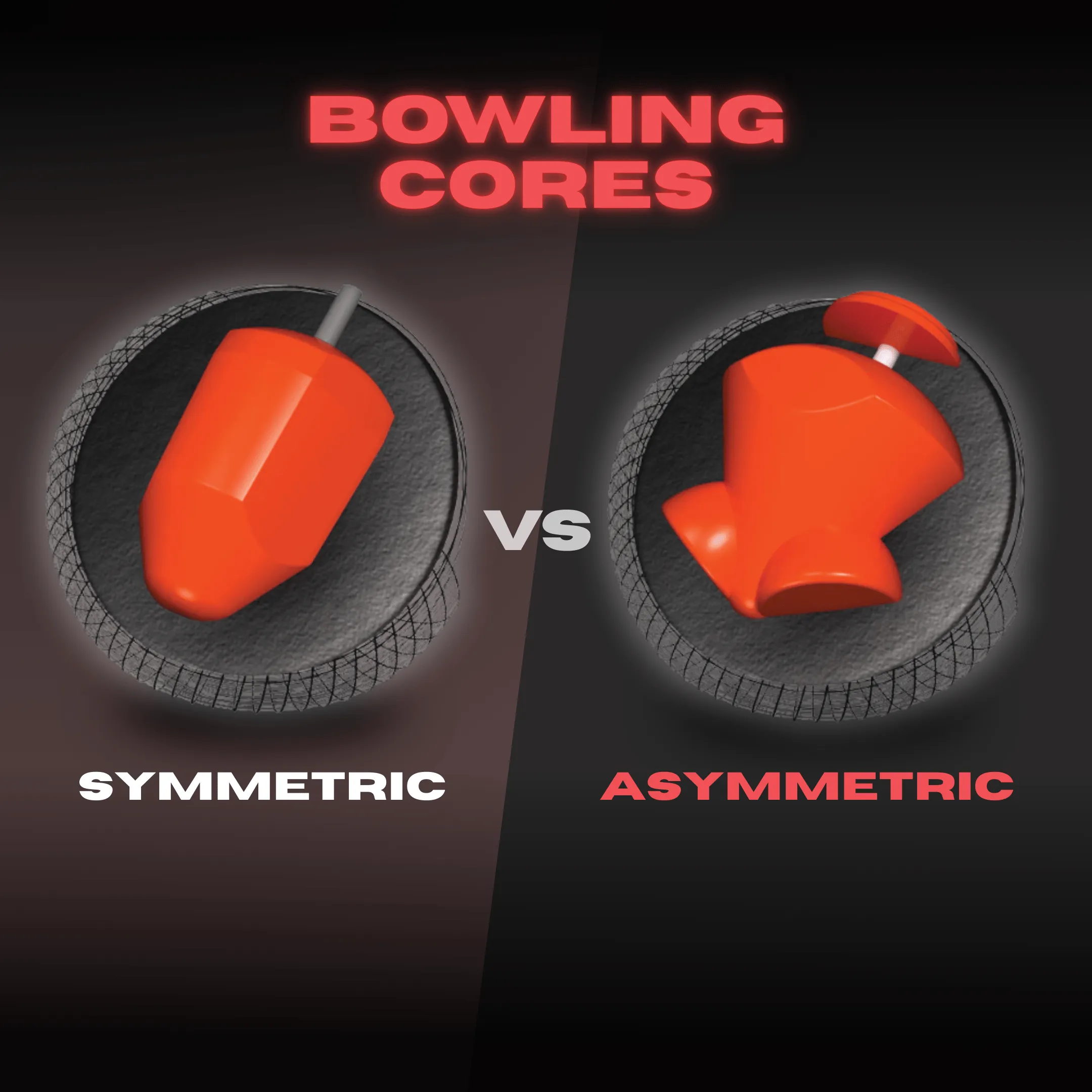
Walking into a pro shop can feel like a physics exam these days. You've gotdrillers talking about symmetrical versus asymmetrical cores likeeveryone already knows the difference. But honestly? If you just want toknock down more pins, you need to know which "engine" actually fitsyour style. symmetrical asymmetrical The 2026 season has changed the game. Between A.I.-designed coresand the latestUSBC rules on 78D hardness,selecting the wrong core type isn't just a mistake - it’s a waste of $200. Let'sbreak down what’s happening inside the ball without all the technicalities. A.I.-designed cores USBC rules on 78D hardness The Basics: Which Engine Are You Revving? Performance ProfileSymmetricalAsymmetricalBall MotionSmooth, predictable "banana" curveSharp, angular "hockey stick" snapTransition SpeedSlow and continuousFast and responsive to frictionForgivenessHigh. Misses don't over-react.Lower. It's touchy on friction.Hook PotentialModerate (Controllable)High (Aggressive) Performance ProfileSymmetricalAsymmetrical Performance Profile Symmetrical Asymmetrical Ball MotionSmooth, predictable "banana" curveSharp, angular "hockey stick" snapTransition SpeedSlow and continuousFast and responsive to frictionForgivenessHigh. Misses don't over-react.Lower. It's touchy on friction.Hook PotentialModerate (Controllable)High (Aggressive) Ball MotionSmooth, predictable "banana" curveSharp, angular "hockey stick" snap Ball Motion Smooth, predictable "banana" curve Sharp, angular "hockey stick" snap Transition SpeedSlow and continuousFast and responsive to friction Transition Speed Slow and continuous Fast and responsive to friction ForgivenessHigh. Misses don't over-react.Lower. It's touchy on friction. Forgiveness High. Misses don't over-react. Lower. It's touchy on friction. Hook PotentialModerate (Controllable)High (Aggressive) Hook Potential Moderate (Controllable) High (Aggressive) Quick visual on how mass is actually "chopped" inside these cores to create torque. 1. Symmetrical: Your Reliable Benchmark Symmetrical Core Example Ball Example: Storm Bionic Ball Example: Storm Bionic Think of a symmetrical core as a balanced top. It spins evenly. It doesn'twant to jump off the lane just because it hit a dry patch. This is why ballslike the Storm Bionic have been dominating the PBA Tour lately. Storm Bionic Why it’s a winner: It blends the lane. If your hand is a little fastor you miss your mark by a board, the ball won't punish you with anugly split. It’s the "safety net" every league bag needs. Why it’s a winner: 2. Asymmetrical: The Aggressive Specialist Asymmetrical Core Example Ball Example: Hammer Zero Mercy Solid Ball Example: Hammer Zero Mercy Solid An asymmetrical core is purposefully "unbalanced." Because the weight isn't even,the ball is constantly trying to find its "preferred" spin axis. This createsmassive torque. When you’re bowling on heavy oil - the kind where your ball feels like it'ssliding on ice - you need that imbalance. A ball like theHammer Zero Mercy Solid uses its "Super Offset" core to force a turneven when the lanes are flooded with volume. Hammer Zero Mercy Solid The Spec Sheet: Understanding Total vs. Intermediate Differential To predict how a ball will actually behave on the lane, you have to lookbeyond the core shape and check the numbers. Specifically, we look at Differential (Diff) and Intermediate Differential. Differential (Diff) Intermediate Differential 1. Total Differential (The "Hook Ceiling") This number represents the "flare potential." It tells you how much theball is physically capable of hooking. For a deeper breakdown of thesemetrics, see our guide on what differential is in bowling. what differential is in bowling Low Diff (.010 - .025): Small flare, smooth arc. Ideal for dry lanes or spare shooting.Medium Diff (.026 - .045): Versatile flare. The sweet spot for most league "benchmark" balls.High Diff (.046 - .060): Massive flare potential. Built for heavy oil and maximum entry angle. Low Diff (.010 - .025): Small flare, smooth arc. Ideal for dry lanes or spare shooting. Low Diff (.010 - .025): Medium Diff (.026 - .045): Versatile flare. The sweet spot for most league "benchmark" balls. Medium Diff (.026 - .045): High Diff (.046 - .060): Massive flare potential. Built for heavy oil and maximum entry angle. High Diff (.046 - .060): 2. Intermediate Differential (The "Asy" Strength) While Total Diff tells you the amount of hook, Intermediate Differential(only found in asymmetrical balls) tells you how quickly the ballresponds to friction. This determines the shape of your shot. You canread more in our intermediate differential guide. amount Intermediate Differential quickly intermediate differential guide Symmetrical (0.000): No intermediate diff. The ball transitions slowly and smoothly.Weak Asymmetric (.008 - .020): Offers a bit more "pop" off the friction than a symmetrical, but isn't over-sensitive.Strong Asymmetric (.020+): High-torque. These balls want to change direction the moment they exit the oil. Symmetrical (0.000): No intermediate diff. The ball transitions slowly and smoothly. Symmetrical (0.000): Weak Asymmetric (.008 - .020): Offers a bit more "pop" off the friction than a symmetrical, but isn't over-sensitive. Weak Asymmetric (.008 - .020): Strong Asymmetric (.020+): High-torque. These balls want to change direction the moment they exit the oil. Strong Asymmetric (.020+): In 2026, A.I. core modeling has allowed manufacturers to push theselimits further. We are seeing symmetrical balls with higher TotalDifferential than ever before, giving you "big hook" potential without theunpredictable "snap" of a high intermediate diff. A.I. core modeling Pro Tip: If you struggle with the ball "jumping" too hard off the dry,look for a Low Intermediate Diff or a symmetrical core. If your ball feels likeit's "skating" and never turning the corner, you likely need a High TotalDifferential asymmetric to help the ball dig into the oil. Pro Tip: Ready to see how these specs translate to real-world performance? Checkout the top-rated gear in our best bowling balls of 2026 buyer's guide. best bowling balls of 2026 The Bottom Line: Building Your 2026 Arsenal Choosing between symmetrical and asymmetrical isn't about which ball is "better" - it's about lane management. lane management Start Symmetrical: Use a benchmark like the Storm Bionic to read thelanes. Its predictable arc tells you exactly where the oil ends.Switch to Asymmetrical: When your benchmark ball starts "skating" past thepocket, you need the extra torque of an asymmetric like the Zero Mercy Solidto force a proper entry angle. Start Symmetrical: Use a benchmark like the Storm Bionic to read thelanes. Its predictable arc tells you exactly where the oil ends. Start Symmetrical: Storm Bionic Switch to Asymmetrical: When your benchmark ball starts "skating" past thepocket, you need the extra torque of an asymmetric like the Zero Mercy Solidto force a proper entry angle. Switch to Asymmetrical: Zero Mercy Solid Don't overlap your bag with five "hook monsters." Balance your arsenal with onesolid symmetrical benchmark and one strong asymmetrical specialist. Got your core strategy figured out? Now you just need to make sure yourfootwork is as stable as your ball motion.Check out our 2026 guide to the best bowling shoes here. Check out our 2026 guide to the best bowling shoes here
Tips & TricksMarch 17, 2026
How to Read Oil Patterns and Build a Smart Line Play
Written by: Panagiotis Vardakis, EBF Level 3, USBC Bronze, and National CoachingSchool Cat C coach Written by: Panagiotis Vardakis, EBF Level 3, USBC Bronze, and National CoachingSchool Cat C coach Panagiotis Vardakis In modern bowling, pattern sheets are everywhere. They are posted online,shown before tournaments, and shared in team chats. Yet, for many bowlers they remain nothing more than a graphic, filled withnumbers and shapes. They look at it - and then bowl the way they always do.That is where coaching comes in. This article is not a rulebook. Get this - there is no one correct line.Instead, this is how I teach bowlers to builda logical starting plan from a pattern sheet. It is based on years ofobservation, mistakes, learning, and what I consistently see working withyouth, amateurs, and competitive bowlers.The goal is simple - make the pattern sheet useful - not intimidating. correct Pattern Sheet Is a Guide, Not a Command Before we talk about boards, arrows, and breakpoints, we need to remove onemyth. The pattern sheet does not tell you where to stand and throw yourbowling ball. What it actually tells you is: Where oil is heavierWhere oil is lighterHow long the oil pattern isWhere friction will eventually appear Where oil is heavier Where oil is lighter How long the oil pattern is Where friction will eventually appear In other words, it shows possibilities, not instructions. When I teach bowlers, I always say that the pattern sheet doesn’t give you theright answers where to play. It gives you the starting question. Your job isto turn that question into a smart first line. Step 1: Read It Like a Bowler, Not an Engineer When I first look at a pattern sheet, I focus on only three things: Length – how far the oil extendsShape – is it flat, house-shot, or sport patternRatio – how much more oil is in the middle compared to the outside Length – how far the oil extends Length Shape – is it flat, house-shot, or sport pattern Shape Ratio – how much more oil is in the middle compared to the outside Ratio Forget the rest. At least at the beginning. The Simple Guide of Length Short pattern → the ball hooks earlierMedium pattern → more balanced reactionLong pattern → the ball skids longer Short pattern → the ball hooks earlier Medium pattern → more balanced reaction Long pattern → the ball skids longer Burnt exit point area at the end of a pattern Guide of 31 In formula it looks like this: Exit point ≈ Pattern Length – 31 For example: 40 ft pattern → 40 – 31 = 9 board43 ft pattern → 43 – 31 = 12 board37 ft pattern → 37 – 31 = 6 board 40 ft pattern → 40 – 31 = 9 board 43 ft pattern → 43 – 31 = 12 board 37 ft pattern → 37 – 31 = 6 board This does not mean you must play exactly there. It simply gives your brain asmart first target. Step 2: Build the Line from the Breakpoint Backward Most bowlers ask - where should I stand? I teach the opposite question:Where should the ball change direction? where should I stand? Where should the ball change direction? One simple guideline I learned from world-class coaches is that the breakpointis usually located around 45 feet down the lane.Horizontally, it is oftenabout three boards inside the last board before the pattern flattens. Thatgives you a starting reference. Also, I always clarify something important - the term breakpoint ismisleading. It is not a single point. It is an area. Breakpoint is typically3–5 feet long and 2–3 boards wide. breakpoint So the process becomes: Choose your breakpoint area (a blue circle in a picture below)Identify your exit point (a red star in a picture below) and extend the line back toward the foul lineThen determine your starting position Choose your breakpoint area (a blue circle in a picture below) a blue circle in a picture below Identify your exit point (a red star in a picture below) and extend the line back toward the foul line a red star in a picture below Then determine your starting position Sometimes, the calculated line may look extreme or unrealistic. That is why wealways consider a margin of error of a few boards on each side.What About the Arrows?Up to this point, you may notice I haven’t mentioned arrows. That isintentional.I consider arrows to be a visual reference within your chosen line - easier tofocus on because they are closer to your release.Depending on the athlete’s level, more variables come into play: lane surface,oil loads, transition, combined volumes.But what we covered so far is enoughto build a strong and logical starting plan. What About the Arrows? Step 3: Match the Line to the Ball - Not Your Ego One mistake I see constantly is that when the pattern is long, playersimmediately think they must play inside. No. You must play what your ball, speed, and rev rate allows you to play. I askbowlers to evaluate: Is my ball too clean for this line?Is it reading too early?Is it missing the breakpoint and not recovering? Is my ball too clean for this line? Is it reading too early? Is it missing the breakpoint and not recovering? My guiding principle is simple. The best line is the one that: Clears the front part of the laneReads the midlane without forcing technique changesMaintains energy through the pins Clears the front part of the lane Reads the midlane without forcing technique changes Maintains energy through the pins It is about finding the best line with the biggest margin of error for thegiven player, not the line that looks impressive on social media. Step 4: Your First Line Is a Test - Not a Marriage This one is critical. Your first line is not your final line. It is a testshot with purpose. When I teach this, I say: You are not trying to strike; you are trying tolearn something quickly. You are not trying to strike; you are trying tolearn something quickly. After two or three shots, evaluate: Reading too early? → Move or choose a cleaner ballSkidding too long? → Move or choose a stronger ballMissing the breakpoint? → Adjust speed or target Reading too early? → Move or choose a cleaner ball Skidding too long? → Move or choose a stronger ball Missing the breakpoint? → Adjust speed or target The pattern sheet gave you a starting idea. The lane gives you the truth. Step 5: Keep It Simple For Beginners When I coach young or new players, I simplify everything to three questions: Where should the ball hook?What arrow do I look at?What board do I stand on? Where should the ball hook? What arrow do I look at? What board do I stand on? That’s it. I do not talk about: Volume per zoneForward versus reverse loadsOil ratios in detail Volume per zone Forward versus reverse loads Oil ratios in detail Instead, I say: Let’s pick one line. Let’s see what the lane tells us. Then weadjust. Confidence grows when the brain is not overloaded. My Coaching Philosophy on Lines This is the foundation of how I teach it: Lines are tools, not identitiesYou do not “play a line” - you read a laneThe best bowlers do not guess - they observe faster Lines are tools, not identities You do not “play a line” - you read a lane The best bowlers do not guess - they observe faster Suggested starting lines for short, medium, and long patterns Final Thought: The Pattern Sheet Is a Map - But You Still Have to Drive A map does not drive the car. A GPS does not hit the brakes. And a patternsheet does not roll the ball. You do. Use the sheet to: Get orientedChoose a smart starting areaAvoid wasting frames Get oriented Choose a smart starting area Avoid wasting frames Then let your eyes, ball motion, and experience finish the job. That is how Iteach lines. Not as strict rules - but as thinking tools. About the Author Panagiotis VardakisPanagiotis Vardakis is an experienced bowling coach and educator whoseinvolvement in the sport spans more than two decades. His work combines technical coaching, long-term player development, andequipment knowledge, supported by his experience as a professional coach andpro shop specialist.Throughout his coaching career, he has guided athletes to national andinternational success across European competitions, coaching players fromGreece, the United Kingdom, Malta, Slovakia, Cyprus, and Bulgaria. About the Author Panagiotis Vardakis Panagiotis Vardakis is an experienced bowling coach and educator whoseinvolvement in the sport spans more than two decades. His work combines technical coaching, long-term player development, andequipment knowledge, supported by his experience as a professional coach andpro shop specialist. Throughout his coaching career, he has guided athletes to national andinternational success across European competitions, coaching players fromGreece, the United Kingdom, Malta, Slovakia, Cyprus, and Bulgaria. A significant part of his work is dedicated to youth development, where hefocuses on structured training environments that support both athleticprogress and personal growth. Vardakis is currently involved in youth-oriented projects throughBYC in Slovakia andcontinues to work with athletes, clubs, and organizations through coachingprograms, clinics, and educational initiatives across Europe. BYC For coaching-related questions or inquiries, Coach Vardakis can becontacted via email at p.vardakis@gmail.com or visit www.byc.sk www.byc.sk
Tips & TricksFebruary 11, 2026
Spares Are a Feeling, Not a Formula – Why You Might Miss Spares?
Written by: Panagiotis Vardakis, EBF Level 3, USBC Bronze, and National CoachingSchool Cat C coach Written by: Panagiotis Vardakis, EBF Level 3, USBC Bronze, and National CoachingSchool Cat C coach Panagiotis Vardakis Ask most bowlers what wins tournaments, and the answer is usually simple:strikes. But ask champions the same question, and you will often hear acompletely different answer: spares. Spares are where confidence grows. With pins coveringroughly four boards and a bowling ball spanning about nine boards, the marginfor error is huge - around 22 boards in theory, which is more than half thelane. That is why spare shooting depends more on mindset andpressure management than on mechanics alone. After many years of coaching and competing, this is the truth I have learned:spares are driven more by feeling than by strict technique or formula. Yes, technique matters.Yes, a spare ball helps.Yes, lines and angles exist. But in my experience, spare shooting is a 70–30 game:70 percent mindset and feeling,30 percent physical execution. Let’s take a closer look at the method I teach my athletes. Don’t Start With “Where.” Start With “How It Feels” Most bowlers approach spares by asking technical questions: Where do I stand?Where do I look? Which board is this? I turn those questions around. The first thing I ask instead is simple:Where do you feel comfortable shooting from? Where do you feel comfortable shooting from? Before boards and arrows come into play, your body needs to feel aligned withthe line of play. Comfort and balance must come first. The order should alwaysbe: Feel the lineLet your body naturally match and align with itThen mark your standing and target points and make proper adjustments Feel the line Let your body naturally match and align with it Then mark your standing and target points and make proper adjustments Every pin (yes, every single pin) can be converted in more than one way. Thereis no single “correct” solution. There is only the solution that feelsrepeatable to you. Ask yourself: where do you feel comfortable shooting from? The “New Lane” Mindset Trick This is the mindset drill that often changes everything. When an athlete steps up to a spare, whether it is a single pin or acombination, I give them one instruction: connect the ball and the pin in your mind. Then, create a new lane between them. connect the ball and the pin in your mind. Imagine that lane as: Ten boards wideThe ball in the centerThe pin in the center Ten boards wide The ball in the center The pin in the center Now visualize that lane in any way that makes you feel calm and secure. It canbe ice, water, a road, grass, light, or even a tunnel. The image itself doesnot matter. The feeling does. The key is what happens next. Everything outside that lane fades away. Thereare no gutters. No crowd noise. No score. No tension in the muscles. Only thelane you created in your head. If the ball stays inside that lane, the spare will be converted. Narrow the Lane = Narrow the Focus As the lane becomes smaller, something powerful happens. Your vision sharpens.Your mind quiets.Your body commits. Your vision sharpens. Your mind quiets. Your body commits. You are no longer simply aiming at a pin. You are moving through space withintention. This is not mechanics. This is presence. This is bowling withclarity. Final Thought Yes, proper technique matters. Yes, using a spare ball helps keep the linestraight, or using a hook ball if you have the control to do so. Butunderstand this first -spares are a mental process before they are a physical one. spares are a mental process before they are a physical one When you feel the line, when you see your lane, and when everything else fadesaway, you no longer hope to make the spare. You expect to. And that expectation is the difference between bowlers who simply surviveframes and bowlers who truly own them. About the Author Panagiotis VardakisPanagiotis Vardakis is an experienced bowling coach and educator whoseinvolvement in the sport spans more than two decades. His work combines technical coaching, long-term player development, andequipment knowledge, supported by his experience as a professional coach andpro shop specialist.Throughout his coaching career, he has guided athletes to national andinternational success across European competitions, coaching players fromGreece, the United Kingdom, Malta, Slovakia, Cyprus, and Bulgaria. About the Author Panagiotis Vardakis Panagiotis Vardakis is an experienced bowling coach and educator whoseinvolvement in the sport spans more than two decades. His work combines technical coaching, long-term player development, andequipment knowledge, supported by his experience as a professional coach andpro shop specialist. Throughout his coaching career, he has guided athletes to national andinternational success across European competitions, coaching players fromGreece, the United Kingdom, Malta, Slovakia, Cyprus, and Bulgaria. A significant part of his work is dedicated to youth development, where hefocuses on structured training environments that support both athleticprogress and personal growth. Vardakis is currently involved in youth-oriented projects throughBYC in Slovakia andcontinues to work with athletes, clubs, and organizations through coachingprograms, clinics, and educational initiatives across Europe. BYC For coaching-related questions or inquiries, Coach Vardakis can becontacted via email at p.vardakis@gmail.com or visit www.byc.sk www.byc.sk
Tips & TricksJanuary 27, 2026
Most Bowling Videos Are Filmed Wrong – A Coach Explains How to Fix It
Written by:Panagiotis Vardakis, EBF Level 3, USBC Bronze, and National Coaching School Cat C coach Written by: Panagiotis Vardakis, EBF Level 3, USBC Bronze, and National Coaching School Cat C coach Panagiotis Vardakis Every week, I receive many bowling videos for analysis. They come fromathletes training on their own, young bowlers, and competitive amateurslooking for feedback. And in most cases, my first reaction has nothing to dowith footwork or release. It has to do with the camera. Today, bowlers can easily upload videos and get advice from coaches allaround the world. The problem is that many of those videos are not filmed withanalysis in mind, making them difficult to evaluate. This often slows thewhole progress, as the player must go back to the bowling center to re-filmhis bowling before any coaching can start.When a video clearlyshows what matters, video coaching becomes a powerful and reliable way toimprove performance. Over the years, I have learned that just a few simple and consistent camerasetups provide nearly all the information needed to help an athlete improve. In this article, I explain the camera angles I prefer, why I ask for them, andwhat I look for in each view as a coach. Camera Straight From Behind – My Starting Point This is usually the first angle I ask for. How I Like It Set The camera should be placed directly behind the bowler, centered with thebody, and completely stable. The full approach, release, and ball path must bevisible, with no zoom. The entire body should be shown from the stance throughthe finish. Why I Ask for This Angle From behind, I can clearly see how the body and the swing work together. Thisangle gives me a strong overall picture of coordination and movement. What I Look For I focus on shoulder alignment during the approach, spine tilt and postureconsistency, and whether the swing stays under control or wraps around thebody. I also evaluate timing between footwork and swing, the release pointrelative to the ankle, and whether missed shots come from body position ratherthan targeting. Many bowlers believe they miss because of aim. Very often, the miss actuallybegins two steps earlier. Camera Straight in Front – What the Release Tells Me This angle gives me information I cannot get from behind, and it is often myfavorite one. How I Ask Athletes to Set ItThe camera should be placed near the arrows, in the middle of the lane,facing the bowler. It must remain stable and level whilerecording the approach, release, and follow-through. Bowlingcenter rules and safety should always be respected when filming from thisposition. The camera should be placed near the arrows, in the middle of the lane,facing the bowler. It must remain stable and level whilerecording the approach, release, and follow-through. Bowlingcenter rules and safety should always be respected when filming from thisposition. The camera should be placed near the arrows, in the middle of the lane,facing the bowler. It must remain stable and level whilerecording the approach, release, and follow-through. Bowlingcenter rules and safety should always be respected when filming from thisposition. Why I Ask for This Angle From the front, the release becomes very clear. Small details that remainhidden from other angles are easy to identify. What I Look For I observe the arm swing path, whether it is free or forced, elbow position atthe bottom of the swing, wrist stability, and hand position. I also look athead movement, eye control, balance at the foul line, and consistency ofrelease height. From this angle, I can quickly tell if an athlete is fighting the swing orallowing it to work naturally. Full Approach – The Most Important Angle Landscape video of the full approach is the angle I request most often, andthe one athletes misunderstand the most. How Coaches Want It FilmedThe video must be filmed in landscape format. The camera shouldbe placed about two to two and a half lanes away, positioned roughly in themiddle of the approach. Once the recording starts, the camera mustremain completely still. There should be no panning, no zooming,and no movement during the approach. The video must be filmed in landscape format. The camera shouldbe placed about two to two and a half lanes away, positioned roughly in themiddle of the approach. Once the recording starts, the camera mustremain completely still. There should be no panning, no zooming,and no movement during the approach. Why This Angle Is So Important This view shows tempo, timing, and repeatability, which are the foundations ofconsistency. What Coach Look ForI evaluate footwork rhythm and cadence, tempo control, and the relationshipbetween steps and swing. I also look at starting positionconsistency, whether the athlete rushes or accelerates smoothly, stabilityin the pre-shot routine, and balance at the foul line. I evaluate footwork rhythm and cadence, tempo control, and the relationshipbetween steps and swing. I also look at starting positionconsistency, whether the athlete rushes or accelerates smoothly, stabilityin the pre-shot routine, and balance at the foul line. If the camera moves, reference points are lost. Without reference points, realanalysis is not possible. Common Filming Issues Athletes Need to Fix Very often, I ask athletes to re-film their videos because the camera followsthe shot, the video is filmed too close, or zoom is used. Other common issuesinclude cutting the video before the finish or sending only strike shots. Missed shots are extremely valuable. They often explain areas for improvementmuch better than perfect ones. Video Checklist (Save These For Later) General Rules Full body visible at all timesCamera never movesNo zoomFull shot recorded from start to finishMultiple shots included, not just strikes Full body visible at all times Camera never moves No zoom Full shot recorded from start to finish Multiple shots included, not just strikes Behind the Bowler Camera centered with the bodyStable and straightFull approach includedBall path clearly visible Camera centered with the body Stable and straight Full approach included Ball path clearly visible Front View Checklist Camera facing the bowlerPositioned near the arrowsStable and levelRelease clearly visible Camera facing the bowler Positioned near the arrows Stable and level Release clearly visible Full Approach Checklist Landscape (horizontal) videoCamera placed 2 to 2.5 lanes awayFixed camera position (no movement, no zoom)Rhythm and timing clearly visibleFull body shown from start through follow-through Landscape (horizontal) video Camera placed 2 to 2.5 lanes away Fixed camera position (no movement, no zoom) Rhythm and timing clearly visible Full body shown from start through follow-through Final Thoughts Video coaching helps athletes improve faster only when filming is done withintention. A good video allows coach to provide more precise feedback, identify issuesearlier, and design more effective training programs. It also helps athletesunderstand not only the outcome of a shot, but their own movement. A good shot does not make a good video - it shows the truth of the motion. About the Author Panagiotis VardakisPanagiotis Vardakis is an experienced bowling coach and educator whoseinvolvement in the sport spans more than two decades. His work combines technical coaching, long-term player development, andequipment knowledge, supported by his experience as a professional coach andpro shop specialist.Throughout his coaching career, he has guided athletes to national andinternational success across European competitions, coaching players fromGreece, the United Kingdom, Malta, Slovakia, Cyprus, and Bulgaria. About the Author Panagiotis Vardakis Panagiotis Vardakis is an experienced bowling coach and educator whoseinvolvement in the sport spans more than two decades. His work combines technical coaching, long-term player development, andequipment knowledge, supported by his experience as a professional coach andpro shop specialist. Throughout his coaching career, he has guided athletes to national andinternational success across European competitions, coaching players fromGreece, the United Kingdom, Malta, Slovakia, Cyprus, and Bulgaria. A significant part of his work is dedicated to youth development, where hefocuses on structured training environments that support both athleticprogress and personal growth. Vardakis is currently involved in youth-oriented projects throughBYC in Slovakia andcontinues to work with athletes, clubs, and organizations through coachingprograms, clinics, and educational initiatives across Europe. BYC For coaching-related questions or inquiries, Coach Vardakis can becontacted via email at p.vardakis@gmail.com or visit www.byc.sk www.byc.sk
Tips & TricksJanuary 16, 2026
Best Bowling Ball Weight Guide: How to Choose the Right Weight
Choosing the right bowling ball weight plays a big role in your scores,comfort, and long-term progress. Many bowlers start with a random house ball,while others try the heaviest ball they can lift, hoping for more strikes. Both approaches often lead toback pain, bad shots, and poor results. back pain This guide explains how bowling ball weight affects your game. You will learnhow to choose the right weight for your body, strength, and experience. Youwill also find real examples, simple rules, and practical tips you can usenext time you go bowling. If you already know your bowling ball weight and want more help choosingbowling balls, you can also read ourBest Bowling Balls 2025 andBest Bowling Ball for Beginners reviews! Best Bowling Balls 2025 Best Bowling Ball for Beginners Some links on this page are affiliate links. If you purchase through them,BowlingLife might earn a small commission that helps support our work, at noextra cost to you. Why Bowling Ball Weight Matters The right bowling ball weight helps you to stay consistent, score better, andkeep your body safe. A ball that is too heavy reduces yourbowling ball speedand accuracy. On the other hand, a ball that is too light reduces pin action. bowling ball speed Weight affects four main things: Your shot speedYour controlYour timingYour stamina over many games Your shot speed Your control Your timing Your stamina over many games When the weight matches your strength, your shots stay steady from the firstto the last frame. What Is the Heaviest Bowling Ball Weight? The heaviest legal bowling ball weight is 16 pounds under USBC rules. However,some bowlers havemade homemade bowling balls that weigh up to 20 pounds. made homemade bowling balls that weigh up to 20 pounds Many bowlers think they must throw 16 pounds to score well. That is not true.Most bowlers use bowling balls between 12 and 15 pounds. The best weightdepends on age, physique, and grip. Bowling Ball Weight Chart This simple bowling ball weight chart gives you a clear starting point. Bowler TypeSuggested WeightKids under 86–8 lbKids 9–119–11 lbTeens12–14 lbAdult Women12–15 lbAdult Men15–16 lbSenior Bowlers13–15 lb Bowler TypeSuggested Weight Bowler Type Suggested Weight Kids under 86–8 lb Kids under 8 6–8 lb Kids 9–119–11 lb Kids 9–11 9–11 lb Teens12–14 lb Teens 12–14 lb Adult Women12–15 lb Adult Women 12–15 lb Adult Men15–16 lb Adult Men 15–16 lb Senior Bowlers13–15 lb Senior Bowlers 13–15 lb These numbers are not strict rules. They help you find a ball that feels goodfrom the first shot. How to Choose Your Bowling Ball Weight Choosing the right bowling ball weight comes down to feel, comfort, andcontrol. You want a ball that gives strong pin action without hurting yourbody. A simple method is this: Divide your body weight (in pounds) by 11. Example:150 lbs ÷ 11 = 13.6 → start with a 13 or 14 lb ball. This number is only a starting point. You then adjust based on how your bodyreacts. Signs Your Bowling Ball Weight Is Too Heavy Your bowling ball weight is too heavy if: Your grip is too looseYour wrist or elbow feels stressedYour ball speed drops fastYou lose control during the swing Your grip is too loose Your wrist or elbow feels stressed Your ball speed drops fast You lose control during the swing A heavy ball may give strong hits, but only when you can handle the weight. Ifyou cannot keep your speed, a lighter ball will score better. Signs Your Bowling Ball Weight Is Too Light Your bowling ball weight is too light if: You feel like you are “tossing” instead of swingingYou throw too fast and lose controlYou get weak pin actionYour ball deflects too much You feel like you are “tossing” instead of swinging You throw too fast and lose control You get weak pin action Your ball deflects too much If these signs match your game, try heavier bowling ball. Bowling Ball Weight for Kids and Teens Kids and teens need a bowling ball weight that protects their hands andwrists. Choose a weight that feels smooth and safe. Do not force heavier ballson young players. Their muscles and joints are still developing. Most young bowlers stay between: 6–11 lb for kids2–14 lb for teens 6–11 lb for kids 2–14 lb for teens Comfort and proper form matter more than weight at this stage. What Bowling Ball Weight Do Pros Use? Pro players do not use bowling balls you can fing in bowling alley. They usehigh-erformance bowling balls, that is pecifically drilled to their handmeasurements. Having a good grip allows to throw heavier bowling balls. Most male pros use 15-pound balls. Some use 16 pounds, but this number is muchlower. Meanwhile, most female pros use 14 or 15 pounds. House Balls vs Custom Balls and Bowling Ball Weight As we mentioned before, house balls often feel heavier because the holes nevermatch your hand perfectly. You grip harder, your swing gets tight, and yourarm gets tired fast. It all affects your accuracy. A custom-drilled ball spreads weight across your hand. This makes the samebowling ball weight feel lighter. Many bowlers can easily handle a ball 2–3 pounds heavier when it is drilledfor their hand. How to Test and Find Your Ideal Bowling Ball Weight Try this simple method: Start with a weight that feels safe (for example 11-12 lbs).Throw 5–6 shots.Move up or down based on feel. Start with a weight that feels safe (for example 11-12 lbs). Throw 5–6 shots. Move up or down based on feel. Your ideal bowling ball weight should: Feel smooth during the swingKeep your speed steadyAvoid pain and sorenessGive strong pin actionLet you bowl many games without fatigue Feel smooth during the swing Keep your speed steady Avoid pain and soreness Give strong pin action Let you bowl many games without fatigue Listen to your body. It will tell you when the weight is right. Experiment, Listen to Your Body, and Build Up Slowly Your ideal bowling ball weight may change over time. As you get stronger, youmay move up in weight. You may also stay at one weight for years. Both pathsare fine. Stay patient and pay attention to your body. Do not force heavy weights toosoon. Smooth progress always wins. If you want more help choosing bowling balls, see our Best Bowling Balls2025 guide!
Tips & TricksNovember 14, 2025
Intermediate Differential in Bowling: How It Affects Ball Motion
Understanding core numbers can help every bowler make better choices. One ofthe most important numbers is intermediate differential. Many bowlers know aboutradius of gyration (RG) anddifferential (diff), but intermediate differential often feels confusing. radius of gyration (RG) differential (diff) Intermediate differential plays a big role in how an asymmetrical bowling ballchanges direction. It also helps you understand which ball shape matches yourstyle and speed. This guide will explain intermediate differential in simple words and show howit affects your bowling ball motion on the lane. What Is Intermediate Differential in Bowling? Intermediate differential measures the difference between the high RG axis andthe intermediate RG axis of a bowling ball. This value exists only inasymmetrical bowling balls, since symmetrical balls have almost no coreasymmetry. A symmetrical bowling ball has two RG values: the minimum RG and the maximumRG. An asymmetrical bowling ball has three RG values. The third value is theintermediate RG, which sits between the low and high RG axes. Because of thisthird value, an asymmetrical ball has an intermediate differential number. Intermediate differential can also be explained as the difference between theball’s high RG axis and its intermediate RG axis. This value is also known asthe mass bias strength. A higher intermediate differential means a strongermass bias. A lower value means weaker mass bias. Intermediate Differential Ranges in Bowling Most intermediate differential values fall between 0.008 and 0.037 inches. Ifa ball’s intermediate differential sits above 0.008, the ball is consideredasymmetrical. If a ball's intermediate differential sits below, then it isconsidered symmetrical. The ranges are: Symmetrical balls: 0.000–0.007Low intermediate differential: 0.008–0.020High intermediate differential: 0.021–0.037 Symmetrical balls: 0.000–0.007 Low intermediate differential: 0.008–0.020 High intermediate differential: 0.021–0.037 These numbers matter because they show how fast a ball responds to frictionand how quickly it changes direction. How Intermediate Differential Affects Bowling Ball Motion Intermediate differential shapes your bowling ball’s motion from the mid-laneto the pins. It does not change how much the ball hooks overall. Instead, itchanges the ball hooks. Higher intermediate differential creates faster changes A higher intermediate differential makes the ball react faster when it touchesfriction. The hook zone becomes shorter but stronger. The ball changes fromskid to hook in a very sharp way. This often creates a strong and suddenbackend motion. The ball turns fast, uses energy quickly, and may hit the pinshard if matched correctly. Lower intermediate differential creates smoother changes A lower intermediate differential creates a longer and smoother hook zone. Theball changes direction more slowly. The backend motion becomes more gradual.This helps the ball keep more energy for the pins and improves control. Both motions can strike well. The key is matching the intermediatedifferential to your style and lane conditions. Intermediate Differential vs Differential Many bowlers confuse differential and intermediate differential. They are notthe same. Differential measures the difference between the lowest RG axis and thehighest RG axis. This number shows how much the ball can flare and how manyboards it can cover. Intermediate differential measures the difference between the intermediate RGand the high RG. This number shows how fast the ball responds to friction andhow the hook shape develops. A simple way to remember the difference: Differential = amount of hookIntermediate differential = shape of hook Differential = amount of hook Intermediate differential = shape of hook Both work together, but intermediate differential gives the ball its uniquemotion shape. Symmetrical vs Asymmetrical Bowling Balls The type of core determines whether a ball has intermediate differential. Symmetrical bowling balls Have no meaningful intermediate differential.Create smooth and predictable motion.Work well for rev-dominant bowlers and slower speeds.Offer fewer layout changes since they lack a strong preferred spin axis(PSA).Symmetrical balls usually are more stable and easier to control. Have no meaningful intermediate differential. Create smooth and predictable motion. Work well for rev-dominant bowlers and slower speeds. Offer fewer layout changes since they lack a strong preferred spin axis(PSA). Symmetrical balls usually are more stable and easier to control. Asymmetrical bowling balls Have a real intermediate differential numberRespond faster to frictionCreate sharper and more angular motionWork well for speed-dominant playersOffer many layout options because the PSA is strongerThe added intermediate differential gives more shape and more ways to adjustthe core’s position during drilling Have a real intermediate differential number Respond faster to friction Create sharper and more angular motion Work well for speed-dominant players Offer many layout options because the PSA is stronger The added intermediate differential gives more shape and more ways to adjustthe core’s position during drilling How Intermediate Differential Affects Spin Time and PSA Strength Intermediate differential controls the strength of the PSA. A higherintermediate differential creates a stronger PSA. A stronger PSA means fasterspin time. Faster spin time leads to a quicker hook. Here is the simple chain: Higher intermediate differential → stronger PSA → faster spin time → quickerhook This is why high intermediate differential balls snap harder off the spot.They release energy quickly and make a fast move toward the pocket. Lower intermediate differential balls spin slower and transition moregradually. This helps the ball keep energy. Which Bowlers Benefit From Higher Intermediate Differential? A higher intermediate differential gives faster motion. This helps thefollowing players: Speed-dominant bowlers who struggle to get the ball to slow downLow-rev bowlers who need help creating motionPlayers who want strong backend shapeBowlers on patterns with a clear downlane friction spot Speed-dominant bowlers who struggle to get the ball to slow down Low-rev bowlers who need help creating motion Players who want strong backend shape Bowlers on patterns with a clear downlane friction spot These bowlers need help forcing the ball to change direction. A higherintermediate differential makes the motion sharper. Which Bowlers Benefit From Lower Intermediate Differential? Lower intermediate differential gives a smoother and longer motion. Thishelps: Rev-dominant bowlers who already create strong hookLow-speed bowlers who do not want the ball to overreactSenior bowlers who prefer short-pin layouts or smoother shapesBowlers on wet-dry patterns who want to control the breakpointPlayers who need stable and predictable motion Rev-dominant bowlers who already create strong hook Low-speed bowlers who do not want the ball to overreact Senior bowlers who prefer short-pin layouts or smoother shapes Bowlers on wet-dry patterns who want to control the breakpoint Players who need stable and predictable motion Intermediate Differential and Oil Patterns Intermediate differential plays a big role on different oil patterns. When to use high intermediate differential A high intermediate differential delivers a sharper transition at thebreakpoint. It’s great for rev-dominant players or anyone trying to get morehook on heavy oil. The higher diff gives the ball more flare and shape,creating that sharp, more angular motion through the backend. When to use low intermediate differential Choose a low intermediate differential bowling ball if you’re looking for asmoother, more predictable reaction. It’s perfect when the lanes start to dryup, or when you don’t want the ball snapping too hard off the spot. It givesyou that nice arc shape and better control through transition. Intermediate Differential and Drilling Layouts Asymmetrical bowling balls allow more layout options because the PSA plays akey role. Moving the PSA changes how the ball responds to friction. A higher intermediate differential gives more layout freedom. You can placethe core in strong or mild positions. A lower intermediate differential creates fewer differences between layouts.The ball remains smoother and more stable. Short-pin layouts reduce core flare. This makes the ball act closer to asymmetrical shape. Many senior bowlers use these layouts for added control. Examples of Bowling Balls With Different Intermediate Differential Values To understand these numbers better, here are clear examples of balls with high and low intermediate differential values. High intermediate differential examples Hammer Pure EnvyEbonite The One Ovation Hammer Pure Envy Ebonite The One Ovation These balls create sharp and fast backend motion. Low intermediate differential examples Storm Ion Pro SolidHammer 3-D Offset Assault Storm Ion Pro Solid Hammer 3-D Offset Assault These balls create smooth and continuous motion. No intermediate differential (symmetrical balls) Brunswick AlertMotiv Primal Ghost Brunswick Alert Motiv Primal Ghost These balls offer stable and predictable motion on many conditions.Please note that some links in this article are affiliate links, whichmeans we may earn a small commission that helps support our work, at noextra cost to you. Please note that some links in this article are affiliate links, whichmeans we may earn a small commission that helps support our work, at noextra cost to you. FAQ What is intermediate differential in bowling? Intermediate differential in bowling is the difference between the ball’s highRGaxis and its intermediateRGaxis. It shows how much asymmetry the core has and how fast the ball respondsto friction. RG Do symmetric bowling balls have intermediate differential? Symmetrical bowling balls have almost no intermediate differential. Theirvalues sit between 0.000 and 0.007. This is not enough to create strongasymmetry. What does higher intermediate differential do? A higher intermediate differential creates a sharper and faster motion. Theball responds quickly to friction and changes direction fast. What does lower intermediate differential do? Lower intermediate differential gives a smoother and more controlled motion.The ball changes direction slowly and keeps more energy for the pins. How does intermediate differential differ from differential? Differential shows the total flare potential. Intermediate differential showshow fast the hook shape forms. One controls the amount of hook. The othercontrols the shape of hook. Is intermediate differential important for beginners? Beginners do not need to worry about intermediate differential. Coverstock andtotal differential are more important at early levels. Which bowlers should use high intermediate differential? High intermediate differential helps speed-dominant and low-rev players. Italso helps bowlers who need strong recovery on the backend. Which bowlers should use low intermediate differential? Low intermediate differential helps rev-dominant and low-speed players. Itgives predictable and continuous motion on many patterns. How does intermediate differential affect drilling layouts? Higher intermediate differential creates more layout options because the PSAis stronger. Lower intermediate differential reduces the impact of layoutchanges. What intermediate differential value is considered high? A value above 0.021 is considered high. Values between 0.008 and 0.020 arelow. Values below 0.007 belong to symmetrical balls. Ready to choose the right equipment? Read our full guide to the BestBowling Balls in 2025!
Tips & TricksNovember 13, 2025
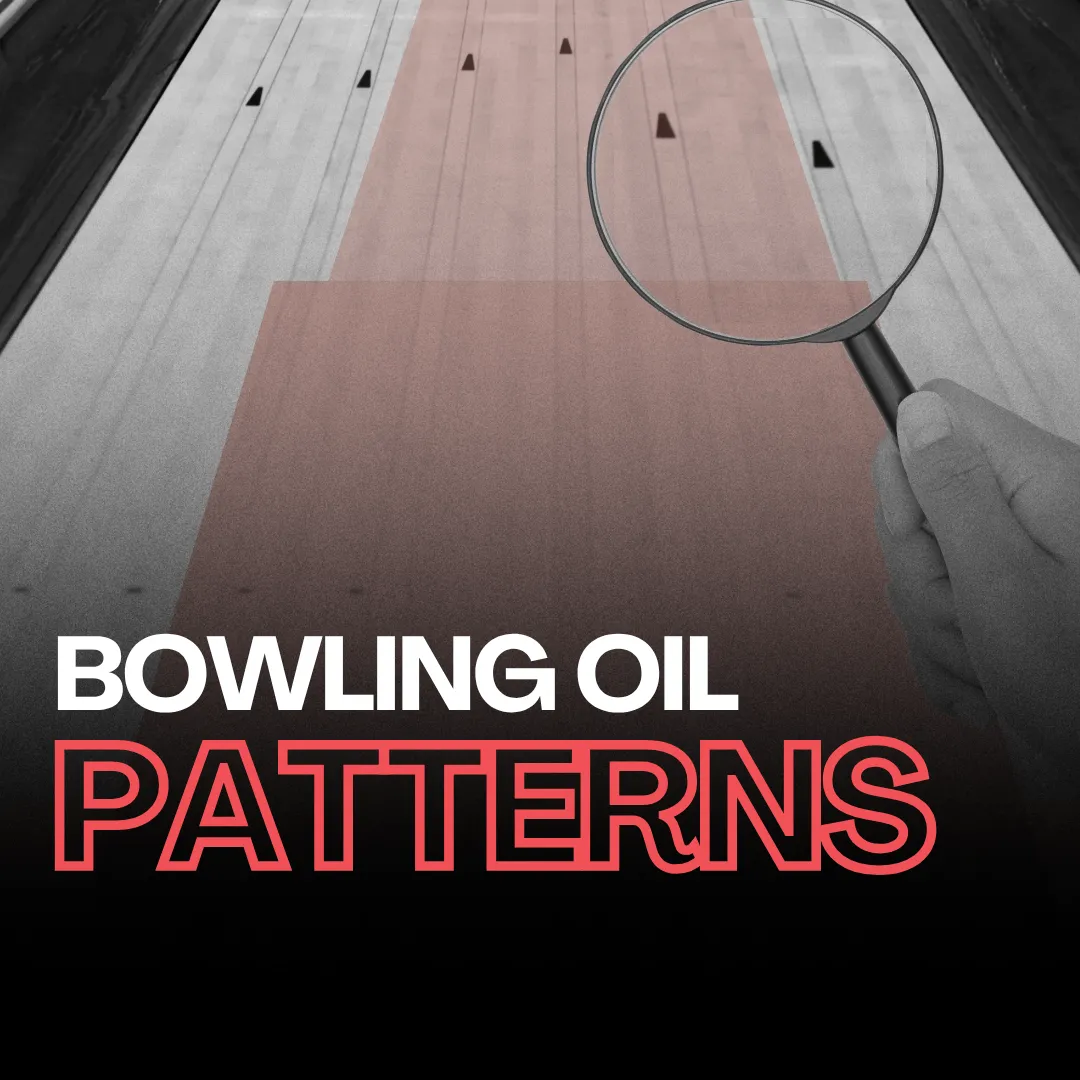
Bowling Oil Patterns: Read the Lanes Like a Pro
Ever wonder why your ball comes back slick and greasy? That’s lane oil - andit changes everything. Bowling lanes use synthetic oil to create differentconditions. These are called bowling oil patterns, and they impactbowling ballmotion. Whether your ball skids too far or hooks too early often depends onthe pattern used that day. In this guide, you’ll learn how oilpatterns work, how to read them, and how they affect your shot. We’ll alsoexplain the difference between house and sport patterns, and how to adjustyour game accordingly. bowling ball What Are Bowling Oil Patterns? Bowling oil patterns show how lane technicians apply oil to the surface. Eachpattern creates a different lane condition.The oil is never spreadevenly. Most patterns use more oil in the middle and less on the outsideboards. This design helps guide your ball toward the pocket - but only if youplay the lane correctly. A standard lane is 60 feet long. However, the oil does not cover the entirelength of the lane. The last portion of the lane is always dry. This dry areahelps the ball grip and hook toward the pins. Lane technitial can use different patterns on each lane. That’s why yousometimes see your ball reacting differently. These differences make lanereading an essential skill - even for casual bowlers. How Do Technicians Apply Oil to a Bowling Lane? In the past, staff used sprays and brooms to apply bowling oil patterns. Ittook time and serious skill. Today, bowling centers use lanemachines that clean and oil the lanes with precision and speed. These machinescreate bowling oil patterns by controlling where and how much oil goes on thelane. Bowling oil protects the surface and creates different lane conditions. Bothare essential for fair and long-lasting play. Bowling Oil Machines Today, every bowling alley uses a bowling oil machine, also called a lanemachine. It cleans the lane and then applies oil to create bowling oilpatterns.First, cleaner heads spray the lane surface. A mixture ofstripper chemical and water breaks down old oil and dirt. At the same time, acloth roll collects larger debris. A vacuum then removes the fluidand waste. During this process, the lane machine travels the full 60 feet ofthe lane. After cleaning, it applies fresh oil in the programmed pattern.Techniciansno longer need sprays or brooms. Everything happens with the push of a button.The lane staff program the machine to set how much oil goes where for thechosen bowling oil patterns. What Oil Do Bowling Alleys Use on Lanes? Manufacturers create bowling lane conditioners specifically for the sport ofbowling. These conditioners combine high-quality oils with additives forconsistent lane performance. They come in different viscositiesand surface densities to create varied lane conditions depending on eachalley’s needs.Lane conditioners must hold their structure whenapplied and also protect the lane, pins, and bowling balls. They are alsonon-toxic and safe for human health, so bowlers can enjoy their pizza withoutworry. Bowling Oil Pattern Types Bowling oil patterns can be classified in several ways. The most common methodis by their length. Bowlers usually group patterns asshort (35 feet or less), medium (between 36-42 feet), orlong (43 feet or more). The oil pattern’s length affects when the ball hooks. Shorterpatterns make the ball hook earlier. short (35 feet or less) medium (between 36-42 feet) long (43 feet or more) House Bowling Oil Patterns Most bowling alleys use special lane patterns called house bowling oilpatterns. These patterns make scoring easier for casual bowlers.Ahouse pattern helps the ball hit the pocket by using more oil in the centerand less outside. Rolling the ball in the middle keeps it straighter forlonger. Rolling it toward the outside allows it to curve back to themiddle.In short, house bowling oil patterns give bowlers moremargin for error and help them hit the pocket more often. Professional Bowling Oil patterns Organizers design professional bowling oil patterns to be more challengingthan house patterns. They make hitting the pocket consistently much harder.Onsport patterns, technicians spread the oil more evenly across the lane. Unlikehouse bowling oil patterns, there is no built-in guide to help your ball. Ifyou miss your target, the ball can easily hook into the gutter. How To Read Bowling Oil Patterns? Knowing how to read bowling oil patterns is crucial for success. It helps youunderstand how to play each lane.There are thousands of differentbowling oil patterns. The Kegel library alone lists over 1,000 options.Mastering them all is impossible, but building a solid foundation is essentialfor effective gameplay. Understanding Bowling Oil Sheet Lane pattern sheets display bowling oil patterns. At first glance, they maylook complex and highly technical.For beginner and intermediatebowlers, two main components matter most. Look at “Oil Pattern Distance” and“Volume Oil Total” listed at the top. These numbers help you choose the rightbowling ball and predict where it will hook at the breakpoint. breakpoint Breakpoint and Exit Point Every bowling oil pattern includes a breakpoint. The breakpoint is where theball moves farthest from the pocket before turning back toward the pins.Thebreakpoint usually appears a few feet past the exit point. The exit point iswhere the oil pattern distance ends on the lane. The Rule of 31 The rule of 31 is nothing new in bowling sport. Many professionals apply it at the highest levels.How doesit work? Standing in the same spot will not work on every oil pattern length.Instead, you must know which board your exit point should be on. That givesyou the best breakpoint for hitting the pocket.To use the Rule of31, subtract 31 from the oil pattern distance on the lane sheet. The resultshows the board where your ball should exit the oil.For example,if the pattern measures 42 feet, subtracting 31 gives 11. Your ball shouldexit at the 11th board. While this rule works best for medium bowling oilpatterns, it also applies to short and long ones. The rule of 31 is nothing new in bowling sport. How to Read Bowling Lane Condition Changes? As bowling oil patterns transition, bowlers must adjust to stay in the pocketand keep scoring. Adjustments may include changing stance, target, ballchoice, speed, or loft. Starting with a stronger ball on a fresh oil pattern creates a smoother hook spot. This gives valuable insight for lateradjustments in ball selection, release, or speed. Always monitor how your ballreacts at the breakpoint and adjust when needed.As lanes breakdown, switch to a weaker ball with less surface or a polished finish. Thisprevents early hook and helps the ball skid farther down the lane. Starting with a stronger ball on a fresh oil pattern Final Thoughts on Bowling Oil Patterns Understanding bowling oil patterns is crucial for improving your game. Readingthe lanes and knowing how oil patterns work leads to more success.Whetheryou are a seasoned pro or a beginner, these insights help you adjust todifferent lane conditions. Use what you learn about bowling oil patterns tobuild confidence, make smart choices, and knock down more pins. FAQ What Is the Purpose of Applying Oil to a Bowling Lane? Oil on the lane has two jobs. It changes lane conditions and protects the lanefrom wear. How Are Bowling Oil Patterns On Bowling Lanes Created In Modern Times? Bowling alleys use bowling oil machines, also called lane machines, are usedin modern bowling alleys. These machines clean the lane with a set cleaner,then add oil based on the programmed pattern. What Kind of Oil Do Bowling Lanes Use, and Why Is It Important? Manufacturers craft bowling lane conditioners for the sport, combininghigh-quality oils with additives. These conditioners maintain structure,protect the lane, pins, andbowling balls, and remain non-toxic and safe for bowlers. bowling balls How Can Bowlers Read and Interpret Bowling Oil Patterns? Bowlers read pattern sheets that show key parts like oil pattern length andtotal oil volume. Bowlers must recognize the breakpoint and exit point toplace shots strategically. What Is the Significance of the "Rule of 31" In Bowling? Bowlers use the "Rule of 31" to determine the exit point based on oil pattern distance. Subtract 31 fromthe pattern length to find the board where your ball should leave the oil. Rule of 31
Tips & TricksNovember 10, 2025
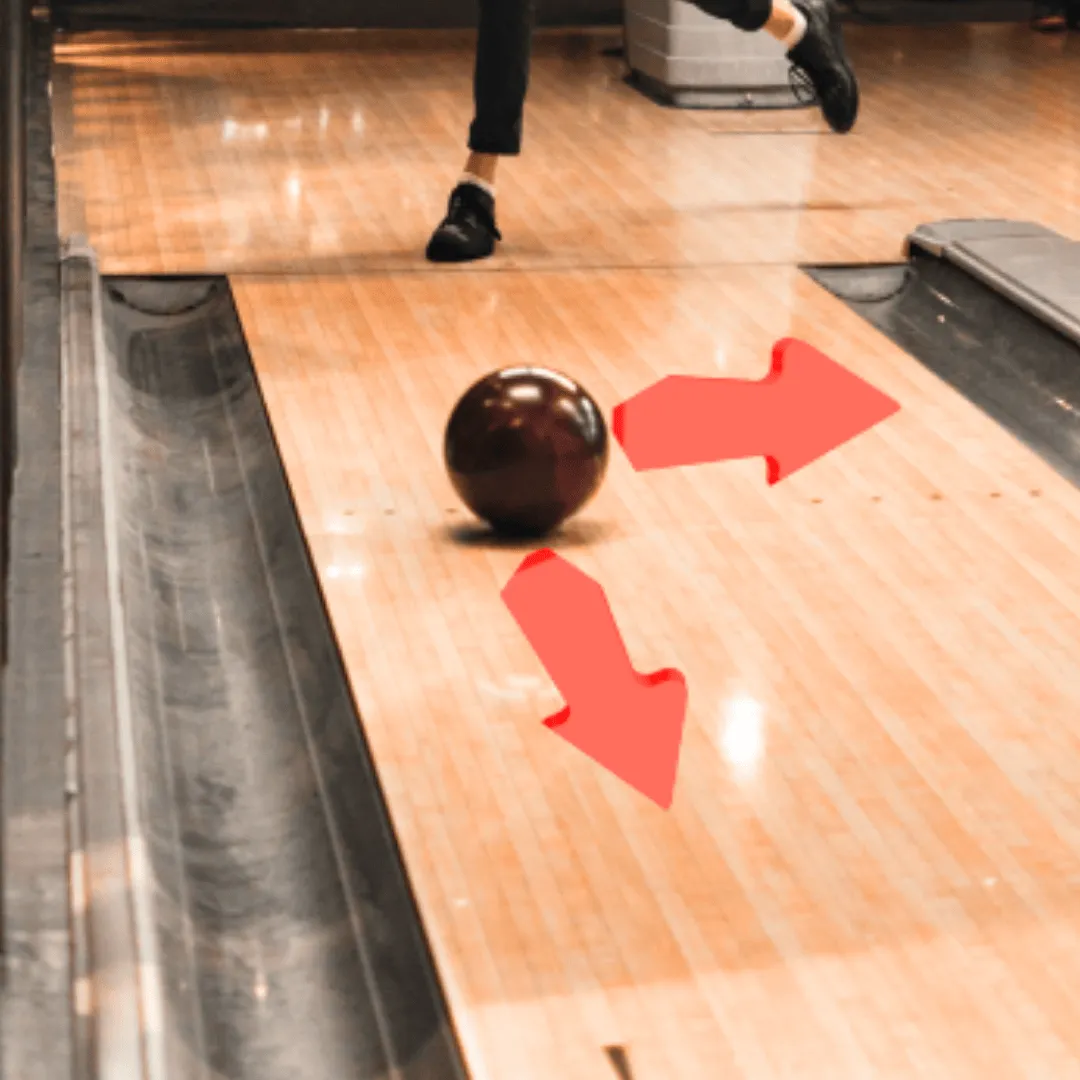
Understanding ball motion | Basics of axis rotation and axis tilt
Bowling is a sport that requires skill, precision, and an understanding of themechanics behind ball motion. Two critical factors that greatly influence thepath a bowling ball takes down the lane are axis rotation and axis tilt. Thesetwo concepts are frequently misinterpreted and misunderstood by many bowlers. Although it may be a challenging subject, this article aims to provide afundamental understanding of what Axis Rotation and Axis Tilt are, how theyare measured, and the significant impact they have on a bowling ball'strajectory. Axis Rotation Axis Rotation refers to the spin applied to a bowling ball during itsdelivery. It determines the orientation of the ball's rotation axis as it rolls down thelane. This rotation can be clockwise or counterclockwise and is usuallydescribed by a numerical value ranging from 0 to 90 degrees. Measuring Axis Rotation Axis Rotation is typically measured by observing the angle at which the ball'score is positioned relative to the horizontal axis. It can be determined by visual inspection of the ball's track marks or byusing advanced tracking systems that analyze ball motion. Axis Tilt Axis Tilt refers to the angle at which a bowling ball is tilted on itsvertical axis while traveling down the lane. It is determined by the inclination of the finger and thumb holes relative tothe ball's vertical axis. Axis Tilt can range from 0 to 90 degrees andinfluences the ball's skid, hook potential, and overall motion. Measuring Axis Tilt Axis Tilt can be measured by examining the angle formed between the ball'strack and the horizontal axis. Similarly to Axis Rotation, this can be done visually or with the help oftracking systems that capture ball motion data. Effects of Axis Rotation and Axis Tilt on Ball Motion Hook Potential. Axis Rotation plays a significant role in the amountof hook or curve a bowling ball generates. A higher degree of rotation willcreate a more aggressive hook pattern, making the ball curve earlier andcover more boards on the lane. Conversely, a lower rotation will result in amore subtle hook.Length of Slide. Axis Tilt affects the length of the ball's slidebefore it begins to hook. A higher tilt angle reduces the ball's contactwith the lane surface, allowing it to skid for a longer distance.Conversely, a lower tilt angle increases friction, causing the ball to starthooking earlier.Ball Path Variation. Combining Axis Rotation and Axis Tilt allowsbowlers to manipulate the ball's path down the lane. Skillful manipulationof these factors can help bowlers adapt to changing lane conditions andincrease their chances of hitting the pocket consistently.Pin Carry. Optimal Axis Rotation and Axis Tilt can improve pin carry,which refers to the ability of the ball to knock down pins effectively. Byadjusting the ball's rotation and tilt, bowlers can optimize pin entryangles and maximize pin carry potential. Hook Potential. Axis Rotation plays a significant role in the amountof hook or curve a bowling ball generates. A higher degree of rotation willcreate a more aggressive hook pattern, making the ball curve earlier andcover more boards on the lane. Conversely, a lower rotation will result in amore subtle hook. Hook Potential. Length of Slide. Axis Tilt affects the length of the ball's slidebefore it begins to hook. A higher tilt angle reduces the ball's contactwith the lane surface, allowing it to skid for a longer distance.Conversely, a lower tilt angle increases friction, causing the ball to starthooking earlier. Length of Slide. Ball Path Variation. Combining Axis Rotation and Axis Tilt allowsbowlers to manipulate the ball's path down the lane. Skillful manipulationof these factors can help bowlers adapt to changing lane conditions andincrease their chances of hitting the pocket consistently. Ball Path Variation. Pin Carry. Optimal Axis Rotation and Axis Tilt can improve pin carry,which refers to the ability of the ball to knock down pins effectively. Byadjusting the ball's rotation and tilt, bowlers can optimize pin entryangles and maximize pin carry potential. Pin Carry Axis Rotation and Axis Tilt are essential aspects of understanding ball motionin bowling. They influence the hook potential, length of slide, ball pathvariation, and pin carry. By mastering these concepts and making the necessaryadjustments, bowlers can enhance their overall performance and adapt todifferent lane conditions. Understanding the interplay between Axis Rotation,Axis Tilt, and lane dynamics can truly elevate a bowler's game to new levelsof precision and consistency.
Tips & TricksOctober 29, 2025
How to Bowl on Dry Lanes - Expert Tips for Bowlers
Many bowlers struggle when the lanes dry out. The ball hooks early, misses thepocket, and becomes tough to control. Knowing how to bowl on dry lanes givesyou an advantage. With the right ball choice, speed adjustments, and targeting, dry conditionscan become manageable. This article covers the key aspects of how to bowl ondry lanes with confidence. Understanding Dry Lanes On dry lanes, friction is high and the ball reacts quickly. A shot thatnormally hits the pocket may now barely touch the head pin. Dry lanes appear for many reasons. First, how fast a lane dries depends on theviscosity of the oil used. Thinner oils move faster, which makes the lane dryout quicker. Short oil patterns also typically have lower volume, so they dryfaster. Lane surface matters too — wooden lanes dry out faster than syntheticones. Even heat and humidity inside the bowling center can accelerate theprocess by evaporating oil. Beginners often enjoy dry lanes because they see more hook than usual, evenwithout high speed or revs. Experienced bowlers, with more power and rotation,usually struggle more. That’s why learning how to bowl on dry lanes is anessential skill for every serious player. How to Bowl on Dry Lanes? 1. Use the Right Bowling Balls Choose weak reactive pearl ball that creates delayed hook. Or, even go withplastic one. Here are some of the best bowling balls for dry lanes: Motiv Max Thrill Pearl - best Motiv bowling ball for dry lanesStorm Typhoon - best Storm bowling ball for dry lanesHammer Purple Pearl Urethane - best urethane bowling ball for dry lanesStorm Mix- best plastic bowling ball for dry lanes Motiv Max Thrill Pearl - best Motiv bowling ball for dry lanes Motiv Max Thrill Pearl - best Motiv bowling ball for dry lanes Storm Typhoon - best Storm bowling ball for dry lanes Storm Typhoon - best Storm bowling ball for dry lanes Hammer Purple Pearl Urethane - best urethane bowling ball for dry lanes Hammer Purple Pearl Urethane - best urethane bowling ball for dry lanes Storm Mix- best plastic bowling ball for dry lanes Storm Mix - best plastic bowling ball for dry lanes Please note that some links in this article may be affiliate links. If youmake a purchase, we may earn a small commission at no extra cost to you.This helps us cover the costs of creating better content for you.When lanes hook early, aggressive reactive balls you normally useon heavy oil become your worst enemy. They grab too soon and lose energybefore reaching the pins. Please note that some links in this article may be affiliate links. If youmake a purchase, we may earn a small commission at no extra cost to you.This helps us cover the costs of creating better content for you. Instead, go weaker. Reactive pearl bowling balls work best, as they skidthrough the front part of the lane and delay the hook. Urethane or evenplastic options also help most bowlers by providing control when the lanefeels wild. Also, look forhigh RG,low differentialdesigns that push the hook further down the lane. A polished surface or a3000–4000 grit finish also helps. high RG low differential 2. Adjust Your Speed and Release One of the best things you can do on dry lanes is increase ball speed. Theeasiest way is to move your feet back on the approach. This naturallyincreases foot speed and forces you to throw the ball a little faster. However, speed alone can create side effects. Adding speed often adds revs,which makes the ball hook just as much. A smart adjustment is to smooth out your release. Stay behind the ball and useless finger rotation for an end-over-end roll. Open your wrist to lower revrate and keep the ball straighter. These subtle changes are a cornerstone of how to bowl on dry lanes withconsistency. 3. Adjust Your Angles Fast On dry lanes, the ball dives left quickly (or right if you are a lefty). Thatmeans you need to move. The rule is simple: move in the direction of yourmiss. For right-handers, missing left means moving left. Use the 2:1 method - two boards with your feet, one with your eyes. On drylanes, larger moves like 4:2 or even 6:3 may be necessary, so don’t be afraidto move more if needed. By moving closer to the center, you may also find moreoil, which helps the ball hold longer. Keep shifting until the ball finds the pocket. Flexibility is often thedifference between just surviving and actually scoring. 4. Surface and Ball Changes On dry lanes, surface prep is critical. Rough finishes like 2000 grit hook tooearly. Instead, polish the cover or use higher grit sanding for added skid. In addition, keep your gear clean. Use abowling ball cleanerbefore and after the game. It helps restore length and reduces overreaction.These simple tools are essential when learning how to bowl on dry lanes. bowling ball cleaner 5. Adjust to the Lane Changes Dry lanes change constantly. Every shot burns more oil, making the lane hookeven earlier. As the transition builds, move deeper inside or switch to weaker equipment.Experienced players sometimes add loft to clear the front part of the lane,though lofting can be difficult for amateur bowlers.Like anyskill, loft takes practice. Controlled loft is one of the most effectivetechniques in how to bowl on dry lanes. The key is awareness. Wait too long to adjust and you’ll leave flat tens orsplits. Adjust quickly and the lane works with you instead of against you. Common Mistakes on Dry Lanes Throwing too slow.Not flattening your hand.Using aggressive equipment designed for heavy oil.Refusing to move deeperwhen the ball hooks early.Ignoring polish, surface prep, and maintenance. Throwing too slow. Not flattening your hand. Using aggressive equipment designed for heavy oil. Refusing to move deeperwhen the ball hooks early. Ignoring polish, surface prep, and maintenance. Avoiding these mistakes is as important as the right adjustments to understand how to bowl on dry lanes. Final Thoughts on How To Bowl on Dry Lanes Dry lanes expose every weakness in your game. They punish over-reaction andreward precision and quick thinking. If you want to master how to bowl on dry lanes, choose weaker balls, adjustyour release, and keep moving to find the pocket. Dry conditions aren’t a curse. They’re a test of patience, awareness, andadaptability. Bowlers who pass that test prove they can score anywhere.
Tips & TricksSeptember 19, 2025