Bowler's Academy

see all
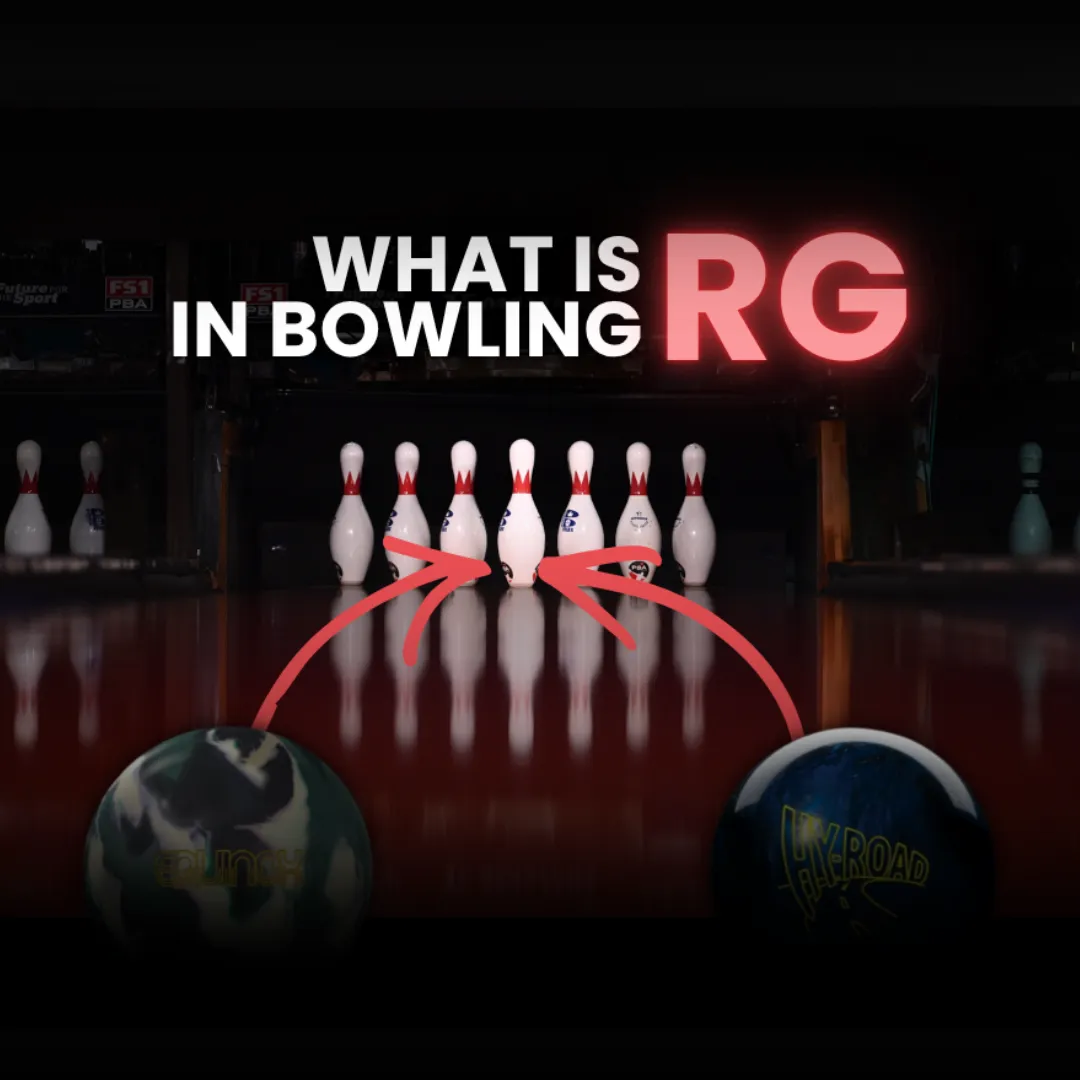
What is RG in bowling? Low, medium, and high RG explained

What Is RG in Bowling? Low, Medium and High RG Explained

When you're buying a new bowling ball or reading bowling ball reviews, you'llalways come across a stat called RG, or Radius of Gyration. But what exactlydoes that mean - and why on earth should you care? RG in bowling means Radius of Gyration. It tells you howquickly a bowling ball revs up, which affects how early or late it hooks onthe lane. RG in bowling means Radius of Gyration. Low RG balls start up sooner, medium RG balls create a balanced shape, andhigh RG balls push farther down the lane before changing direction. Understanding RG helps you read bowling ball specs with more confidence, matcha ball to the lane condition, and build a smarter bowling ball arsenal. In this guide, we go into details and explain what RG means in bowling, how low, medium, and highRG differ, and when to use each one. Some links in this article are affiliate links, which means we may earn asmall commission if you make a purchase at no extra cost to you. This helpsus keep our content free and accessible. What Does RG Mean in Bowling? RG, or Radius of Gyration, refers to how mass is distributed inside a bowlingball. More specifically, it shows how far that mass sits from the center ofthe core. It is measured in inches and usually falls between 2.46 and 2.80. RG tells you how quickly a bowling ball revs up and transitions from skid tohook. In a low RG ball, more of the mass sits closer to the center of the core. In ahigh RG ball, more of the mass sits farther away from the center. A simple way to understand this is to think about a figure skater. When theskater pulls the arms in, the body spins faster. That is like a low RG bowlingball, where the mass is closer to the center. When the skater stretches thearms out, the spin slows down. That is like a high RG bowling ball, where themass is farther from the center. The lower the RG, the sooner the ball wants to rev up and leave the skidphase. The higher the RG, the longer it pushes down the lane before making itsmove. How Does RG Affect Bowling Ball Motion? Understanding RG helps you predict how a bowling ball will behave down thelane and choose the right reaction for the conditions you are bowling on. Low RG balls rev up earlier and hook sooner. They areuseful on heavier oil conditions when you want the ball to read the laneearlier or when you want to play straighter angles.Medium RG balls create a balanced shape. They are oftencalled benchmark balls because they offer a controlled, readable motion onmany conditions.High RG balls glide longer before revving up, which helpsthem save energy for a stronger move downlane. They are often a good matchfor lighter oil or for players who want more backend shape. Low RG balls rev up earlier and hook sooner. They areuseful on heavier oil conditions when you want the ball to read the laneearlier or when you want to play straighter angles. Low RG balls Medium RG balls create a balanced shape. They are oftencalled benchmark balls because they offer a controlled, readable motion onmany conditions. Medium RG balls High RG balls glide longer before revving up, which helpsthem save energy for a stronger move downlane. They are often a good matchfor lighter oil or for players who want more backend shape. High RG balls RG is important, but it does not work alone. Coverstock, surface,differential, layout, and lane pattern all help shape the full reaction. Ifyou want to understand the lane side of the equation better, read our guide tobowling oil patterns. differential bowling oil patterns RG Categories Explained Here is a simple breakdown of the RG categories you will usually see onbowling ball spec sheets: RG CategoryRG RangeBall Motion BehaviorBest Used OnLow RG2.46 - 2.50Revves up quickly, earlier hookHeavy oil, earlier lane readMedium RG2.51 - 2.53Smooth transition, balanced reactionVersatile, benchmark ballsHigh RG2.54 and upDelayed rev-up, more length and backend motionMedium-dry lanes, later response RG CategoryRG RangeBall Motion BehaviorBest Used On RG Category RG Range Ball Motion Behavior Best Used On Low RG2.46 - 2.50Revves up quickly, earlier hookHeavy oil, earlier lane readMedium RG2.51 - 2.53Smooth transition, balanced reactionVersatile, benchmark ballsHigh RG2.54 and upDelayed rev-up, more length and backend motionMedium-dry lanes, later response Low RG2.46 - 2.50Revves up quickly, earlier hookHeavy oil, earlier lane read Low RG 2.46 - 2.50 Revves up quickly, earlier hook Heavy oil, earlier lane read Medium RG2.51 - 2.53Smooth transition, balanced reactionVersatile, benchmark balls Medium RG 2.51 - 2.53 Smooth transition, balanced reaction Versatile, benchmark balls High RG2.54 and upDelayed rev-up, more length and backend motionMedium-dry lanes, later response High RG 2.54 and up Delayed rev-up, more length and backend motion Medium-dry lanes, later response Which RG Should You Choose and When? The best answer depends on how many bowling balls you own and what laneconditions you face most often. If you only want one versatile option, a medium RG benchmark ball is usuallythe safest starting point. If you are building a full bowling ball arsenal,having low, medium, and high RG options gives you much better coverage as thelanes change. A low RG bowling ball is a strong choice for fresh oil,heavier volume, or situations where you want the ball to start sooner.Medium RG bowling balls are great benchmark choices. Theyhelp you read the lane and build a game plan around a more neutral shape.A high RG bowling ball helps delay the hook and store moreenergy for the backend. It becomes especially useful during transition or ondrier lane conditions. A low RG bowling ball is a strong choice for fresh oil,heavier volume, or situations where you want the ball to start sooner. low RG Medium RG bowling balls are great benchmark choices. Theyhelp you read the lane and build a game plan around a more neutral shape. Medium RG A high RG bowling ball helps delay the hook and store moreenergy for the backend. It becomes especially useful during transition or ondrier lane conditions. high RG Ball Examples by RG Category Now that you know what RG in bowling means, let’s look at some real examplesof low, medium, and high RG bowling balls, allreviewed on BowlingLife. reviewed on BowlingLife Low RG Bowling Ball Examples Storm Equinox Solid - Smooth and early on fresh heavy oil patterns.Motiv Evoke Hysteria- Controllable with enough continuation on medium-heavy oil. Storm Equinox Solid - Smooth and early on fresh heavy oil patterns. Storm Equinox Solid Motiv Evoke Hysteria- Controllable with enough continuation on medium-heavy oil. Motiv Evoke Hysteria Medium RG Bowling Ball Examples Hammer Black Widow 3.0 Dynasty - Predictable motion for medium-heavy oil patterns.Roto Grip Transformer - Controllable yet powerful motion through the pins. Hammer Black Widow 3.0 Dynasty - Predictable motion for medium-heavy oil patterns. Hammer Black Widow 3.0 Dynasty Roto Grip Transformer - Controllable yet powerful motion through the pins. Roto Grip Transformer High RG Bowling Ball Examples DV8 Hater Pearl- Clean through the fronts with a stronger backend move.Storm Hy-Road- A clean and classic option for medium-dry lanes. DV8 Hater Pearl- Clean through the fronts with a stronger backend move. DV8 Hater Pearl Storm Hy-Road- A clean and classic option for medium-dry lanes. Storm Hy-Road RG Bowling FAQ What does RG mean in bowling? RG means Radius of Gyration. It describes how mass is distributed inside abowling ball and helps predict how quickly the ball will rev up. What is the difference between low RG and high RG bowling balls? Low RG bowling balls start up sooner and read the lane earlier. High RGbowling balls push farther down the lane before they respond. When should you use a low RG bowling ball? Low RG balls are usually best on heavier oil conditions or when you want asmoother and earlier reaction. When is a high RG bowling ball best? High RG balls are often best on medium-dry conditions or later in the blockwhen you want more length and a later move. Final Thoughts RG may sound technical at first, but once you understand it, it becomes one ofthe most useful bowling ball specs you can learn. It is not about low RG being better than high RG. It is about matching theright RG to your style, your speed and rev rate, and the lane conditions infront of you. Once you understand what RG in bowling means, choosing the rightball gets much easier. {"@context": "https://schema.org","@type": "FAQPage","mainEntity": [{"@type": "Question","name": "What does RG mean in bowling?","acceptedAnswer": {"@type": "Answer","text": "RG, or Radius of Gyration, describes how mass is distributed inside a bowling ball. It helps predict how quickly the ball revs up and transitions from skid to hook."}},{"@type": "Question","name": "What is the difference between low RG and high RG bowling balls?","acceptedAnswer": {"@type": "Answer","text": "Low RG bowling balls rev up sooner and read the lane earlier. High RG bowling balls push farther down the lane before changing direction."}},{"@type": "Question","name": "When should you use a low RG bowling ball?","acceptedAnswer": {"@type": "Answer","text": "A low RG bowling ball is usually best on heavier oil conditions or when you want the ball to start sooner and create a smoother, earlier reaction."}},{"@type": "Question","name": "When is a high RG bowling ball best?","acceptedAnswer": {"@type": "Answer","text": "A high RG bowling ball is often best on medium-dry conditions or later in transition when you want more length and a later move downlane."}}]}
Health & Nutrition

see all
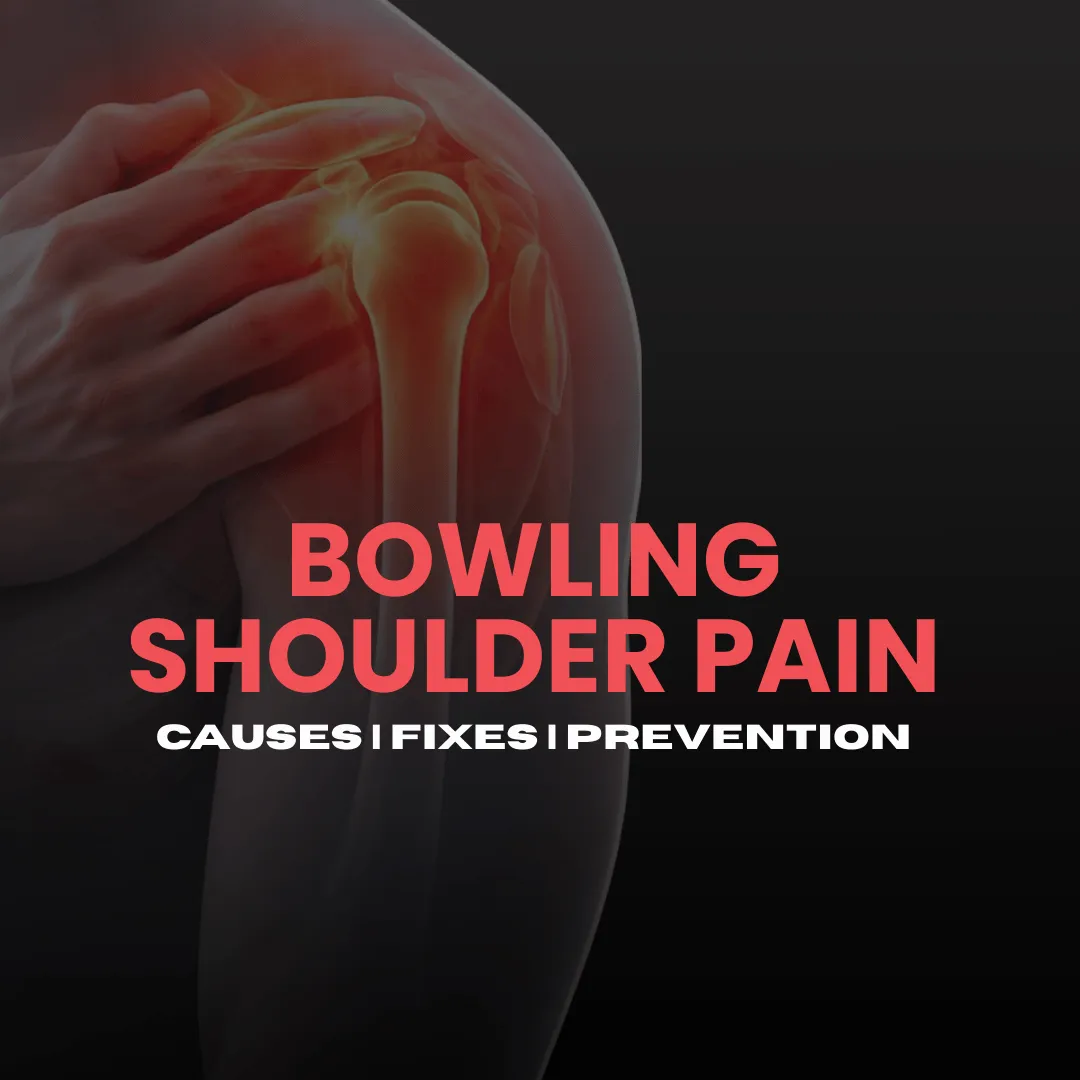
Illustration showing bowling shoulder pain during the bowling swing.

Bowling Shoulder Pain: Causes, Relief, and Prevention

Bowling shoulder pain is one of the most common problems bowlers deal with.Many bowlers notice soreness, stiffness, or discomfort in the shoulder afterpractice or competition, but are not sure why it happens. Bowling shoulder pain usually builds up over time. Repeated swings, poor warmup, and technique issues slowly put stress on the shoulder. The good news isthat bowling shoulder pain is often preventable with simple changes. Why bowlers experience bowling shoulder pain Bowling shoulder pain often starts with repeated stress on the shoulder joint.Every shot includes a swing, rotation, and release. When this motion repeats many times, the shoulder muscles and tendons canbecome irritated. Common causes of bowling shoulder pain include bowling too often, skippingwarm-ups, and using too much force. Many bowlers try to throw the ball harderwith their arm instead of letting the swing stay loose. When the shoulderworks harder than needed, bowling shoulder pain becomes more likely. Long bowling sessions and tournaments increase the risk. Bowling shoulder painoften shows up after several games.Worst think is that bowling shoulder pain often does not appear on its own. Many bowlers who struggle with shoulder issues also deal with bowling back pain, especially when posture or balance during the swing is off. bowling back pain Common Shoulder Problems Linked to Bowling Shoulder Pain Most bowling shoulder pain does not come from one bad throw. It usuallydevelops slowly as the shoulder gets overworked.A rotator cuff strain is one of the most common causes of bowling shoulderpain. The rotator cuff helps control shoulder movement. When it gets tired orsore, bowlers may feel pain or weakness.Shoulder tendon pain is another frequent issue. This happens when tendonsbecome irritated from repeated use. Bowling shoulder pain may appear duringthe swing or later in the day.Pain near the front of the shoulder can also come from the biceps tendon,especially during the release.Grip pressure also plays a role. Bowlers dealing with thumb swelling in bowling often squeeze the ball harder, which can increase tension through the arm and contribute to bowling shoulder pain. thumb swelling in bowling Is Bowling Shoulder Pain Unavoidable? Bowling shoulder pain is not unavoidable. Bowling itself is not harmful whendone with good habits. Most bowling shoulder pain comes from poor technique, lack of strengthbalance, or too much bowling without rest. A smooth swing puts far less stresson the shoulder than a forced one. Bowlers who muscle the ball are more likelyto develop bowling shoulder pain. With proper care, many bowlers can bowl for years without shoulder problems. How to Relieve Bowling Shoulder Pain When bowling shoulder pain appears, reducing strain is important. Bowlingthrough pain often makes the problem worse. Short rest periods help calm the shoulder. Light stretching and gentlemovement can reduce stiffness without causing more pain. Ice can help early onif bowling shoulder pain feels sore or swollen. Avoid heavy sessions until pain improves. Returning too fast is a commonreason bowling shoulder pain becomes long-lasting. How to Prevent Bowling Shoulder Pain Preventing bowling shoulder pain starts before the first shot. A short warm-uphelps prepare the shoulder for repeated swings. Simple arm circles and lightband exercises improve movement and blood flow.Strength balance matters. Many bowlers focus on the front of the body andforget the upper back. Strong back and shoulder support muscles reduce stressand lower the risk of bowling shoulder pain.Lower-body stability matters more than many bowlers realize. Issues like bowling knee pain can change timing and balance, forcing the upper body and shoulder to work harder during the swing.Technique is more important than power. A relaxed swing that uses gravityprotects the shoulder. If your arm feels tense, bowling shoulder pain is morelikely. bowling knee pain Rest days are just as important. Bowling shoulder pain often appears when thebody does not have time to recover. When Bowling Shoulder Pain Needs Medical Help Some bowling shoulder pain is mild and temporary. Other signs should not beignored. Sharp pain, sudden weakness, or pain that affects daily tasks may point to abigger problem. If bowling shoulder pain lasts several weeks or gets worse,seeing a doctor or physiotherapist is a smart step. Early care often prevents long breaks from bowling. Final Thoughts on Bowling Shoulder Pain Bowling shoulder pain is common, but it should not be ignored. In most cases,bowling shoulder pain develops slowly due to repeated motion, poorwarm up, or using too much force. By warming up, and keeping a relaxed swing,bowlers can greatly reduce bowling shoulder pain. Paying attention to earlysigns helps you stay healthy and enjoy bowling longer.
Health & NutritionJanuary 31, 2026
Bowler stretching to prevent bowling back pain before a game

Bowling Back Pain: Prevention and Relief Tips That Work

Back pain has become one of the most common physical issues in the 21stcentury. And bowling, unfortunately, is no exception. Bowling back pain is more common than most think. Many bowlers deal withsoreness, stiffness, or serious injury. If left untreated, it can ruin yourgame, cause missed tournaments, or lead to long-term issues. In this article, you’ll learn what causes bowling back pain and how to preventit. We’ll also cover proven tips to manage pain and stay strong on the lanes. Please note: Some links in this article may be affiliate links. We may earna small commission to support our work, at no extra cost to you. Causes of Bowling Back Pain Bowling forces your body to move in an uneven way. Most of the strain goes toyour dominant side. This causes a muscular imbalance - one side becomesoverused while the other stays weak. Over time, that imbalance puts pressure on your spine and lower back. It’s oneof the most common causes of bowling back pain. Another major cause is muscle strain. A sudden or forceful movement - such asan overextension during a release - can lead to painful strain. It may alsotear the muscles, ligaments, or tendons in the lower back. Bowling players are professional athletes, so injuries are inevitable. Bowlersoften rush to get back on the lanes, so past injuries that have not healed yetcan also cause bowling back pain. Eventually, poor mechanics cause more strain. One small issue can triggersoreness in other parts of the body. Ignoring these early signs often leads tolong-term bowling back pain. How to Prevent and Relieve Bowling Back Pain Every bowler should be proactive in caring for their physical health. Here arefive essential strategies to help reduce and manage bowling back pain. 1. Therapeutic treatment A medical expert is always the best option to treat bowling back pain.Depending on your condition, the therapist will design a personal plan. It mayinclude stretching, strength, coordination, and relaxation exercises. Thesetargeted movements help eliminate the root causes of bowling back pain. 2. Exercising Exercising just 15 minutes a day can strengthen your core and back muscles.This helps prevent muscular imbalance and reduces the risk of bowling backpain. You don’t need a gym membership. Low-impact activities like walking,cycling, or at-home core workouts are more than enough. 3. Stretching Starting your bowling game or tournament without stretching is a big mistake.It puts unnecessary strain on your muscles. Lack of stretching reducesperformance and increases the risk of joint pain and muscle damage. Do basicstretches at least 20 minutes before the game to prevent bowling back pain. 4. Heat & Ice treatment Applying a cold pack on your back can help relieve pain and reduceinflammation. It also improves mobility after bowling. Cold therapy is greatcare for your body after a long day at the lanes. For best results, apply coldfor 15 minutes several times within 24 hours after bowling. Then switch toheat therapy using a heat pad or hot tub. This loosens tight back muscles andeases bowling back pain. We recommend using Reusable Hot&Cold Teraphy Pack. Reusable Hot&Cold Teraphy Pack Alternatively, for deeper muscle recovery, you can also use amassage gun. Designed for athletes, this massage gun helps release tight fascia, reducesoreness, and improve recovery time. We recommend usingTheraGunbecouse it is powerful yet very easy to use. massage gun TheraGun 5. Maintain a healthy weight Excess body weight puts extra strain on the lower back. For bowlers, it canshift the pelvis forward and affect balance. This change increases the risk ofpain or injury. Maintaining a healthy weight through good nutrition andregular activity supports long-term back health. A balanced lifestyle alsohelps prevent bowling back pain. Conclusion on Bowling Back Pain Bowling back pain doesn’t have to stop you from playing the sport you love.Most cases improve with smart habits and consistent care. Focus on proper warm-ups, strength work, and recovery after each game. Listento your body and rest when needed. Ignoring the pain can turn a small probleminto a long-term issue. If your pain continues, seek help from a physical therapist or sports doctor.With the right care and determination, you can return to the lanes strongerthan before. Want to protect your whole body while bowling? Check out our guide to theBest Bowling Shoes of 2025 - the right shoes can help prevent pain from head to toe! Best Bowling Shoes of 2025 - Best Bowling Shoes of 2025
Health & NutritionNovember 16, 2025
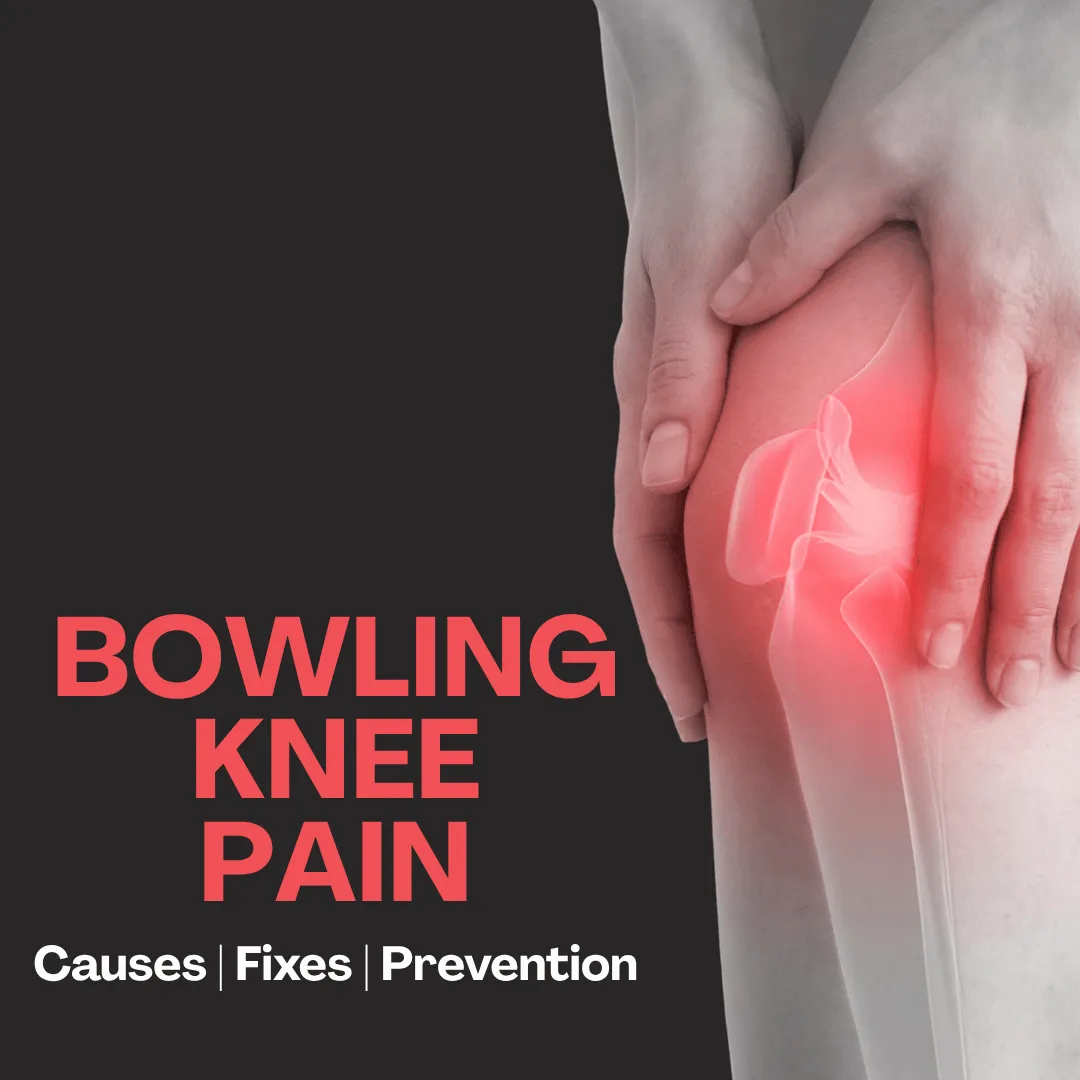
Bowling Knee Pain visual showing a person clutching their knee in pain with a red-highlighted joint illustration, paired with bold red and white text reading: 'Bowling Knee Pain – Causes | Fixes | Prevention' on a dark background

How To Prevent Bowling Knee Pain For Bowlers

Knee injuries are the most common type of injury in bowling. That’s whymany bowlers - no matter their age - wear a knee brace orkinesiology tapeto reduce pain and protect their joints. kinesiology tape But where does bowling knee pain come from? Why is it so common? And whydo so many bowlers eventually need surgery? In this article, we’ll break down what causes bowling knee pain, how bowlingaffects the knees, the most common injuries to watch for, and most importantly - how to prevent knee pain so you can keep bowling without pain.Please note that some links in this article may be affiliate links. Please note that some links in this article may be affiliate links. Why Does Bowling Knee Pain Occur? Bowling knee pain happens because of the stress bowling puts on yourbody. Each shot includes a fast approach, a strong slide, and a sudden stop -all while holding a 7-kilogram ball on a bent front knee. This movement puts heavy pressure on your knee joint. And that’s in a perfect shot. Add poor form, timing issues, or fatigue, andthe strain gets worse. Plus, bowling is a repetitive sport. That means thestress builds over time, often leading to pain. Key Causes of Bowling-Related Knee Pain There are many possible reasons for bowling knee pain, including past injuriesor extra body weight. But some causes are much more common than others. Bad slide The sliding knee takes a lot of force at the foul line. A poor slide can makethat force even worse. Too much slide may cause posterior knee pain, sincebowlers may lunge and lean back during release. Too little slide is evenriskier. Sudden stops with high impact can lead to serious injuries, such asan ACL (anterior cruciate ligament) tear. Overuse Training and competition are important, but too much can cause trouble. Whenknee muscles, tendons, and ligaments get overused, inflammation builds up.This leads to swelling, pain, and missed weeks of bowling. Speed A fast approach can hurt your knee. If your body has to stop suddenly at theline, the knee absorbs too much force. Bowling knee pain often resultswhen speed and a poor slide combine. Slow down, and aim for control, notpower. Bad release position Poor balance or aggressive moves like twisting, turning, or rotating your legcan add stress. Over time, this pressure builds and causes pain in the knee. Common Bowling Knee Injuries Pain is basically a signal from your body that something is not right. Youmust pay great attention here, as bowling knee pain can be caused by somethingfar more serious. Here are the most common injuries and diseases that causebowling knee pain. Patellofemoral Pain Syndrome (a.k.a. Runner's Knee) This is a broad term for several knee issues caused by repeated activity. Itcreates a dull, stinging pain on the inner side of the knee. The pain getsworse when walking, climbing stairs, running, or standing up and sitting down. Runner’s knee is often caused by overuse and frequent bending. Over time, thejoint wears down, muscles overstretch, and the knee becomes weak. Pain oftengoes away with rest, but usually comes back when you resume activity. Patellar Tendinitis This condition occurs due to constant overloading of the patellar ligament,causing micro-tears of the ligament and inflammation. After the onset ofpatellar ligament tendinitis, local pain and swelling at the top of thepatella occur. Local swelling and a burning sensation may come about,especially when kneeling and standing up from a squat position. Meniscal Tear It is a plate of fibrocartilage in the knee joint between the tibia and femurbones. It absorbs shock, helps transfer load, and increases overall stabilityin the knee joint. Meniscal tears can be degenerative or acute, butdegenerative ones are more common in bowling. These usually result fromoveractivity, weak or tight muscles, and poor pre-bowling exercise routines.There’s no quick fix for degenerative tears due to low blood flow in the area.That makes healing slow and gradual, often taking up to six months withoutbowling. Knee Ligament Tear This is another major injury that can happen while bowling. Despite the factthat there are four main ligaments in the knee. ACL (Anterior cruciate ligament) and PCL (Posterior cruciate ligament) - are injured for the mostpart. ACL is located in the front of the knee and is responsible for resistingabnormal forward movement of the tibia. Due to the biomechanics of bowlingsport and sudden stops at the foul line, ACL receives the lion’s share of allligament injuries. PCL is located in the back of the knee, and does theopposite, preventing the tibia from sliding backwards. PCL tear can happenwhen the bowler's slide is too long, making the athlete lean back to keep hisweight centered. Anterior cruciate ligament Posterior cruciate ligament How to Prevent Bowling Knee Pain and Injuries As you've seen, bowling knee pain is often caused by a mix of stress,form issues, and overuse — not just one injury. That’s why prevention matters.Small changes in gear, habits, and technique can keep your knees healthy andpain-free. Here are our top tips for avoiding bowling knee pain. Get your bowling shoes with a good fit Many bowlers invest in new bowling balls before they upgrade their shoes - butthat’s backward. Bowling shoes help with balance, control, and injuryprevention. Look for shoes with interchangeable soles and heels so you canmatch your slide to your game.We've picked some of the best bowling shoes on the market to elevateyour game. We've picked some of the best bowling shoes on the market to elevateyour game Get rid of a bowling sock Bowling socks can make you slide more than you should. They mimic aggressiveslide pads but don’t offer control. Every bowler needs a custom slide, matchedto their form and speed. A proper sole and heel combo does the job better -and safer - than a sock. Maintain your bowling shoes While not in use, shoes must be covered withshoe covers. This rule also applies when walking off the lane, during warm-up, etc. Justdon't forget to take it off before the throw. During the game, the slide padcovers with dust or lane oil residues, so after each throw, it is worthrefreshing it with abowling shoe brush- this way, the slide pad will last much longer.We've made some other high value tips to maintain your shoes in anotherarticle. shoe covers bowling shoe brush We've made some other high value tips to maintain your shoes in anotherarticle. Warm-up and stretch before and after bowling Warm-ups raise your body temperature and get muscles ready to move. Stretchingimproves flexibility and protects your knees from injury. Always warm upfirst, then stretch. This reduces tendon strain and helps prevent bowling kneepain. Maintain your body weight Extra body weight adds more pressure to your knees. Many bowlers are nowrealizing the role of good nutrition and fitness. A healthy weight reducesinjury risk and helps you bowl pain-free for years to come.We've made some helpful nutrition tips for you too. We've made some helpful nutrition tips for you too. Use knee brace or sleeve If you're playing long sessions, extra support can help. A quality knee braceor compression sleeve can reduce swelling, ease pain, and even prevent injury.Modvel Elite Knee Brace provides optimal support and is used byprofessionals during and after exercise.Plus, it comes woth different colors and sizes to fit all. Modvel Elite Knee Brace provides optimal support and is used byprofessionals during and after exercise. FAQ Why do bowlers often experience knee pain? Bowlers often experience bowling knee pain because the sport puts a lotof stress on the knees. Fast footwork, a heavy ball, and sudden stops createhigh pressure on the joints. This pressure gets worse with poor form, fatigue,or overuse. What are common knee injuries in bowling and their impact? The most common injuries linked to bowling knee pain include Runner’sKnee, Patellar Tendinitis, Meniscal Tears, and Ligament Tears. These injuriesoften come from overuse, poor slide mechanics, or lack of stretching. They cancause pain, swelling, and even require long breaks from the sport — or surgeryin severe cases. How do you fix bowling knee pain or injuries? To manage bowling knee pain, rest and ice are great for short-term relief. Inthe long run, it helps to stretch, strengthen key muscles, and improve yourform. Prevention is key — wear proper shoes, avoid using slide socks, warm upproperly, and keep a healthy body weight. What causes inner knee pain in bowlers? If the pain is on the inside of your knee and gets worse when walking,running, or climbing stairs, you may have Patellofemoral Pain Syndrome(Runner’s Knee). It’s a common cause of bowling knee pain, especially if youbowl often or bend your knees a lot. This type of pain often fades with restbut can return once activity resumes. What is the best treatment for knee pain? The best treatment depends on the cause of the pain. Many bowlers managebowling knee pain with a mix of rest, physical therapy, supportive gear,and weight control. More serious injuries may require medical treatment orsurgery. Always consult a healthcare professional for guidance based on yourcondition.
Health & NutritionOctober 20, 2025
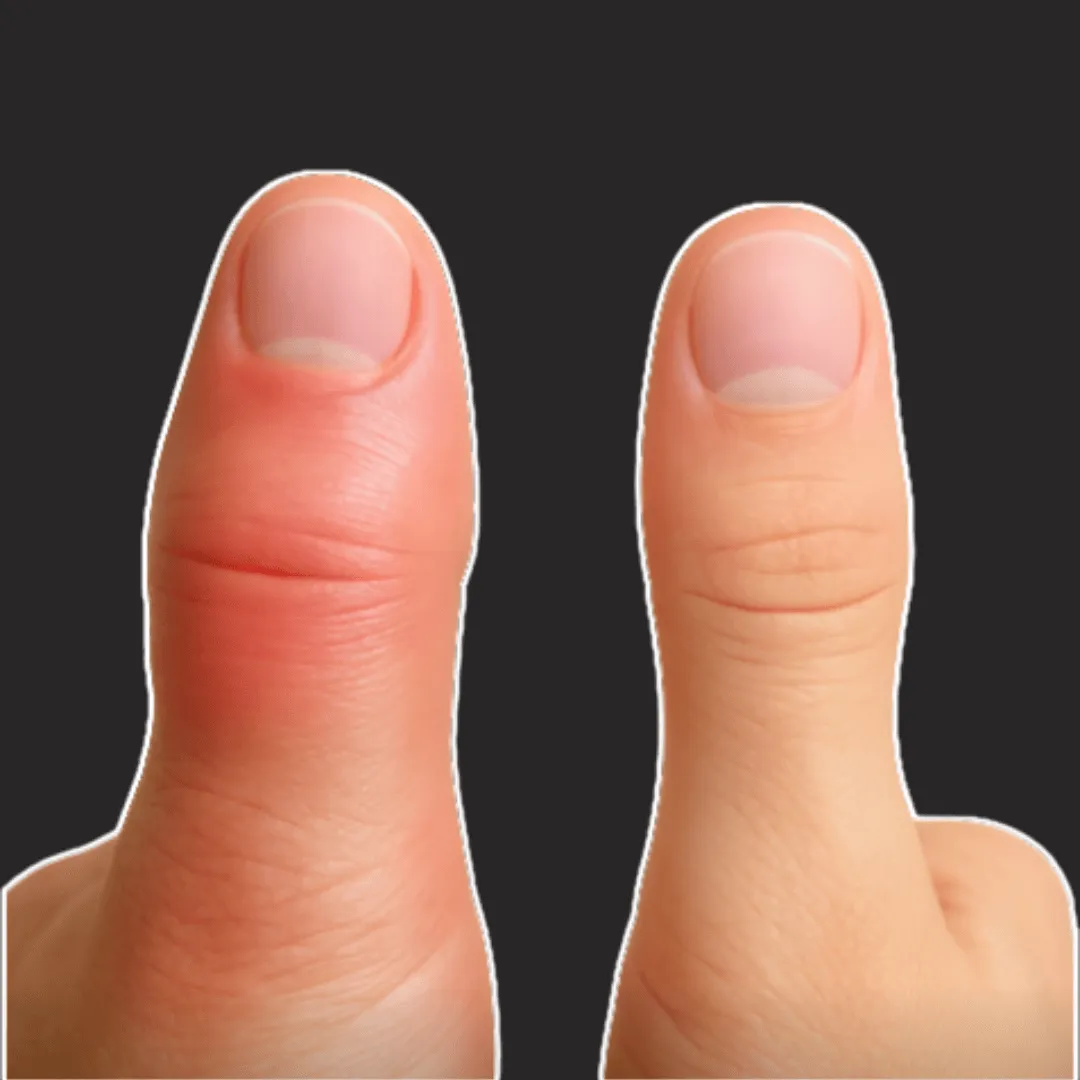
Close-up comparison of a swollen thumb and a normal thumb side by side

Thumb Swelling in Bowling: Causes, Fixes, and Tips

If your thumb swells during or after bowling, you’re not alone. The author of this article once had such bad swelling that he had to widen his thumbhole just to fit his thumb in. And once it healed, he needed 18! thumb tapes to snug it back up again. So yes - many bowlers deal with this painful, frustrating issue. Thumb swelling in bowling creates inconsistant grip, reduces control, and can even lead to injury. It doesn’t matter if you're a casual league player or a pro - the problem can strike anyone. The good news? Most swelling comes from fixable causes. With smart changes and the right tools, you can keep your thumb healthy and your game strong. In this article, you'll learn how to prevent swelling, when to rest, and what recovery tools really help. Let’s break it down.This article contains affiliate links. If you purchase through them, BowlingLife may earn a small commission at no additional cost to you. It helps us keep producing free, helpful content for bowlers worldwide. This article contains affiliate links. If you purchase through them, BowlingLife may earn a small commission at no additional cost to you. It helps us keep producing free, helpful content for bowlers worldwide. What Causes Thumb Swelling in Bowling? Thumb swelling in bowling happens when your thumb faces too much pressure and friction during play. Every time you grip and release the ball, you create stress on your skin, muscles, and joints. Over time, this leads to inflammation. The tighter the fit, the faster it can happen. Poor ball fit is one of the main reasons bowlers experience swelling. If the thumb hole is too tight, it restricts blood flow. If it's too loose, your thumb can over-grip, creating extra friction. Bowlers who squeeze the ball instead of letting it rest in the hand are more likely to get swelling. Dehydration also plays a role. If your body holds less water, soft tissue tends to swell more under pressure. In short, swelling comes from a mix of tension, poor fit, and stress. The next section covers how to avoid that. How to Avoid Thumb Swelling in Bowling Thumb swelling in bowling is avoidable with the right steps. Get the Perfect Fit First, make sure your ball fits your hand. A proper fit reduces pressure and helps the thumb move cleanly.Visit a pro shop to check the thumb hole size and angle. A custom fit makes a big difference. Avoid Gripping Too Hard Don’t squeeze the ball. A relaxed grip not only reduces tension but also improves accuracy. If you feel like you have to squeeze the ball to keep it from falling off during your throw, your fit might be off. Visit your local pro shop to get it checked. Warm Up Your Hand Before bowling, stretch and warm up your fingers. This increases blood flow and lowers the chance of sudden swelling. Hydrate Before and During Bowling Dehydration is the most common cause of swelling we usually see in bowlers. Since most competitions start in the morning - when lymphatic flow is slower due to lower muscle activity -drinking plenty of water can help reduce swelling more quickly. Aim to drink 1–2 liters of water before competition, and continue sipping small amounts throughout your games. Use Tape Strategically Next, add bowling tape to adjust tightness. You can layer it to match changes in swelling throughout the day. Thumb tape also reduces skin friction and improves release. Take Breaks During Play In long sessions, take breaks between games. Even short rests help your thumb recover and reduce built-up stress. Holding your hand above heart level can also help reduce swelling - this simple trick uses gravity to lower pressure in the blood vessels, encouraging lymphatic drainage. Cool Down After Bowling After play, ice your thumb for 10–15 minutes. This helps with recovery and stops swelling before it starts. These habits protect your hand and help you stay on the lanes longer. Remember - prevention is always easier than recovery. Switch to Two-Handed Just kidding—I couldn’t help myself. But seriously, this will definitely help reduce thumb swelling in bowling once and for all! Best Products to Prevent and Manage Thumb Swelling Best Products to Prevent and Manage Thumb Swelling Along with good habits, the right tools can help reduce thumb swelling in bowling and speed up recovery. 1. Reusable Thumb Ice Pack After bowling, icing your thumb is one of the best ways to reduce swelling and pain. Try this Thumb Wrist Ice Pack. It stays in place and delivers targeted cold (and hot) therapy in minutes. We keep one of these in the freezer at all times. It not only reduce thumb swelling in bowling, but also helps with sore wrist joints after league night. Thumb Wrist Ice Pack Thumb Wrist Ice Pack 2. Bowling Thumb Tape Thumb tape is essential for every bowler who use thumb. It protects your skin, adjusts thumb fit, and prevents swelling during long sessions. We recommend VISE Hada Patch - flexible, breathable, and easy to layer. VISE Hada Patch VISE Hada Patch 3. Hand Massager Using a massage tool boosts blood flow and helps sore fingers recover faster. The Voluart Hand Massager offers deep tissue relief and pressure control. It’s a favorite among athletes dealing with overuse injuries. The Voluart Hand Massager The Voluart Hand Massager No product replaces good grip, but the right tools can help preventthumb swelling in bowling. Combine them with good habits, and your thumb will thank you. FAQ FAQ Why does my thumb swell after bowling? Thumb swelling in bowling often comes from poor fit, tight grip, or overuse.Repetitive pressure builds inflammation in the thumb joint and surrounding tissue. How long does thumb swelling last? It depends on the cause. Mild swelling may go down in a few hours.But if you're bowling often, it may last days without proper care. Can thumb swelling be a sign of injury? Yes. If swelling is sharp, painful, or doesn’t go away, you may have tendon strain or joint irritation. Talk to a doctor before it gets worse. Should I bowl with a swollen thumb? No. Though, it is not always possible. Bowling through swelling may cause further damage. Rest your hand and use tape or ice packs to reduce stress on the joint. What’s the fastest way to reduce thumb swelling after bowling? Use cold therapy right after bowling. Elevate your hand above heart level, drink plenty of water, and use a recovery tools if needed.
Health & NutritionJuly 27, 2025
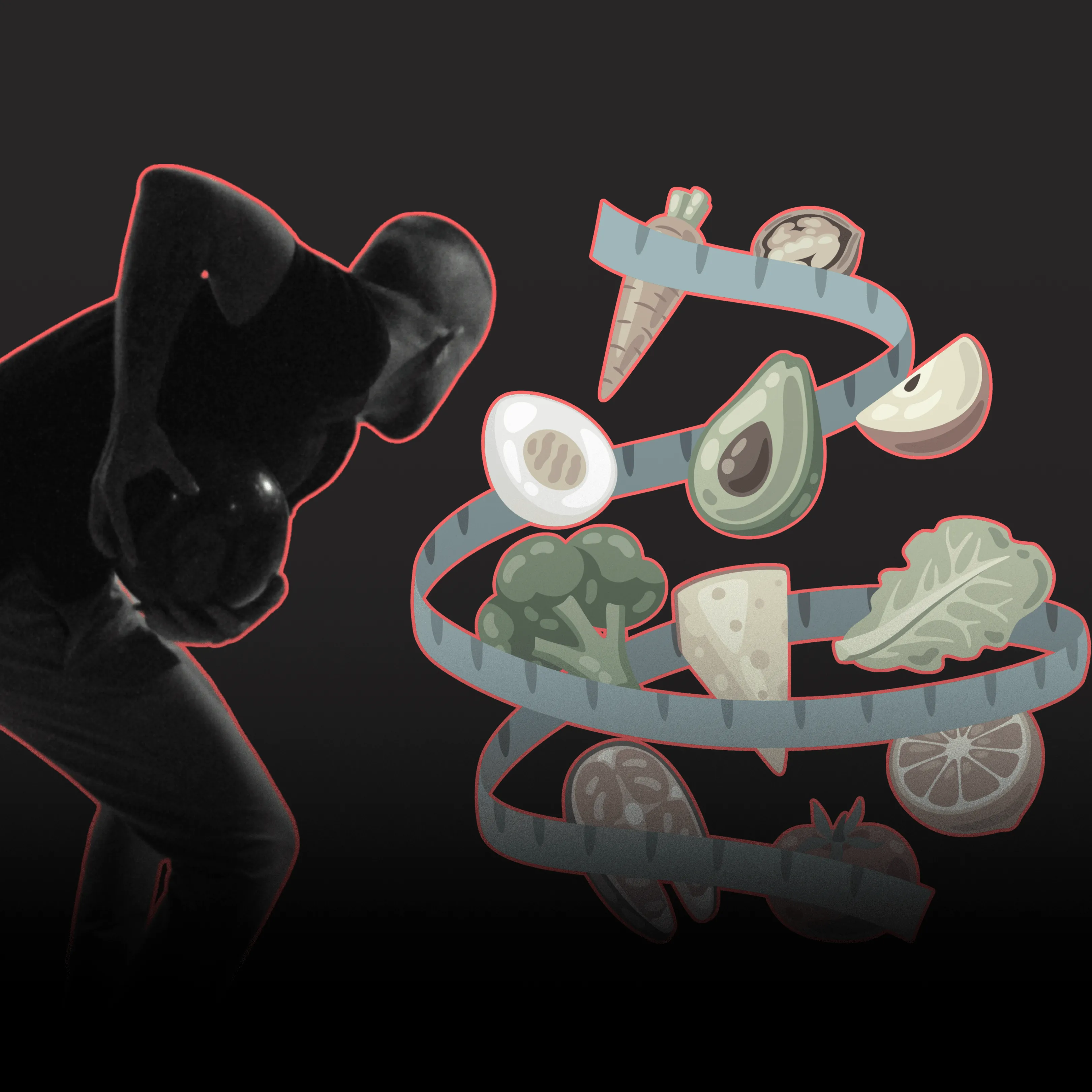
A balanced selection of meals and snacks for bowlers: protein bar, water bottle, sandwich, fruit, and trail mix on a table

What to Eat Before, During & After a Tournament: Meal Plan for Bowlers

When you're competing in a bowling tournament, it's not just your technique and equipment that matter — your nutrition plays a critical role too. This tournament day meal plan for bowlers is designed specifically for bowlers who want to maintain focus, avoid fatigue, and recover faster after competition. tournament day meal plan for bowlers What you eat before, during, and after competition directly affects your performance and how well you recover afterward. This guide will walk you through a science-backed approach to fueling your body the right way throughout tournament day. The Day Before: Building Your Energy Reserves Proper nutrition starts well before you arrive at the bowling center. The evening before a tournament is the time to focus on carbohydrates and hydration. Complex carbohydrates such as brown rice, whole grain pasta, and potatoes help build glycogen reserves in your muscles — the energy your body will rely on the next day. A balanced meal might include grilled chicken, roasted vegetables, and rice or pasta. Oatmeal, bananas, and fruits are also great options for lighter meals. It’s important to avoid greasy or heavily processed foods that can lead to discomfort or sluggishness. Drink plenty of water to stay hydrated overnight and begin the day fresh. On Tournament Morning: Light, Familiar, and Fueling Breakfast is where you set the tone for the day. It should be familiar, easy to digest, and rich in carbohydrates with a moderate amount of protein. Eating two to three hours before your first game is ideal, giving your body enough time to digest. Good choices include peanut butter on toast with banana, oatmeal with berries, or a smoothie with milk and protein powder. Hydration is also important in the morning. Water is essential, and a small pinch of salt or an electrolyte tab can help maintain fluid balance throughout the day. For those with limited time, a lighter meal such as a banana and a protein bar can still offer a helpful energy boost. During the Tournament: Sustaining Energy and Focus Tournaments can stretch for several hours with limited opportunities for full meals. That’s why small, consistent snacks are key. You’ll want foods that are easy to carry, won’t spoil quickly, and offer quick energy without spiking your blood sugar. Options like granola bars, chocolate, fruit, trail mix, peanut butter crackers, or rice cakes are practical and effective. Bananas and apples are also excellent for quick carbohydrates and natural sugars. To stay hydrated, sip water throughout the day and consider adding an electrolyte mix, especially during play, as with sweat you loose necessary minerals. Liquid I.V. and other hydration powders can be helpful and are easy to keep in your bag. Recommended on-the-go options include: Junkless Chewy Granola Bar PackLiquid I.V. Hydration MultiplierThat's it. Fruit Bars Junkless Chewy Granola Bar Pack Junkless Chewy Granola Bar Pack Junkless Chewy Granola Bar Pack Liquid I.V. Hydration Multiplier Liquid I.V. Hydration Multiplier Liquid I.V. Hydration Multiplier That's it. Fruit Bars That's it. Fruit Bars That's it. Fruit Bars Avoid heavy meals, excess sugar, or long gaps without eating, which can lead to fatigue and loss of focus during crucial frames. After the Tournament: Recovery and Repair Once the competition ends, recovery begins. What you eat and drink in the first hour post-tournament — during what is often referred to as the anabolic window — can significantly affect how well and how quickly your body recovers. anabolic window The anabolic window is a short period, typically lasting up to 60 minutes after intense physical activity, during which your muscles are especially receptive to nutrients. During this time, the body is primed to shift from a catabolic state (where muscle breakdown occurs during activity) to an anabolic state, which promotes muscle repair and growth. anabolic window catabolic state anabolic state Scientific studies suggest that consuming a combination of protein and carbohydrates shortly after exercise can help: Rebuild damaged muscle fibersRestore glycogen stores more efficientlyReduce muscle soreness and inflammationSupport immune function Rebuild damaged muscle fibers Rebuild damaged muscle fibers Restore glycogen stores more efficiently Restore glycogen stores more efficiently Reduce muscle soreness and inflammation Reduce muscle soreness and inflammation Support immune function Support immune function For bowlers, especially after a full day of competition, this recovery phase is crucial. Long tournament sessions place repetitive strain on the lower back, shoulders, and knees, and involve sustained mental focus. Refueling your body immediately afterward gives it the building blocks it needs to repair and prepare for the next session — whether that’s another day of competition or your next training block. lower back lower back knees knees Some practical options for this window include a protein shake with carbohydrates, a turkey sandwich, or even chocolate milk, which research has shown to provide an effective post-exercise carb-to-protein ratio for recovery. Hydration is equally important — rehydrating with water or an electrolyte drink helps replace fluids lost through sweating and keeps your muscles functioning properly. By treating the anabolic window seriously, bowlers can bounce back faster and reduce the cumulative wear and tear of long seasons or back-to-back tournament weekends. Make sure to rehydrate with plenty of water or an electrolyte beverage, and aim to eat something within the first 60 minutes after your final game. Trusted recovery options include: Optimum Nutrition Gold Standard Whey Protein PowderCore Power Protein Shake – Ready to Drink Optimum Nutrition Gold Standard Whey Protein Powder Optimum Nutrition Gold Standard Whey Protein Powder Optimum Nutrition Gold Standard Whey Protein Powder Core Power Protein Shake – Ready to Drink Core Power Protein Shake – Ready to Drink Core Power Protein Shake – Ready to Drink Packing Smart for Tournament Day Planning your meals is just as important as choosing them. A small insulated lunchbox or meal prep bag can help keep snacks fresh. Reusable containers make it easier to portion your food and keep things organized, and a good-quality water bottle will save you from relying on vending machines. Recommended gear: ThinkFit Insulated Meal Prep Lunch BoxStanley Quencher ThinkFit Insulated Meal Prep Lunch Box ThinkFit Insulated Meal Prep Lunch Box ThinkFit Insulated Meal Prep Lunch Box Stanley Quencher Stanley Quencher Stanley Quencher Be sure to separate food from your bowling gear to avoid contamination, and pack extras in case matches run longer than expected. Final Thoughts Nutrition isn’t just something to think about on game day — it’s a part of your preparation and performance. With the right food choices, you can improve your energy, focus, and consistency throughout the entire tournament. Start by making small changes: prepare a better breakfast, bring a few smart snacks, and drink water regularly. Over time, fueling properly will become part of your competition routine — just like stretching, taping your fingers, or adjusting your grip. Sources Kerksick, C., et al. (2017). International Society of Sports Nutrition Position Stand: Nutrient Timing. Journal of the International Society of Sports Nutrition, 14(1), 33. Pritchett, K., & Pritchett, R. (2012). Chocolate milk: A post-exercise recovery beverage for endurance sports. Medicine & Sport Science, 59, 127–134. Ivy, J. L., & Portman, R. J. (2004). Nutrient Timing: The Future of Sports Nutrition. Basic Health Publications. Tipton, K. D., & Wolfe, R. R. (2001). Exercise, protein metabolism, and muscle growth. International Journal of Sport Nutrition and Exercise Metabolism, 11(1), 109–132. Kerksick, C., et al. (2017). International Society of Sports Nutrition Position Stand: Nutrient Timing. Journal of the International Society of Sports Nutrition, 14(1), 33. International Society of Sports Nutrition Position Stand: Nutrient Timing Pritchett, K., & Pritchett, R. (2012). Chocolate milk: A post-exercise recovery beverage for endurance sports. Medicine & Sport Science, 59, 127–134. Chocolate milk: A post-exercise recovery beverage for endurance sports Ivy, J. L., & Portman, R. J. (2004). Nutrient Timing: The Future of Sports Nutrition. Basic Health Publications. Nutrient Timing: The Future of Sports Nutrition Tipton, K. D., & Wolfe, R. R. (2001). Exercise, protein metabolism, and muscle growth. International Journal of Sport Nutrition and Exercise Metabolism, 11(1), 109–132. International Journal of Sport Nutrition and Exercise Metabolism Affiliate Disclosure: This article contains affiliate links. If you purchase through these links, BowlingLife may earn a small commission at no additional cost to you. This helps support our platform and keeps our content free for readers. Affiliate Disclosure
Health & NutritionJuly 07, 2025

Performance Nutrition Tips For Your Next Bowling Tournament

Three-four practices a week, preparing for two-three monthly bowling tournaments, which last from sunrise to sundown. That is the daily life of a decent bowler. Torture us as long as you want, but we will never give up on the idea that bowling is an endurance sport. bowling tournaments bowling tournaments Beer bellies in the bowling community seem to be coming to an end. How nutrition affects athletic performance? Everyone who wants to be on top of bowling sport must realize the importance of performance nutrition. For instance, take a look at the best bowling players. More and more bowling professionals have begun to pay great attention to their performance nutrition and weight management at home and during competitions. A well-balanced performance nutrition is necessary for good sports results in any sport, including bowling. Unfortunately, the liaison between bowling and nutrition is very complicated. Think about what food you can get at the bowling alley. Pizza? Nachos? After a couple of hours on the lanes, your body demands whole foods, but all you can offer is fat and soft drinks with tons of sugar. The average bowler consumes up to 6000 kcal daily to maintain everyday energy needs. Although pizza with nachos is full of calories, they are not beneficial. Fat is absorbed and turned into energy slowly, making you feel heavy and sleepy. That gives your opponent an advantage - you don't want that. We will not talk about food components in general here. Let's jump to the most important thing - how to balance nutrition on the day of the competition. CARBS Carbs are as crucial as a good bowling ball. Our nutrition on the day of the competition should be based on them. It is recommended that athletes consume about 6-10 g of carbohydrates per 1 kg of body weight, and carbohydrates in the diet should make up about 50% of the calorie norm on the day of the competition. Quite a lot, isn't it? However, if you divide them into adequate time intervals, you will not even feel how you have consumed them. Start your competition day with several boiled eggs or whole grain porridge with fruit and nut butter for breakfast. It's a natural superfood for a long and tiring day. If you are one of those people who can't eat in the mornings - buy a blender. Use honey, fruit, or berries to add flavor to your cocktails. Even protein powder can do the work. Just DON'T skip breakfast! During the competition, it is also essential to maintain the number of carbohydrates. Consume at least 40 g of carbohydrates every hour in liquid form (e.g., smoothies with oatmeal, fruits, and berries) - they are absorbed faster. However, suppose you feel better by chewing something. In that case, you can snack on oatmeal cookies, porridge, fruit, or various bars full of nutritional supplements. Just keep in mind that they are intended to supplement your diet, not replace food, so consume them in moderation. PROTEIN Protein is essential as a building material for the recovery of muscle cells. Still, in bowling, it is recommended to use them after training or competition, as well as with a longer gap between games, because their absorption takes longer. Find time to eat more foods containing animal protein - red meat (e.g., beef), fish, and poultry, because these products are rich in all the amino acids. Various salads with poultry or beef are suitable here (combine protein products with your favorite vegetables). If you don't eat meat, eat beans with rice during a break or after the competition. FATS Fats are a source of energy used mainly in less intense activities such as endurance exercise. Since the average person has accumulated about 70,000 kcal of fat, there is no need to consume a lot of them. However, it is still mandatory to get it with food since some vitamins are fat-soluble and can only be absorbed that way. On the day of the competition, an athlete should consume about 100 g of fat with food, of which at least a third should be plant-based (you will obtain the rest from the food you eat during the day). Add a spoonful of linseed oil to your smoothie. If you like to snack, choose walnuts or almonds. VITAMINS In bowling, it is crucial to use such vitamins that promote the absorption of carbohydrates (B group vitamins, vitamins C and E). You must get 2-3 times more vitamins when exercising than an average person, so it is suggested to supplement the diet with vitamin complexes. STAY HYDRATED And we're not just talking about almighty water here. During the competition, we recommend having two bottles: one with water and the other with an isotonic drink. And we're not just talking about almighty water here. During the competition, we recommend having two bottles: one with water and the other with an isotonic drink. And we're not just talking about almighty water here. During the competition, we recommend having two bottles: one with water and the other with an isotonic drink. During sports, not only the water evaporates with sweat, but also essential substances for the body - potassium, sodium, chlorine, calcium, and magnesium. During the competition, it is recommended to consume at least 4-5 liters of fluids in a ratio of 2:1 (2 parts water and one part isotonic drink). Nutrition is a significant part of the sport; the biggest bowling stars have already noticed this. Beer bellies in the bowling community seem to be coming to an end. A nutritious and strategically planned diet helps to feel better, look healthier, and have an evenly distributed amount of energy throughout the competition. Also, it can help to enjoy bowling longer and avoid injuries. Try applying these recommendations to yourself during your next training or competition. If you enjoyed reading this article, don't forget to check out how to create correct nutrition habits to increase your bowling performance. nutrition nutrition
Health & NutritionJuly 04, 2025

Best Vitamins & Supplements For Bowling Players

Vitamins can help deliver a broad range of nutrient benefits you might not be getting from food over your lifetime. A proper diet can provide essential minerals and vitamins to promote sports performance by avoiding deficiencies and refueling your body. Still, some vitamins or supplements can't be found in daily dietary, or their doses require to be more significant. We have discussed a balanced and rational diet before, and now we will dive deeper into this topic. We have discussed a balanced and rational diet before We have discussed a balanced and rational diet before This article offers insight into five vitamins and supplements that may help bowling to increase their performance by filling the gap between the essential nutrients you get from food and the vitamins and supplements your active lifestyle requires. Please note that some links in this artice might be affiliate links. Vitamin B12 Vitamin B12 Vitamin B12 Every bowler must pay the greatest attention to taking a daily dose of vitamin B12 since the body cannot make it independently. Every cell in the body depends on vitamin B12 since it plays a role in synthesizing fatty acids and producing energy, making it a critical vitamin for athletic performance. Because B12 is found mainly in animal foods, vegetarian and vegan athletes are at risk of becoming deficient. Vitamin C Vitamin C Vitamin C Athletes have used vitamin C for a long time to enhance performance and decrease fatigue. The main ways that vitamin C can improve athletic performance is by reducing inflammation, stress hormones, and oxidative stress. In addition, vitamin C is necessary for immune health, so bowlers must take vitamin C because it can help prevent or shorten the duration of common colds and respiratory infections, meaning less training time is lost due to sickness. Vitamin C also plays a significant role in helping iron absorption, which is essential for an athlete's circulatory system. Magnesium and Potassium Magnesium and Potassium Magnesium and Potassium Magnesium helps to maintain normal psychological activity and muscle function, helps to reduce fatigue and maintains normal bone condition. At the same time, potassium keeps blood pressure in check. They both help to prevent muscle cramps, which are very common and annoying. Magnesium and potassium go foot-to-foot in your body. That is why we marked them together. For example, magnesium deficiency in athletes is directly related to the ongoing loss of potassium from the kidneys via urine. Even a slight excessive loss of these supplements through sweat and urine may harm performance and increase oxidative stress effects on the body. Creatine Creatine Creatine Studies show that creatine supplementation increases lean muscle mass and strength when athlete supplements it with training. Supplementing with creatine may give the muscles additional energy, endurance, and post-workout recovery. It is especially crucial in long tournaments or bowling league days. Creatine supplements which also contain caffeine, taurine, and amino acids, help athletes to feel more focused. Protein Protein Protein Protein is a building material for your muscles. Adding additional protein into your daily diet may help ensure essential amino acids, such as leucine, to support your recovery process. In bowling, it is recommended to use protein after training or competition, as well as with a longer gap between games, because their absorption takes longer. Male and female athletes use similar supplements, with women taking more iron and men taking more protein and creatine. More and more bowling professionals have begun to pay great attention to their nutrition at home and during competitions. Insufficient diet gives an advantage to your opponent, and you don't want that, do you? Bowling is an endurance sport, and a rich diet is one of the major components to get you where you ultimately want to be - the Olympus of bowling sport.
Health & NutritionJuly 04, 2025
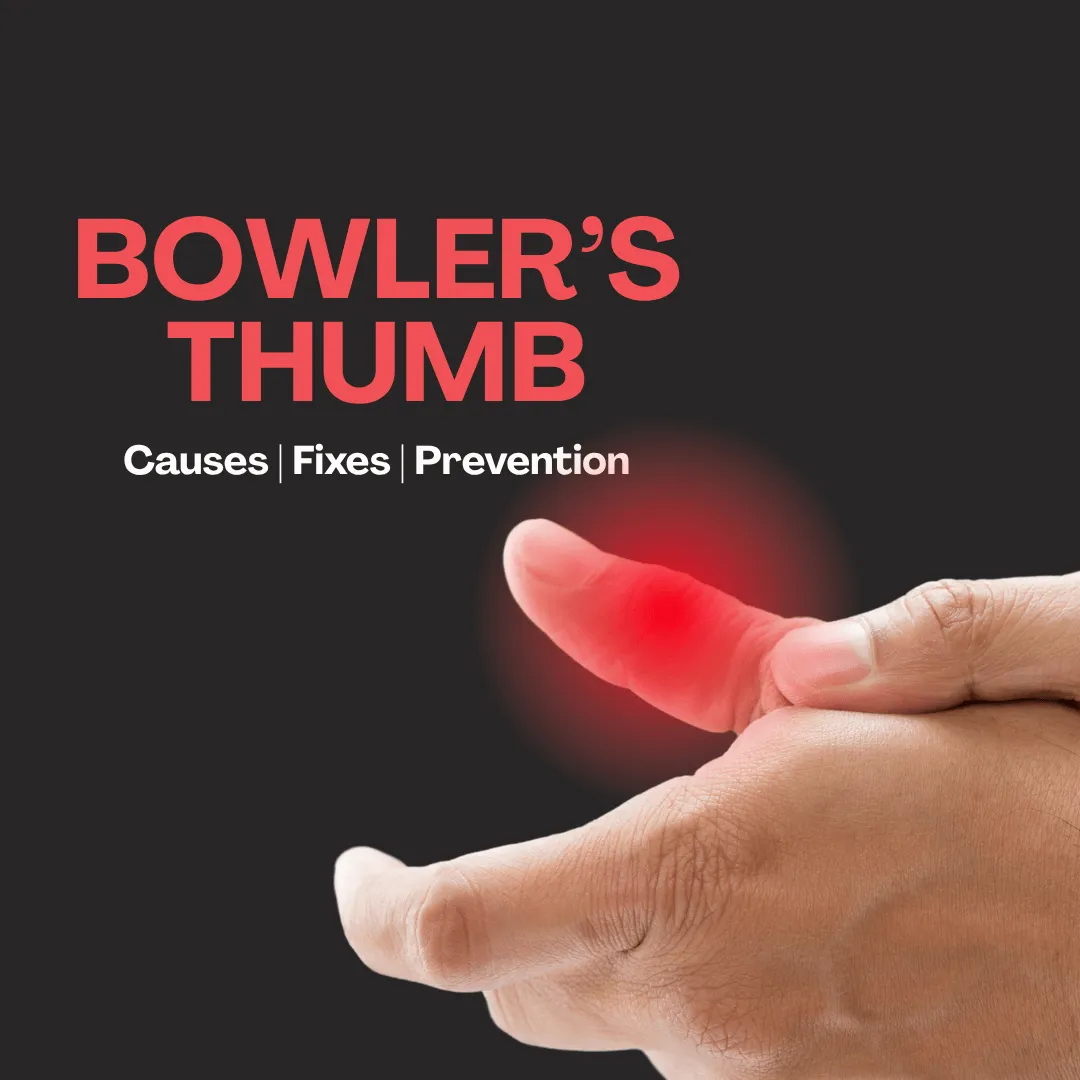
A person showing hand thumb's pain caused by bowler's thumb

Bowler's Thumb: Causes, Symptoms, and Prevention for Pain-Free Bowling

When it comes to the game of bowling, even the tiniest detail has the potential to knock you off your feet. Especially when we talk about pain. One such challenge is the dreaded bowler's thumb, causing discomforting symptoms which can not only hamper a bowler's performance but also lead to frustration and, in severe cases, even force bowlers to take a break from the game they love. bowler's thumb In this article, we will delve into the depths of Bowler's Thumb, exploring its causes, symptoms, and potential preventive measures. What is Bowler's Thumb? Medically speaking, Bowler's Thumb is a perineural fibrosis involving the ulnar digital nerve of the thumb. It occurs almost exclusively among frequent bowlers — not seen often in other sports — due to the specific motion of inserting and releasing the thumb from a bowling ball. perineural fibrosis involving the ulnar digital nerve of the thumb The condition is caused by chronic repetitive impaction of the thumb's ulnar soft tissues against the thumbhole of a bowling ball. Causes of Bowler's Thumb Bowler’s Thumb develops gradually over time — not from a single event. It’s the result of thousands of repetitive bowling motions wearing down a specific part of the thumb. thousands of repetitive bowling motions The primary cause is repetitive thumb motion during ball release. Intense gripping, pressure, and rotation can damage the soft tissue, strain the ulnar collateral ligament, and irritate the nerve. repetitive thumb motion during ball release An improper thumb hole size can also be the cause. When the thumb hole of a bowling ball is too tight, it can create friction or decompression of the ulnar nerve, contributing to the development of this condition. improper thumb hole size Symptoms of Bowler's Thumb Symptoms can vary in severity, but commonly include: Numbness in the thumbTingling sensationsPain or tendernessSwelling around the thumb jointWeak grip strengthDifficulty holding objectsGeneral thumb weakness Numbness in the thumb Numbness in the thumb Tingling sensations Tingling sensations Pain or tenderness Pain or tenderness Swelling around the thumb joint Swelling around the thumb joint Weak grip strength Weak grip strength Difficulty holding objects Difficulty holding objects General thumb weakness General thumb weakness If these symptoms occur, it's important to give your hand adequate rest and consult a healthcare professional for a proper diagnosis. How to prevent Bowler's Thumb? To protect your thumb and prevent injury, consider the following strategies: Proper Technique Learn and consistently use correct technique when gripping and releasing the ball. Poor form can create excess stress on the thumb joint. If unsure, seek help from a coach or certified instructor. Use Protective Thumb Tape Thumb tape can reduce friction and skin damage during release. It's especially useful for bowlers who throw high volumes or practice frequently. Recommended product on Amazon: Storm Max Pro Thumb Tape – smooth texture, easy application. Recommended product on Amazon Storm Max Pro Thumb Tape Storm Max Pro Thumb Tape Warm-Up and Stretch Before bowling, gently warm up and stretch your hands, focusing on the thumb and wrist. This helps prepare tendons and ligaments for repetitive motion. Rest and Recovery Avoid overuse. Let your thumb recover between sessions, especially if pain or discomfort is present. Thumb Support If your thumb is already irritated or prone to injury, consider wearing a supportive thumb brace during practice. Recommended product on Amazon: Fitomo Thumb Brace – lightweight, comfortable, and with flexible, adjustable aluminum strip for extra support. This brace is designed for sports use. Recommended product on Amazon Fitomo Thumb Brace Fitomo Thumb Brace Maintaining thumb health is crucial for avid bowlers. By understanding injury causes, symptoms, and preventive measures, you can protect your thumb joints and enjoy a healthier bowling experience. With the right techniques and care, you can continue rolling strikes with confidence. Affiliate disclosure: This article contains affiliate links. If you purchase through these links, we may earn a small commission at no additional cost to you. This helps support BowlingLife and allows us to continue producing useful content. Affiliate disclosure
Health & NutritionJuly 04, 2025

Tips & Tricks

see all
What is RG in bowling? Low, medium, and high RG explained

What Is RG in Bowling? Low, Medium and High RG Explained

When you're buying a new bowling ball or reading bowling ball reviews, you'llalways come across a stat called RG, or Radius of Gyration. But what exactlydoes that mean - and why on earth should you care? RG in bowling means Radius of Gyration. It tells you howquickly a bowling ball revs up, which affects how early or late it hooks onthe lane. RG in bowling means Radius of Gyration. Low RG balls start up sooner, medium RG balls create a balanced shape, andhigh RG balls push farther down the lane before changing direction. Understanding RG helps you read bowling ball specs with more confidence, matcha ball to the lane condition, and build a smarter bowling ball arsenal. In this guide, we go into details and explain what RG means in bowling, how low, medium, and highRG differ, and when to use each one. Some links in this article are affiliate links, which means we may earn asmall commission if you make a purchase at no extra cost to you. This helpsus keep our content free and accessible. What Does RG Mean in Bowling? RG, or Radius of Gyration, refers to how mass is distributed inside a bowlingball. More specifically, it shows how far that mass sits from the center ofthe core. It is measured in inches and usually falls between 2.46 and 2.80. RG tells you how quickly a bowling ball revs up and transitions from skid tohook. In a low RG ball, more of the mass sits closer to the center of the core. In ahigh RG ball, more of the mass sits farther away from the center. A simple way to understand this is to think about a figure skater. When theskater pulls the arms in, the body spins faster. That is like a low RG bowlingball, where the mass is closer to the center. When the skater stretches thearms out, the spin slows down. That is like a high RG bowling ball, where themass is farther from the center. The lower the RG, the sooner the ball wants to rev up and leave the skidphase. The higher the RG, the longer it pushes down the lane before making itsmove. How Does RG Affect Bowling Ball Motion? Understanding RG helps you predict how a bowling ball will behave down thelane and choose the right reaction for the conditions you are bowling on. Low RG balls rev up earlier and hook sooner. They areuseful on heavier oil conditions when you want the ball to read the laneearlier or when you want to play straighter angles.Medium RG balls create a balanced shape. They are oftencalled benchmark balls because they offer a controlled, readable motion onmany conditions.High RG balls glide longer before revving up, which helpsthem save energy for a stronger move downlane. They are often a good matchfor lighter oil or for players who want more backend shape. Low RG balls rev up earlier and hook sooner. They areuseful on heavier oil conditions when you want the ball to read the laneearlier or when you want to play straighter angles. Low RG balls Medium RG balls create a balanced shape. They are oftencalled benchmark balls because they offer a controlled, readable motion onmany conditions. Medium RG balls High RG balls glide longer before revving up, which helpsthem save energy for a stronger move downlane. They are often a good matchfor lighter oil or for players who want more backend shape. High RG balls RG is important, but it does not work alone. Coverstock, surface,differential, layout, and lane pattern all help shape the full reaction. Ifyou want to understand the lane side of the equation better, read our guide tobowling oil patterns. differential bowling oil patterns RG Categories Explained Here is a simple breakdown of the RG categories you will usually see onbowling ball spec sheets: RG CategoryRG RangeBall Motion BehaviorBest Used OnLow RG2.46 - 2.50Revves up quickly, earlier hookHeavy oil, earlier lane readMedium RG2.51 - 2.53Smooth transition, balanced reactionVersatile, benchmark ballsHigh RG2.54 and upDelayed rev-up, more length and backend motionMedium-dry lanes, later response RG CategoryRG RangeBall Motion BehaviorBest Used On RG Category RG Range Ball Motion Behavior Best Used On Low RG2.46 - 2.50Revves up quickly, earlier hookHeavy oil, earlier lane readMedium RG2.51 - 2.53Smooth transition, balanced reactionVersatile, benchmark ballsHigh RG2.54 and upDelayed rev-up, more length and backend motionMedium-dry lanes, later response Low RG2.46 - 2.50Revves up quickly, earlier hookHeavy oil, earlier lane read Low RG 2.46 - 2.50 Revves up quickly, earlier hook Heavy oil, earlier lane read Medium RG2.51 - 2.53Smooth transition, balanced reactionVersatile, benchmark balls Medium RG 2.51 - 2.53 Smooth transition, balanced reaction Versatile, benchmark balls High RG2.54 and upDelayed rev-up, more length and backend motionMedium-dry lanes, later response High RG 2.54 and up Delayed rev-up, more length and backend motion Medium-dry lanes, later response Which RG Should You Choose and When? The best answer depends on how many bowling balls you own and what laneconditions you face most often. If you only want one versatile option, a medium RG benchmark ball is usuallythe safest starting point. If you are building a full bowling ball arsenal,having low, medium, and high RG options gives you much better coverage as thelanes change. A low RG bowling ball is a strong choice for fresh oil,heavier volume, or situations where you want the ball to start sooner.Medium RG bowling balls are great benchmark choices. Theyhelp you read the lane and build a game plan around a more neutral shape.A high RG bowling ball helps delay the hook and store moreenergy for the backend. It becomes especially useful during transition or ondrier lane conditions. A low RG bowling ball is a strong choice for fresh oil,heavier volume, or situations where you want the ball to start sooner. low RG Medium RG bowling balls are great benchmark choices. Theyhelp you read the lane and build a game plan around a more neutral shape. Medium RG A high RG bowling ball helps delay the hook and store moreenergy for the backend. It becomes especially useful during transition or ondrier lane conditions. high RG Ball Examples by RG Category Now that you know what RG in bowling means, let’s look at some real examplesof low, medium, and high RG bowling balls, allreviewed on BowlingLife. reviewed on BowlingLife Low RG Bowling Ball Examples Storm Equinox Solid - Smooth and early on fresh heavy oil patterns.Motiv Evoke Hysteria- Controllable with enough continuation on medium-heavy oil. Storm Equinox Solid - Smooth and early on fresh heavy oil patterns. Storm Equinox Solid Motiv Evoke Hysteria- Controllable with enough continuation on medium-heavy oil. Motiv Evoke Hysteria Medium RG Bowling Ball Examples Hammer Black Widow 3.0 Dynasty - Predictable motion for medium-heavy oil patterns.Roto Grip Transformer - Controllable yet powerful motion through the pins. Hammer Black Widow 3.0 Dynasty - Predictable motion for medium-heavy oil patterns. Hammer Black Widow 3.0 Dynasty Roto Grip Transformer - Controllable yet powerful motion through the pins. Roto Grip Transformer High RG Bowling Ball Examples DV8 Hater Pearl- Clean through the fronts with a stronger backend move.Storm Hy-Road- A clean and classic option for medium-dry lanes. DV8 Hater Pearl- Clean through the fronts with a stronger backend move. DV8 Hater Pearl Storm Hy-Road- A clean and classic option for medium-dry lanes. Storm Hy-Road RG Bowling FAQ What does RG mean in bowling? RG means Radius of Gyration. It describes how mass is distributed inside abowling ball and helps predict how quickly the ball will rev up. What is the difference between low RG and high RG bowling balls? Low RG bowling balls start up sooner and read the lane earlier. High RGbowling balls push farther down the lane before they respond. When should you use a low RG bowling ball? Low RG balls are usually best on heavier oil conditions or when you want asmoother and earlier reaction. When is a high RG bowling ball best? High RG balls are often best on medium-dry conditions or later in the blockwhen you want more length and a later move. Final Thoughts RG may sound technical at first, but once you understand it, it becomes one ofthe most useful bowling ball specs you can learn. It is not about low RG being better than high RG. It is about matching theright RG to your style, your speed and rev rate, and the lane conditions infront of you. Once you understand what RG in bowling means, choosing the rightball gets much easier. {"@context": "https://schema.org","@type": "FAQPage","mainEntity": [{"@type": "Question","name": "What does RG mean in bowling?","acceptedAnswer": {"@type": "Answer","text": "RG, or Radius of Gyration, describes how mass is distributed inside a bowling ball. It helps predict how quickly the ball revs up and transitions from skid to hook."}},{"@type": "Question","name": "What is the difference between low RG and high RG bowling balls?","acceptedAnswer": {"@type": "Answer","text": "Low RG bowling balls rev up sooner and read the lane earlier. High RG bowling balls push farther down the lane before changing direction."}},{"@type": "Question","name": "When should you use a low RG bowling ball?","acceptedAnswer": {"@type": "Answer","text": "A low RG bowling ball is usually best on heavier oil conditions or when you want the ball to start sooner and create a smoother, earlier reaction."}},{"@type": "Question","name": "When is a high RG bowling ball best?","acceptedAnswer": {"@type": "Answer","text": "A high RG bowling ball is often best on medium-dry conditions or later in transition when you want more length and a later move downlane."}}]}
Tips & TricksApril 03, 2026
Bowling terms guide featuring key concepts like strike, PAP and differential on a bowling lane background

70+ Bowling Terms Explained: The Complete 2026 Guide

This encyclopedia of bowling terms is regularly updated. Latest update: March 31, 2026. Looking for a complete list of bowling terms? This guide breaks downthe most important bowling terms used by beginners, league players, andprofessionals. bowling terms Whether you are stepping onto the approach for the first time orrefining your ball reaction, understanding bowling terms helps you readlanes, choose equipment, and improve faster. approach ball reaction At BowlingLife, we have organized dozens of essential bowling termsinto clear categories so you can quickly learn the language of the sport. BowlingLife If you're new to ball motion or want to improve your hook, check out ourguide on how to spin a bowling ball. guide on how to spin a bowling ball Bowling Terms Navigation Scoring & StrikesLane AnatomyOil PatternsBall TechnologySplits & LeavesBowling StylesBowling Slang Scoring & Strikes Lane Anatomy Oil Patterns Ball Technology Splits & Leaves Bowling Styles Bowling Slang 1. Bowling Terms for Scoring & Strikes These bowling terms explain scoring fundamentals and how strike strings arenamed. Clean Game: A full game without any open frames.Deadwood: Any pin that remains on the lane or in the gutter butcannot be cleared by the pinsetter.Double: Two strikes in a row.Dutch 200: Alternating strikes and spares for exactly 200.Fill Ball: Extra shot(s) in the 10th frame after a strike or spare.Front Nine / Front Ten: The first nine or ten strikes in a row.Hambone: Four consecutive strikes.Open Frame: A frame without a strike or spare.Perfect Game: 12 strikes in a row for a score of 300.Punching Out: Finishing the final frames with strikes.Six-Pack: Six consecutive strikes.Spare (/): Knocking down all pins using two shots.Strike (X): Knocking down all ten pins on the first ball.Turkey: Three consecutive strikes.Five-Bagger: Five consecutive strikes. Clean Game: A full game without any open frames. Clean Game: Deadwood: Any pin that remains on the lane or in the gutter butcannot be cleared by the pinsetter. Deadwood: Double: Two strikes in a row. Double: Dutch 200: Alternating strikes and spares for exactly 200. Dutch 200: Fill Ball: Extra shot(s) in the 10th frame after a strike or spare. Fill Ball: Front Nine / Front Ten: The first nine or ten strikes in a row. Front Nine / Front Ten: Hambone: Four consecutive strikes. Hambone: Open Frame: A frame without a strike or spare. Open Frame: Perfect Game: 12 strikes in a row for a score of 300. Perfect Game: Punching Out: Finishing the final frames with strikes. Punching Out: Six-Pack: Six consecutive strikes. Six-Pack: Spare (/): Knocking down all pins using two shots. Spare (/): Strike (X): Knocking down all ten pins on the first ball. Strike (X): Turkey: Three consecutive strikes. Turkey: Five-Bagger: Five consecutive strikes. Five-Bagger: 2. Lane Anatomy Bowling Terms Understanding lane structure is essential for accuracy and targeting. Approach: The area where the bowler takes steps before releasing theball.Arrows: Target markers about 15 feet down the lane used for aiming.Boards: The 39 boards across the lane used for targeting.Breakpoint: The point where the ball transitions from skid to hook.Dots: Position markers on the approach and front of the lane.Foul Line: The line separating the approach from the lane. Crossingit cancels the shot.Gutters: Channels on both sides of the lane where the ball is out ofplay.Headpin: The front pin in the rack (1-pin).Laydown Point: The board where the ball first contacts the lane.Pit: The area behind the pins where they fall after impact.Pocket: The ideal strike zone (1-3 for right-handers, 1-2 forleft-handers). Approach: The area where the bowler takes steps before releasing theball. Approach: Arrows: Target markers about 15 feet down the lane used for aiming. Arrows: Boards: The 39 boards across the lane used for targeting. Boards: Breakpoint: The point where the ball transitions from skid to hook. Breakpoint: Dots: Position markers on the approach and front of the lane. Dots: Foul Line: The line separating the approach from the lane. Crossingit cancels the shot. Foul Line: Gutters: Channels on both sides of the lane where the ball is out ofplay. Gutters: Headpin: The front pin in the rack (1-pin). Headpin: Laydown Point: The board where the ball first contacts the lane. Laydown Point: Pit: The area behind the pins where they fall after impact. Pit: Pocket: The ideal strike zone (1-3 for right-handers, 1-2 forleft-handers). Pocket: 3. Oil Pattern Bowling Terms Oil patterns control how the ball moves. Learning these bowling terms is keyto reading lanes. Want to go deeper? Read our fullbowling oil patterns guide. bowling oil patterns guide Backends: The final part of the lane where the ball hooks most.Breakdown: Oil removed from the track area, increasing friction.Carrydown: Oil pushed downlane, reducing hook potential.Heads: The front part of the lane where oil is heaviest.House Shot: A forgiving pattern with more oil in the center.Lane Conditioner: Oil applied to protect the lane and control ballmotion.Midlane: Where the ball begins to slow and read the lane.Rule of 31: Pattern length minus 31 gives a breakpoint reference.Sport Pattern: A flat and challenging oil pattern.Track Area: The part of the lane where most balls travel.Transition: Changing oil conditions during play. Backends: The final part of the lane where the ball hooks most. Backends: Breakdown: Oil removed from the track area, increasing friction. Breakdown: Carrydown: Oil pushed downlane, reducing hook potential. Carrydown: Heads: The front part of the lane where oil is heaviest. Heads: House Shot: A forgiving pattern with more oil in the center. House Shot: Lane Conditioner: Oil applied to protect the lane and control ballmotion. Lane Conditioner: Midlane: Where the ball begins to slow and read the lane. Midlane: Rule of 31: Pattern length minus 31 gives a breakpoint reference. Rule of 31: Sport Pattern: A flat and challenging oil pattern. Sport Pattern: Track Area: The part of the lane where most balls travel. Track Area: Transition: Changing oil conditions during play. Transition: 4. Bowling Ball Technology Terms These bowling terms explain how equipment affects ball motion. For real-world examples, check ourbest bowling balls guide. best bowling balls guide Asymmetrical Core: Stronger and more angular motion.Axis Rotation: Side rotation affecting backend shape.Axis Tilt: Vertical tilt affecting ball transition.Core: Internal structure that affects motion and rotation.Coverstock: Outer shell controlling traction and friction.Differential: Determines flare and hook potential.Flare: The oil rings created as the ball rotates.Layout: Drilling pattern that affects ball motion.PAP: The bowler’s axis of rotation.RG (Radius of Gyration): Low RG = early roll, high RG = laterreaction.Surface Adjustment: Changing grit to control hook timing.Symmetrical Core: Smooth and predictable motion. Asymmetrical Core: Stronger and more angular motion. Asymmetrical Core : Axis Rotation: Side rotation affecting backend shape. Axis Rotation : Axis Tilt: Vertical tilt affecting ball transition. Axis Tilt : Core: Internal structure that affects motion and rotation. Core: Coverstock: Outer shell controlling traction and friction. Coverstock : Differential: Determines flare and hook potential. Differential : Flare: The oil rings created as the ball rotates. Flare: Layout: Drilling pattern that affects ball motion. Layout: PAP: The bowler’s axis of rotation. PAP : RG (Radius of Gyration): Low RG = early roll, high RG = laterreaction. RG (Radius of Gyration): Surface Adjustment: Changing grit to control hook timing. Surface Adjustment: Symmetrical Core: Smooth and predictable motion. Symmetrical Core : 5. Bowling Terms for Splits & Leaves These bowling terms describe pin combinations after the first shot. 7-10 Split: The two back corner pins.Baby Split: 2-7 or 3-10.Big Four: 4-6-7-10 split.Bucket: Four pins forming a diamond shape.Chop: Missing the back pin on a spare attempt.Greek Church: A difficult multi-pin split.Messenger: A flying pin that knocks down another.Sleeper: Hidden pin behind another.Washout: Includes the headpin (not a true split). 7-10 Split: The two back corner pins. 7-10 Split: Baby Split: 2-7 or 3-10. Baby Split: Big Four: 4-6-7-10 split. Big Four: Bucket: Four pins forming a diamond shape. Bucket: Chop: Missing the back pin on a spare attempt. Chop: Greek Church: A difficult multi-pin split. Greek Church: Messenger: A flying pin that knocks down another. Messenger: Sleeper: Hidden pin behind another. Sleeper: Washout: Includes the headpin (not a true split). Washout: 6. Bowling Style Terms These bowling terms describe player styles and release techniques. Ball Speed: Speed of the ball off the hand.Cranker: High rev rate and aggressive hook.Full Roller: Ball rolls over full circumference.Rev Rate: Rotations per minute.Spinner: Ball spins more than rolls.Stroker: Smooth and accurate style.Tweener: Balanced style.Two-Hander: Uses both hands for higher rev rate. Ball Speed: Speed of the ball off the hand. Ball Speed: Cranker: High rev rate and aggressive hook. Cranker: Full Roller: Ball rolls over full circumference. Full Roller: Rev Rate: Rotations per minute. Rev Rate: Spinner: Ball spins more than rolls. Spinner: Stroker: Smooth and accurate style. Stroker: Tweener: Balanced style. Tweener: Two-Hander: Uses both hands for higher rev rate. Two-Hander: 7. Bowling Slang & Regional Terms Some bowling terms come from tradition and bowling culture. Anchor: Last bowler in a lineup.Beer Frame: Lowest scorer buys drinks.Kegler: Traditional term for a bowler.Sandbagging: Lowering average intentionally.String: Another word for a game. Anchor: Last bowler in a lineup. Anchor: Beer Frame: Lowest scorer buys drinks. Beer Frame: Kegler: Traditional term for a bowler. Kegler: Sandbagging: Lowering average intentionally. Sandbagging: String: Another word for a game. String: Conclusion: Why Bowling Terms Matter Learning bowling terms helps you understand ball motion, lane conditions, andscoring strategy. The more bowling terms you know, the easier it becomes to adjust and improve. Want to apply these bowling terms? Explore ourbowling ball reviewsand guides. bowling ball reviews {"@context": "https://schema.org","@type": "Article","mainEntityOfPage": {"@type": "WebPage","@id": "https://bowlinglife.eu/bowling-terms"},"headline": "70+ Bowling Terms Explained: The Complete 2026 Guide","description": "The definitive encyclopedia of bowling terms. Learn the language of the sport with our alphabetical guide to scoring, lane anatomy, oil patterns, and ball technology.","image": "https://fsn1.your-objectstorage.com/bowlinglife/media/Uploads/social_images/bowling_terminology.png","author": {"@type": "Organization","name": "BowlingLife Editorial Team","url": "https://bowlinglife.eu"},"publisher": {"@type": "Organization","name": "BowlingLife","logo": {"@type": "ImageObject","url": "https://bowlinglife.eu/logo.png"}},"datePublished": "2026-03-31","dateModified": "2026-03-31","articleSection": "Bowler's Academy","keywords": "bowling terms, bowling lingo, bowling glossary, bowling jargon, rule of 31, bowling ball specs, bowling terminology"} {"@context": "https://schema.org","@type": "FAQPage","mainEntity": [{"@type": "Question","name": "What is a 'Turkey' in bowling?","acceptedAnswer": {"@type": "Answer","text": "A 'Turkey' is a common bowling term used to describe three consecutive strikes in a single game."}},{"@type": "Question","name": "What does RG stand for in bowling ball specs?","acceptedAnswer": {"@type": "Answer","text": "RG stands for Radius of Gyration. It is a technical bowling term that measures how the mass of the ball's core is distributed, determining how early or late the ball will roll."}},{"@type": "Question","name": "What is the Rule of 31 in bowling?","acceptedAnswer": {"@type": "Answer","text": "The Rule of 31 is a formula used to calculate the breakpoint. You subtract 31 from the length of the oil pattern (e.g., 40ft - 31 = 9th board)."}},{"@type": "Question","name": "What is the difference between a split and a washout?","acceptedAnswer": {"@type": "Answer","text": "A split occurs when the headpin (1-pin) is down and the remaining pins have a gap. A washout has a similar gap but the headpin remains standing, meaning it is not technically a split."}},{"@type": "Question","name": "What is the 'Pocket' in bowling?","acceptedAnswer": {"@type": "Answer","text": "The pocket is the ideal strike zone located between the 1-pin and 3-pin for right-handers, or the 1-pin and 2-pin for left-handers."}}]}
Tips & TricksMarch 31, 2026
Proper timing and body-swing synchronization during a bowling approach.

The Hidden Timing Mistakes That Might Be Ruining Your Shots

One of the most common technical mistakes I see in bowling athletes of alllevels, from beginners to elite competitors, is not being late. It is being too early. Too early with the body.Too early with the swing.Too early with the release. It usually comes from good intentions. The bowler wants control. They want toprepare. They want to “hit the pose.” But bowling is not a sport of forced poses. It is a sport of timing, sequence,and flow. When you try to get into the shot too early, you destroy the naturalsynchronization between body and swing. And that synchronization is whatcreates consistency. This is not just a technical observation. It reflects my coaching philosophy,built through years of studying athletes, observing elite players, andrefining what truly works. The Shot Is a Sequence, Not a Position One of the biggest misconceptions in bowling technique is the belief that youmust actively place your body into correct positions. In reality, the best shots are not forced. They are allowed to happen. When you watch elite players like Jason Belmonte or EJ Tackett, you do not seethem forcing positions early. Their motion builds progressively. The correctpositions appear naturally at the correct moment. Here is the principle I teach:Positions are the result of timing, not the goal of timing. Positions are the result of timing, not the goal of timing. When you chase positions too early, you break the kinetic chain. Recommended Reading How to Read Oil Patterns and Build a Smart Line Play Stop treating pattern sheets like abstract art. EBF Level 3 and USBC BronzeCoach Panagiotis Vardakis breaks down how to turn confusingoil graphs into a winning first-shot strategy. Panagiotis Vardakis ✓Use the "Guide of 31" to instantly find your exitpoint.✓Stop asking where to stand - build your line from thebreakpoint backward.✓Match the line to your ball speed and rev rate,not your ego. ✓Use the "Guide of 31" to instantly find your exitpoint. ✓ Use the "Guide of 31" to instantly find your exitpoint. "Guide of 31" ✓Stop asking where to stand - build your line from thebreakpoint backward. ✓ Stop asking where to stand - build your line from thebreakpoint backward. breakpoint backward ✓Match the line to your ball speed and rev rate,not your ego. ✓ Match the line to your ball speed and rev rate,not your ego. not your ego Read the Full Guide What “Too Early” Actually Looks Like 1. Bending Too Early This is extremely common. You bend your upper body forward during the first orsecond step because you want to prepare for the release. The result is loss ofbalance, reduced leverage, restricted swing freedom, muscle tension, and aforced release. Your body should lower gradually through knee flex and step progression. Itshould not drop early because you are trying to “get ready.” Early bending isoften a response to fear of missing the shot. 2. Starting the Swing Too Early Another major issue is forcing the pushaway too early or too aggressively. Instead of allowing the swing to fall naturally with gravity at the correcttiming point, you try to start it. This creates early timing, loss ofsynchronization, muscling the ball, and reduced power transfer. The swingshould not move independently. It should respond to the body’s motion. The swing is a reaction, not an isolated action. 3. Getting Under the Ball Too Early Many athletes try to set their hand under the ball from the top of the swing.This is one of the most damaging habits I see. The correct hand position at release is not something you hold from thebeginning. It develops naturally as the swing approaches the release zone.When you try to hold that position early, you create tension in the forearm,wrist, shoulder, and fingers. Tension destroys consistency. Relaxation builds repeatability. 4. Releasing Too Early Mentally Sometimes the mistake is not physical. It is mental. You jump ahead to the release before your body arrives there. You think aboutrotation. You think about target. You think about the result. Great bowling happens in the present moment. Anticipation creates tension. Why This Happens In my experience, making shots too early usually comes from four causes: Trying too hard. You want the perfect shot, so you try tocontrol every detail. Ironically, more control often creates less control.Lack of trust in timing. You do not trust that body andswing will arrive together naturally, so you force the synchronization.Misunderstanding technique. Many players see photos ofcorrect positions and try to copy them directly instead of recreating themotion that produces them. Educational systems provided by the USBC or EBFconsistently emphasize timing, balance, and rhythm, not forced positioning.Anxiety and pressure. Under stress, athletes rushinternally, even if their feet move at the same speed. That internal rushcreates early tension. Trying too hard. You want the perfect shot, so you try tocontrol every detail. Ironically, more control often creates less control. Trying too hard. Lack of trust in timing. You do not trust that body andswing will arrive together naturally, so you force the synchronization. Lack of trust in timing. Misunderstanding technique. Many players see photos ofcorrect positions and try to copy them directly instead of recreating themotion that produces them. Educational systems provided by the USBC or EBFconsistently emphasize timing, balance, and rhythm, not forced positioning. Misunderstanding technique. Anxiety and pressure. Under stress, athletes rushinternally, even if their feet move at the same speed. That internal rushcreates early tension. Anxiety and pressure. The Real Goal: Let the Shot Build My philosophy is simple. The shot should build progressively from start tofinish. It should not jump to the end. Let the Shot Build ✓Start relaxed✓Initiate a smooth pushaway with timing✓Allow the swing to fall naturally✓Let the body lower progressively✓Arrive at release naturally✓Let the ball come off the hand instead of forcingit ✓Start relaxed ✓ Start relaxed ✓Initiate a smooth pushaway with timing ✓ Initiate a smooth pushaway with timing Initiate a smooth pushaway ✓Allow the swing to fall naturally ✓ Allow the swing to fall naturally Allow the swing to fall ✓Let the body lower progressively ✓ Let the body lower progressively Let the body lower ✓Arrive at release naturally ✓ Arrive at release naturally Arrive at release ✓Let the ball come off the hand instead of forcingit ✓ Let the ball come off the hand instead of forcingit Let the ball come off the hand The release is the result of everything before it. It is not something youcreate independently. Feeling “Late” Might Mean You Are On Time Many athletes need to feel slightly late in order to be correctly timed.Because most players are early, what feels late is often correct timing. Correct timing feels smooth rather than rushed. The body arrives first. Theswing follows. The release happens effortlessly. No forced acceleration isrequired. Effortless shots are almost always the most repeatable. A Simple Test After a shot, ask yourself: Did I make the shot happen, or did I let it happen? If it felt forced, you were probably early.If it felt natural and simple, timing was likely correct. ✗ If it felt forced, you were probably early. ✗ If it felt forced , you were probably early . ✓ If it felt natural and simple, timing was likely correct. ✓ If it felt natural and simple , timing was likely correct . A Drill That Restores Sequence One of the best drills I use is the short and slow motion approach. Perform the approach at 50 percent speed and from 50 percent distance. Thisremoves the ability to rush. It teaches patience, timing awareness, andrelaxation. You begin to feel how the swing and body synchronize naturally. Then gradually increase speed and distance while maintaining the samesequence. My Core Philosophy I do not teach athletes to force positions. I teach them to trust sequence. I do not teach them to control the release. I teach them to control theprocess that leads to the release. Consistency is not built by forcing the end. It is built by respecting theorder of movement. Final Message If you recognize yourself in this mistake, do not worry. It is extremelycommon and completely fixable. Start with one focus: patience. patience. Let the shot develop. Do not rush into it. Do not try to control it too early.Allow your body and swing to work together. Great bowling does not happen when you try harder. It happens when you trustthe sequence. About the Author Panagiotis VardakisPanagiotis Vardakis is an experienced bowling coach and educator whoseinvolvement in the sport spans more than two decades. His work combines technical coaching, long-term player development, andequipment knowledge, supported by his experience as a professional coach andpro shop specialist.Throughout his coaching career, he has guided athletes to national andinternational success across European competitions, coaching players fromGreece, the United Kingdom, Malta, Slovakia, Cyprus, and Bulgaria. About the Author Panagiotis Vardakis Panagiotis Vardakis is an experienced bowling coach and educator whoseinvolvement in the sport spans more than two decades. His work combines technical coaching, long-term player development, andequipment knowledge, supported by his experience as a professional coach andpro shop specialist. Throughout his coaching career, he has guided athletes to national andinternational success across European competitions, coaching players fromGreece, the United Kingdom, Malta, Slovakia, Cyprus, and Bulgaria. A significant part of his work is dedicated to youth development, where hefocuses on structured training environments that support both athleticprogress and personal growth. Vardakis is currently involved in youth-oriented projects throughBYC in Slovakia andcontinues to work with athletes, clubs, and organizations through coachingprograms, clinics, and educational initiatives across Europe. BYC For coaching-related questions or inquiries, Coach Vardakis can becontacted via email at p.vardakis@gmail.com or visit www.byc.sk www.byc.sk {"@context": "https://schema.org","@graph": [{"@type": "Article","@id": "https://bowlinglife.eu/fix-early-timing-bowling-coach-vardakis/#article","headline": "Why You Are Too Early at the Foul Line: How to Fix Bowling Timing","description": "EBF Level 3 and USBC Bronze Coach Panagiotis Vardakis explains why forcing your bowling shot destroys timing, and how to build a natural, consistent release sequence.","image": ["https://fsn1.your-objectstorage.com/bowlinglife/media/Posts_Uploads/Panagiotis_Verdakis_article_picture.png","https://fsn1.your-objectstorage.com/bowlinglife/media/Posts_Uploads/Discord_ad_banner_bowlinglife.png"],"datePublished": "2026-03-31T14:00:00+03:00","dateModified": "2026-03-31T14:00:00+03:00","author": {"@type": "Person","name": "Panagiotis Vardakis","jobTitle": "EBF Level 3 & USBC Bronze Bowling Coach","url": "http://www.byc.sk","description": "Panagiotis Vardakis is a professional bowling coach with over two decades of experience, guiding athletes to national and international success across Europe."},"publisher": {"@type": "Organization","name": "BowlingLife","logo": {"@type": "ImageObject","url": "https://bowlinglife.eu/logo.png"}},"mainEntityOfPage": {"@type": "WebPage","@id": "https://bowlinglife.eu/fix-early-timing-bowling-coach-vardakis/"}},{"@type": "FAQPage","mainEntity": [{"@type": "Question","name": "What does it mean to be 'too early' in your bowling swing?","acceptedAnswer": {"@type": "Answer","text": "Being 'too early' means forcing the motion before your body is ready. This includes bending your upper body forward too soon, aggressively pulling the pushaway, or trying to cup your hand under the ball from the top of the swing. This breaks your natural synchronization."}},{"@type": "Question","name": "Why do bowlers force their timing and release?","acceptedAnswer": {"@type": "Answer","text": "Bowlers usually force their timing due to trying too hard for a perfect shot, a lack of trust in their natural timing, competition anxiety, or misunderstanding technique by trying to copy static poses rather than fluid motion."}},{"@type": "Question","name": "How can I fix early timing in my bowling approach?","acceptedAnswer": {"@type": "Answer","text": "A great drill to fix early timing is the short and slow-motion approach. Perform your approach at 50% speed and 50% distance. This removes the ability to rush, teaches patience, and helps you feel how the swing and body synchronize naturally before increasing speed."}},{"@type": "Question","name": "How do I know if my bowling timing is correct?","acceptedAnswer": {"@type": "Answer","text": "After a shot, ask yourself if you made it happen or let it happen. If the shot felt forced, you were likely early. If it felt smooth, effortless, and natural, your timing was correct."}}]}]}
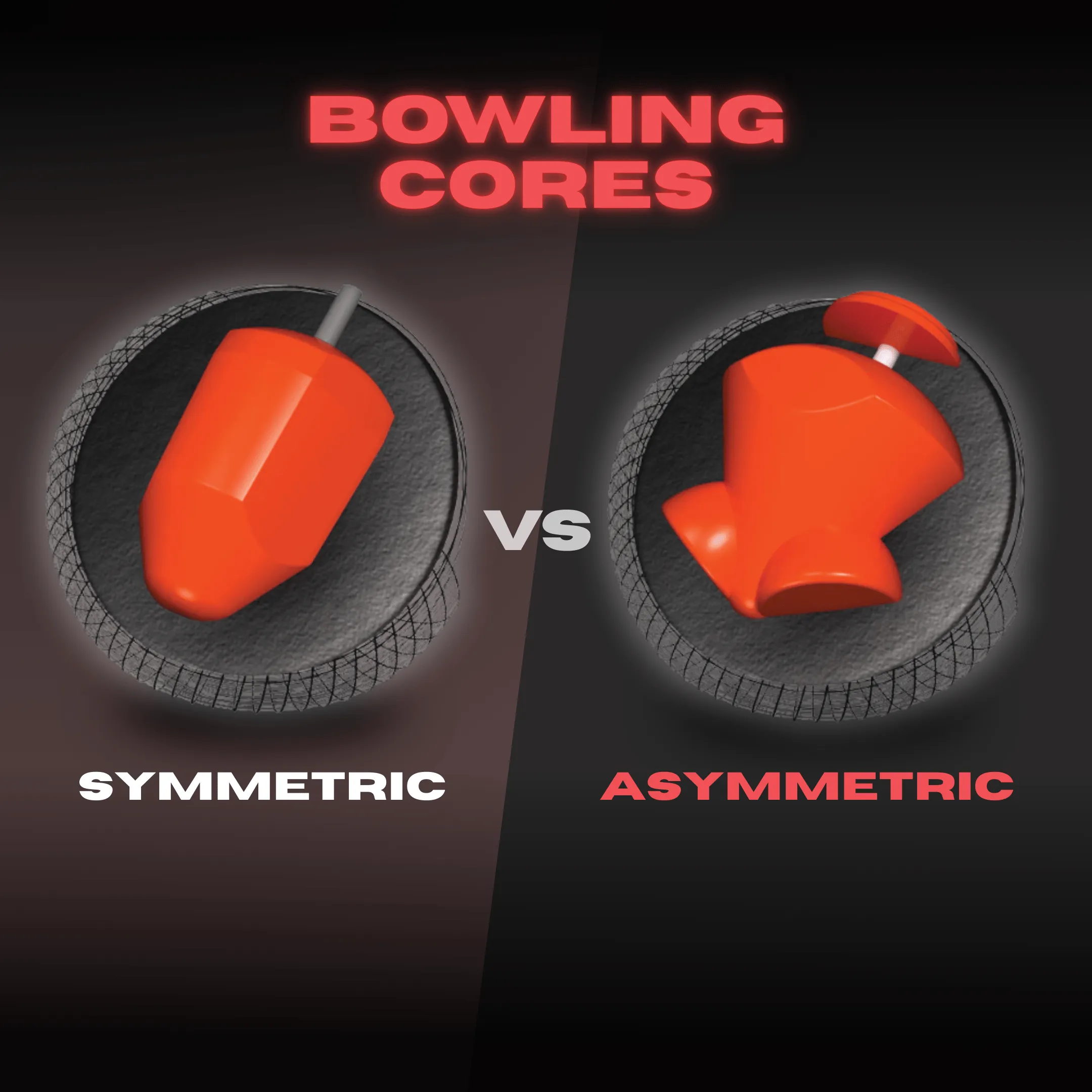
Tips & TricksMarch 31, 2026
Comparison of Symmetric vs Asymmetric bowling ball cores featuring side-by-side 3D renders of internal weight blocks.

Symmetrical and Asymmetrical Bowling Balls - What's the Difference?

Walking into a pro shop can feel like a physics exam these days. You've gotdrillers talking about symmetrical versus asymmetrical cores likeeveryone already knows the difference. But honestly? If you just want toknock down more pins, you need to know which "engine" actually fitsyour style. symmetrical asymmetrical The 2026 season has changed the game. Between A.I.-designed coresand the latestUSBC rules on 78D hardness,selecting the wrong core type isn't just a mistake - it’s a waste of $200. Let'sbreak down what’s happening inside the ball without all the technicalities. A.I.-designed cores USBC rules on 78D hardness The Basics: Which Engine Are You Revving? Performance ProfileSymmetricalAsymmetricalBall MotionSmooth, predictable "banana" curveSharp, angular "hockey stick" snapTransition SpeedSlow and continuousFast and responsive to frictionForgivenessHigh. Misses don't over-react.Lower. It's touchy on friction.Hook PotentialModerate (Controllable)High (Aggressive) Performance ProfileSymmetricalAsymmetrical Performance Profile Symmetrical Asymmetrical Ball MotionSmooth, predictable "banana" curveSharp, angular "hockey stick" snapTransition SpeedSlow and continuousFast and responsive to frictionForgivenessHigh. Misses don't over-react.Lower. It's touchy on friction.Hook PotentialModerate (Controllable)High (Aggressive) Ball MotionSmooth, predictable "banana" curveSharp, angular "hockey stick" snap Ball Motion Smooth, predictable "banana" curve Sharp, angular "hockey stick" snap Transition SpeedSlow and continuousFast and responsive to friction Transition Speed Slow and continuous Fast and responsive to friction ForgivenessHigh. Misses don't over-react.Lower. It's touchy on friction. Forgiveness High. Misses don't over-react. Lower. It's touchy on friction. Hook PotentialModerate (Controllable)High (Aggressive) Hook Potential Moderate (Controllable) High (Aggressive) Quick visual on how mass is actually "chopped" inside these cores to create torque. 1. Symmetrical: Your Reliable Benchmark Symmetrical Core Example Ball Example: Storm Bionic Ball Example: Storm Bionic Think of a symmetrical core as a balanced top. It spins evenly. It doesn'twant to jump off the lane just because it hit a dry patch. This is why ballslike the Storm Bionic have been dominating the PBA Tour lately. Storm Bionic Why it’s a winner: It blends the lane. If your hand is a little fastor you miss your mark by a board, the ball won't punish you with anugly split. It’s the "safety net" every league bag needs. Why it’s a winner: 2. Asymmetrical: The Aggressive Specialist Asymmetrical Core Example Ball Example: Hammer Zero Mercy Solid Ball Example: Hammer Zero Mercy Solid An asymmetrical core is purposefully "unbalanced." Because the weight isn't even,the ball is constantly trying to find its "preferred" spin axis. This createsmassive torque. When you’re bowling on heavy oil - the kind where your ball feels like it'ssliding on ice - you need that imbalance. A ball like theHammer Zero Mercy Solid uses its "Super Offset" core to force a turneven when the lanes are flooded with volume. Hammer Zero Mercy Solid The Spec Sheet: Understanding Total vs. Intermediate Differential To predict how a ball will actually behave on the lane, you have to lookbeyond the core shape and check the numbers. Specifically, we look at Differential (Diff) and Intermediate Differential. Differential (Diff) Intermediate Differential 1. Total Differential (The "Hook Ceiling") This number represents the "flare potential." It tells you how much theball is physically capable of hooking. For a deeper breakdown of thesemetrics, see our guide on what differential is in bowling. what differential is in bowling Low Diff (.010 - .025): Small flare, smooth arc. Ideal for dry lanes or spare shooting.Medium Diff (.026 - .045): Versatile flare. The sweet spot for most league "benchmark" balls.High Diff (.046 - .060): Massive flare potential. Built for heavy oil and maximum entry angle. Low Diff (.010 - .025): Small flare, smooth arc. Ideal for dry lanes or spare shooting. Low Diff (.010 - .025): Medium Diff (.026 - .045): Versatile flare. The sweet spot for most league "benchmark" balls. Medium Diff (.026 - .045): High Diff (.046 - .060): Massive flare potential. Built for heavy oil and maximum entry angle. High Diff (.046 - .060): 2. Intermediate Differential (The "Asy" Strength) While Total Diff tells you the amount of hook, Intermediate Differential(only found in asymmetrical balls) tells you how quickly the ballresponds to friction. This determines the shape of your shot. You canread more in our intermediate differential guide. amount Intermediate Differential quickly intermediate differential guide Symmetrical (0.000): No intermediate diff. The ball transitions slowly and smoothly.Weak Asymmetric (.008 - .020): Offers a bit more "pop" off the friction than a symmetrical, but isn't over-sensitive.Strong Asymmetric (.020+): High-torque. These balls want to change direction the moment they exit the oil. Symmetrical (0.000): No intermediate diff. The ball transitions slowly and smoothly. Symmetrical (0.000): Weak Asymmetric (.008 - .020): Offers a bit more "pop" off the friction than a symmetrical, but isn't over-sensitive. Weak Asymmetric (.008 - .020): Strong Asymmetric (.020+): High-torque. These balls want to change direction the moment they exit the oil. Strong Asymmetric (.020+): In 2026, A.I. core modeling has allowed manufacturers to push theselimits further. We are seeing symmetrical balls with higher TotalDifferential than ever before, giving you "big hook" potential without theunpredictable "snap" of a high intermediate diff. A.I. core modeling Pro Tip: If you struggle with the ball "jumping" too hard off the dry,look for a Low Intermediate Diff or a symmetrical core. If your ball feels likeit's "skating" and never turning the corner, you likely need a High TotalDifferential asymmetric to help the ball dig into the oil. Pro Tip: Ready to see how these specs translate to real-world performance? Checkout the top-rated gear in our best bowling balls of 2026 buyer's guide. best bowling balls of 2026 The Bottom Line: Building Your 2026 Arsenal Choosing between symmetrical and asymmetrical isn't about which ball is "better" - it's about lane management. lane management Start Symmetrical: Use a benchmark like the Storm Bionic to read thelanes. Its predictable arc tells you exactly where the oil ends.Switch to Asymmetrical: When your benchmark ball starts "skating" past thepocket, you need the extra torque of an asymmetric like the Zero Mercy Solidto force a proper entry angle. Start Symmetrical: Use a benchmark like the Storm Bionic to read thelanes. Its predictable arc tells you exactly where the oil ends. Start Symmetrical: Storm Bionic Switch to Asymmetrical: When your benchmark ball starts "skating" past thepocket, you need the extra torque of an asymmetric like the Zero Mercy Solidto force a proper entry angle. Switch to Asymmetrical: Zero Mercy Solid Don't overlap your bag with five "hook monsters." Balance your arsenal with onesolid symmetrical benchmark and one strong asymmetrical specialist. Got your core strategy figured out? Now you just need to make sure yourfootwork is as stable as your ball motion.Check out our 2026 guide to the best bowling shoes here. Check out our 2026 guide to the best bowling shoes here
Tips & TricksMarch 17, 2026
Guide to reading a bowling oil pattern sheet and building a starting line, featuring coach Panagiotis Vardakis

How to Read Oil Patterns and Build a Smart Line Play

Written by: Panagiotis Vardakis, EBF Level 3, USBC Bronze, and National CoachingSchool Cat C coach Written by: Panagiotis Vardakis, EBF Level 3, USBC Bronze, and National CoachingSchool Cat C coach Panagiotis Vardakis In modern bowling, pattern sheets are everywhere. They are posted online,shown before tournaments, and shared in team chats. Yet, for many bowlers they remain nothing more than a graphic, filled withnumbers and shapes. They look at it - and then bowl the way they always do.That is where coaching comes in. This article is not a rulebook. Get this - there is no one   correct line.Instead, this is how I teach bowlers to builda logical starting plan from a pattern sheet. It is based on years ofobservation, mistakes, learning, and what I consistently see working withyouth, amateurs, and competitive bowlers.The goal is simple - make the pattern sheet useful - not intimidating. correct Pattern Sheet Is a Guide, Not a Command Before we talk about boards, arrows, and breakpoints, we need to remove onemyth. The pattern sheet does not tell you where to stand and throw yourbowling ball. What it actually tells you is: Where oil is heavierWhere oil is lighterHow long the oil pattern isWhere friction will eventually appear Where oil is heavier Where oil is lighter How long the oil pattern is Where friction will eventually appear In other words, it shows possibilities, not instructions. When I teach bowlers, I always say that the pattern sheet doesn’t give you theright answers where to play. It gives you the starting question. Your job isto turn that question into a smart first line. Step 1: Read It Like a Bowler, Not an Engineer When I first look at a pattern sheet, I focus on only three things: Length – how far the oil extendsShape – is it flat, house-shot, or sport patternRatio – how much more oil is in the middle compared to the outside Length – how far the oil extends Length Shape – is it flat, house-shot, or sport pattern Shape Ratio – how much more oil is in the middle compared to the outside Ratio Forget the rest. At least at the beginning. The Simple Guide of Length Short pattern → the ball hooks earlierMedium pattern → more balanced reactionLong pattern → the ball skids longer Short pattern → the ball hooks earlier Medium pattern → more balanced reaction Long pattern → the ball skids longer Burnt exit point area at the end of a pattern Guide of 31 In formula it looks like this: Exit point ≈ Pattern Length – 31 For example: 40 ft pattern → 40 – 31 = 9 board43 ft pattern → 43 – 31 = 12 board37 ft pattern → 37 – 31 = 6 board 40 ft pattern → 40 – 31 = 9 board 43 ft pattern → 43 – 31 = 12 board 37 ft pattern → 37 – 31 = 6 board This does not mean you must play exactly there. It simply gives your brain asmart first target. Step 2: Build the Line from the Breakpoint Backward Most bowlers ask - where should I stand? I teach the opposite question:Where should the ball change direction? where should I stand? Where should the ball change direction? One simple guideline I learned from world-class coaches is that the breakpointis usually located around 45 feet down the lane.Horizontally, it is oftenabout three boards inside the last board before the pattern flattens. Thatgives you a starting reference. Also, I always clarify something important - the term breakpoint ismisleading. It is not a single point. It is an area. Breakpoint is typically3–5 feet long and 2–3 boards wide. breakpoint So the process becomes: Choose your breakpoint area (a blue circle in a picture below)Identify your exit point (a red star in a picture below) and extend the line back toward the foul lineThen determine your starting position Choose your breakpoint area (a blue circle in a picture below) a blue circle in a picture below Identify your exit point (a red star in a picture below) and extend the line back toward the foul line a red star in a picture below Then determine your starting position Sometimes, the calculated line may look extreme or unrealistic. That is why wealways consider a margin of error of a few boards on each side.What About the Arrows?Up to this point, you may notice I haven’t mentioned arrows. That isintentional.I consider arrows to be a visual reference within your chosen line - easier tofocus on because they are closer to your release.Depending on the athlete’s level, more variables come into play: lane surface,oil loads, transition, combined volumes.But what we covered so far is enoughto build a strong and logical starting plan. What About the Arrows? Step 3: Match the Line to the Ball - Not Your Ego One mistake I see constantly is that when the pattern is long, playersimmediately think they must play inside. No. You must play what your ball, speed, and rev rate allows you to play. I askbowlers to evaluate: Is my ball too clean for this line?Is it reading too early?Is it missing the breakpoint and not recovering? Is my ball too clean for this line? Is it reading too early? Is it missing the breakpoint and not recovering? My guiding principle is simple. The best line is the one that: Clears the front part of the laneReads the midlane without forcing technique changesMaintains energy through the pins Clears the front part of the lane Reads the midlane without forcing technique changes Maintains energy through the pins It is about finding the best line with the biggest margin of error for thegiven player, not the line that looks impressive on social media. Step 4: Your First Line Is a Test - Not a Marriage This one is critical. Your first line is not your final line. It is a testshot with purpose. When I teach this, I say: You are not trying to strike; you are trying tolearn something quickly. You are not trying to strike; you are trying tolearn something quickly. After two or three shots, evaluate: Reading too early? → Move or choose a cleaner ballSkidding too long? → Move or choose a stronger ballMissing the breakpoint? → Adjust speed or target Reading too early? → Move or choose a cleaner ball Skidding too long? → Move or choose a stronger ball Missing the breakpoint? → Adjust speed or target The pattern sheet gave you a starting idea. The lane gives you the truth. Step 5: Keep It Simple For Beginners When I coach young or new players, I simplify everything to three questions: Where should the ball hook?What arrow do I look at?What board do I stand on? Where should the ball hook? What arrow do I look at? What board do I stand on? That’s it. I do not talk about: Volume per zoneForward versus reverse loadsOil ratios in detail Volume per zone Forward versus reverse loads Oil ratios in detail Instead, I say: Let’s pick one line. Let’s see what the lane tells us. Then weadjust. Confidence grows when the brain is not overloaded. My Coaching Philosophy on Lines This is the foundation of how I teach it: Lines are tools, not identitiesYou do not “play a line” - you read a laneThe best bowlers do not guess - they observe faster Lines are tools, not identities You do not “play a line” - you read a lane The best bowlers do not guess - they observe faster Suggested starting lines for short, medium, and long patterns Final Thought: The Pattern Sheet Is a Map - But You Still Have to Drive A map does not drive the car. A GPS does not hit the brakes. And a patternsheet does not roll the ball. You do. Use the sheet to: Get orientedChoose a smart starting areaAvoid wasting frames Get oriented Choose a smart starting area Avoid wasting frames Then let your eyes, ball motion, and experience finish the job. That is how Iteach lines. Not as strict rules - but as thinking tools. About the Author Panagiotis VardakisPanagiotis Vardakis is an experienced bowling coach and educator whoseinvolvement in the sport spans more than two decades. His work combines technical coaching, long-term player development, andequipment knowledge, supported by his experience as a professional coach andpro shop specialist.Throughout his coaching career, he has guided athletes to national andinternational success across European competitions, coaching players fromGreece, the United Kingdom, Malta, Slovakia, Cyprus, and Bulgaria. About the Author Panagiotis Vardakis Panagiotis Vardakis is an experienced bowling coach and educator whoseinvolvement in the sport spans more than two decades. His work combines technical coaching, long-term player development, andequipment knowledge, supported by his experience as a professional coach andpro shop specialist. Throughout his coaching career, he has guided athletes to national andinternational success across European competitions, coaching players fromGreece, the United Kingdom, Malta, Slovakia, Cyprus, and Bulgaria. A significant part of his work is dedicated to youth development, where hefocuses on structured training environments that support both athleticprogress and personal growth. Vardakis is currently involved in youth-oriented projects throughBYC in Slovakia andcontinues to work with athletes, clubs, and organizations through coachingprograms, clinics, and educational initiatives across Europe. BYC For coaching-related questions or inquiries, Coach Vardakis can becontacted via email at p.vardakis@gmail.com or visit www.byc.sk www.byc.sk
Tips & TricksFebruary 11, 2026
Spares are a feeling, not a formula article cover featuring bowling coach Panagiotis Vardakis with a bowling lane background.

Spares Are a Feeling, Not a Formula – Why You Might Miss Spares?
Written by: Panagiotis Vardakis, EBF Level 3, USBC Bronze, and National CoachingSchool Cat C coach Written by: Panagiotis Vardakis, EBF Level 3, USBC Bronze, and National CoachingSchool Cat C coach Panagiotis Vardakis Ask most bowlers what wins tournaments, and the answer is usually simple:strikes. But ask champions the same question, and you will often hear acompletely different answer: spares. Spares are where confidence grows. With pins coveringroughly four boards and a bowling ball spanning about nine boards, the marginfor error is huge - around 22 boards in theory, which is more than half thelane. That is why spare shooting depends more on mindset andpressure management than on mechanics alone. After many years of coaching and competing, this is the truth I have learned:spares are driven more by feeling than by strict technique or formula. Yes, technique matters.Yes, a spare ball helps.Yes, lines and angles exist. But in my experience, spare shooting is a 70–30 game:70 percent mindset and feeling,30 percent physical execution. Let’s take a closer look at the method I teach my athletes. Don’t Start With “Where.” Start With “How It Feels” Most bowlers approach spares by asking technical questions: Where do I stand?Where do I look? Which board is this? I turn those questions around. The first thing I ask instead is simple:Where do you feel comfortable shooting from? Where do you feel comfortable shooting from? Before boards and arrows come into play, your body needs to feel aligned withthe line of play. Comfort and balance must come first. The order should alwaysbe: Feel the lineLet your body naturally match and align with itThen mark your standing and target points and make proper adjustments Feel the line Let your body naturally match and align with it Then mark your standing and target points and make proper adjustments Every pin (yes, every single pin) can be converted in more than one way. Thereis no single “correct” solution. There is only the solution that feelsrepeatable to you. Ask yourself: where do you feel comfortable shooting from? The “New Lane” Mindset Trick This is the mindset drill that often changes everything. When an athlete steps up to a spare, whether it is a single pin or acombination, I give them one instruction: connect the ball and the pin in your mind. Then, create a new lane between them. connect the ball and the pin in your mind. Imagine that lane as: Ten boards wideThe ball in the centerThe pin in the center Ten boards wide The ball in the center The pin in the center Now visualize that lane in any way that makes you feel calm and secure. It canbe ice, water, a road, grass, light, or even a tunnel. The image itself doesnot matter. The feeling does. The key is what happens next. Everything outside that lane fades away. Thereare no gutters. No crowd noise. No score. No tension in the muscles. Only thelane you created in your head. If the ball stays inside that lane, the spare will be converted. Narrow the Lane = Narrow the Focus As the lane becomes smaller, something powerful happens. Your vision sharpens.Your mind quiets.Your body commits. Your vision sharpens. Your mind quiets. Your body commits. You are no longer simply aiming at a pin. You are moving through space withintention. This is not mechanics. This is presence. This is bowling withclarity. Final Thought Yes, proper technique matters. Yes, using a spare ball helps keep the linestraight, or using a hook ball if you have the control to do so. Butunderstand this first -spares are a mental process before they are a physical one. spares are a mental process before they are a physical one When you feel the line, when you see your lane, and when everything else fadesaway, you no longer hope to make the spare. You expect to. And that expectation is the difference between bowlers who simply surviveframes and bowlers who truly own them. About the Author Panagiotis VardakisPanagiotis Vardakis is an experienced bowling coach and educator whoseinvolvement in the sport spans more than two decades. His work combines technical coaching, long-term player development, andequipment knowledge, supported by his experience as a professional coach andpro shop specialist.Throughout his coaching career, he has guided athletes to national andinternational success across European competitions, coaching players fromGreece, the United Kingdom, Malta, Slovakia, Cyprus, and Bulgaria. About the Author Panagiotis Vardakis Panagiotis Vardakis is an experienced bowling coach and educator whoseinvolvement in the sport spans more than two decades. His work combines technical coaching, long-term player development, andequipment knowledge, supported by his experience as a professional coach andpro shop specialist. Throughout his coaching career, he has guided athletes to national andinternational success across European competitions, coaching players fromGreece, the United Kingdom, Malta, Slovakia, Cyprus, and Bulgaria. A significant part of his work is dedicated to youth development, where hefocuses on structured training environments that support both athleticprogress and personal growth. Vardakis is currently involved in youth-oriented projects throughBYC in Slovakia andcontinues to work with athletes, clubs, and organizations through coachingprograms, clinics, and educational initiatives across Europe. BYC For coaching-related questions or inquiries, Coach Vardakis can becontacted via email at p.vardakis@gmail.com or visit www.byc.sk www.byc.sk
Tips & TricksJanuary 27, 2026
Illustration showing how to film your bowling for video analysis, with a smartphone recording a bowling approach on the lanes

Most Bowling Videos Are Filmed Wrong – A Coach Explains How to Fix It
Written by:Panagiotis Vardakis, EBF Level 3, USBC Bronze, and National Coaching School Cat C coach Written by: Panagiotis Vardakis, EBF Level 3, USBC Bronze, and National Coaching School Cat C coach Panagiotis Vardakis Every week, I receive many bowling videos for analysis. They come fromathletes training on their own, young bowlers, and competitive amateurslooking for feedback. And in most cases, my first reaction has nothing to dowith footwork or release. It has to do with the camera. Today, bowlers can easily upload videos and get advice from coaches allaround the world. The problem is that many of those videos are not filmed withanalysis in mind, making them difficult to evaluate. This often slows thewhole progress, as the player must go back to the bowling center to re-filmhis bowling before any coaching can start.When a video clearlyshows what matters, video coaching becomes a powerful and reliable way toimprove performance. Over the years, I have learned that just a few simple and consistent camerasetups provide nearly all the information needed to help an athlete improve. In this article, I explain the camera angles I prefer, why I ask for them, andwhat I look for in each view as a coach. Camera Straight From Behind – My Starting Point This is usually the first angle I ask for. How I Like It Set The camera should be placed directly behind the bowler, centered with thebody, and completely stable. The full approach, release, and ball path must bevisible, with no zoom. The entire body should be shown from the stance throughthe finish. Why I Ask for This Angle From behind, I can clearly see how the body and the swing work together. Thisangle gives me a strong overall picture of coordination and movement. What I Look For I focus on shoulder alignment during the approach, spine tilt and postureconsistency, and whether the swing stays under control or wraps around thebody. I also evaluate timing between footwork and swing, the release pointrelative to the ankle, and whether missed shots come from body position ratherthan targeting. Many bowlers believe they miss because of aim. Very often, the miss actuallybegins two steps earlier. Camera Straight in Front – What the Release Tells Me This angle gives me information I cannot get from behind, and it is often myfavorite one. How I Ask Athletes to Set ItThe camera should be placed near the arrows, in the middle of the lane,facing the bowler. It must remain stable and level whilerecording the approach, release, and follow-through. Bowlingcenter rules and safety should always be respected when filming from thisposition. The camera should be placed near the arrows, in the middle of the lane,facing the bowler. It must remain stable and level whilerecording the approach, release, and follow-through. Bowlingcenter rules and safety should always be respected when filming from thisposition. The camera should be placed near the arrows, in the middle of the lane,facing the bowler. It must remain stable and level whilerecording the approach, release, and follow-through. Bowlingcenter rules and safety should always be respected when filming from thisposition. Why I Ask for This Angle From the front, the release becomes very clear. Small details that remainhidden from other angles are easy to identify. What I Look For I observe the arm swing path, whether it is free or forced, elbow position atthe bottom of the swing, wrist stability, and hand position. I also look athead movement, eye control, balance at the foul line, and consistency ofrelease height. From this angle, I can quickly tell if an athlete is fighting the swing orallowing it to work naturally. Full Approach – The Most Important Angle Landscape video of the full approach is the angle I request most often, andthe one athletes misunderstand the most. How Coaches Want It FilmedThe video must be filmed in landscape format. The camera shouldbe placed about two to two and a half lanes away, positioned roughly in themiddle of the approach. Once the recording starts, the camera mustremain completely still. There should be no panning, no zooming,and no movement during the approach. The video must be filmed in landscape format. The camera shouldbe placed about two to two and a half lanes away, positioned roughly in themiddle of the approach. Once the recording starts, the camera mustremain completely still. There should be no panning, no zooming,and no movement during the approach. Why This Angle Is So Important This view shows tempo, timing, and repeatability, which are the foundations ofconsistency. What Coach Look ForI evaluate footwork rhythm and cadence, tempo control, and the relationshipbetween steps and swing. I also look at starting positionconsistency, whether the athlete rushes or accelerates smoothly, stabilityin the pre-shot routine, and balance at the foul line. I evaluate footwork rhythm and cadence, tempo control, and the relationshipbetween steps and swing. I also look at starting positionconsistency, whether the athlete rushes or accelerates smoothly, stabilityin the pre-shot routine, and balance at the foul line. If the camera moves, reference points are lost. Without reference points, realanalysis is not possible. Common Filming Issues Athletes Need to Fix Very often, I ask athletes to re-film their videos because the camera followsthe shot, the video is filmed too close, or zoom is used. Other common issuesinclude cutting the video before the finish or sending only strike shots. Missed shots are extremely valuable. They often explain areas for improvementmuch better than perfect ones. Video Checklist (Save These For Later) General Rules Full body visible at all timesCamera never movesNo zoomFull shot recorded from start to finishMultiple shots included, not just strikes Full body visible at all times Camera never moves No zoom Full shot recorded from start to finish Multiple shots included, not just strikes Behind the Bowler Camera centered with the bodyStable and straightFull approach includedBall path clearly visible Camera centered with the body Stable and straight Full approach included Ball path clearly visible Front View Checklist Camera facing the bowlerPositioned near the arrowsStable and levelRelease clearly visible Camera facing the bowler Positioned near the arrows Stable and level Release clearly visible Full Approach Checklist Landscape (horizontal) videoCamera placed 2 to 2.5 lanes awayFixed camera position (no movement, no zoom)Rhythm and timing clearly visibleFull body shown from start through follow-through Landscape (horizontal) video Camera placed 2 to 2.5 lanes away Fixed camera position (no movement, no zoom) Rhythm and timing clearly visible Full body shown from start through follow-through Final Thoughts Video coaching helps athletes improve faster only when filming is done withintention. A good video allows coach to provide more precise feedback, identify issuesearlier, and design more effective training programs. It also helps athletesunderstand not only the outcome of a shot, but their own movement. A good shot does not make a good video - it shows the truth of the motion. About the Author Panagiotis VardakisPanagiotis Vardakis is an experienced bowling coach and educator whoseinvolvement in the sport spans more than two decades. His work combines technical coaching, long-term player development, andequipment knowledge, supported by his experience as a professional coach andpro shop specialist.Throughout his coaching career, he has guided athletes to national andinternational success across European competitions, coaching players fromGreece, the United Kingdom, Malta, Slovakia, Cyprus, and Bulgaria. About the Author Panagiotis Vardakis Panagiotis Vardakis is an experienced bowling coach and educator whoseinvolvement in the sport spans more than two decades. His work combines technical coaching, long-term player development, andequipment knowledge, supported by his experience as a professional coach andpro shop specialist. Throughout his coaching career, he has guided athletes to national andinternational success across European competitions, coaching players fromGreece, the United Kingdom, Malta, Slovakia, Cyprus, and Bulgaria. A significant part of his work is dedicated to youth development, where hefocuses on structured training environments that support both athleticprogress and personal growth. Vardakis is currently involved in youth-oriented projects throughBYC in Slovakia andcontinues to work with athletes, clubs, and organizations through coachingprograms, clinics, and educational initiatives across Europe. BYC For coaching-related questions or inquiries, Coach Vardakis can becontacted via email at p.vardakis@gmail.com or visit www.byc.sk www.byc.sk
Tips & TricksJanuary 16, 2026
heavy and ligh bowling ball showing a good bowling ball weight for bowlers

Best Bowling Ball Weight Guide: How to Choose the Right Weight

Choosing the right bowling ball weight plays a big role in your scores,comfort, and long-term progress. Many bowlers start with a random house ball,while others try the heaviest ball they can lift, hoping for more strikes. Both approaches often lead toback pain, bad shots, and poor results. back pain This guide explains how bowling ball weight affects your game. You will learnhow to choose the right weight for your body, strength, and experience. Youwill also find real examples, simple rules, and practical tips you can usenext time you go bowling. If you already know your bowling ball weight and want more help choosingbowling balls, you can also read ourBest Bowling Balls 2025 andBest Bowling Ball for Beginners reviews! Best Bowling Balls 2025 Best Bowling Ball for Beginners Some links on this page are affiliate links. If you purchase through them,BowlingLife might earn a small commission that helps support our work, at noextra cost to you. Why Bowling Ball Weight Matters The right bowling ball weight helps you to stay consistent, score better, andkeep your body safe. A ball that is too heavy reduces yourbowling ball speedand accuracy. On the other hand, a ball that is too light reduces pin action. bowling ball speed Weight affects four main things: Your shot speedYour controlYour timingYour stamina over many games Your shot speed Your control Your timing Your stamina over many games When the weight matches your strength, your shots stay steady from the firstto the last frame. What Is the Heaviest Bowling Ball Weight? The heaviest legal bowling ball weight is 16 pounds under USBC rules. However,some bowlers havemade homemade bowling balls that weigh up to 20 pounds. made homemade bowling balls that weigh up to 20 pounds Many bowlers think they must throw 16 pounds to score well. That is not true.Most bowlers use bowling balls between 12 and 15 pounds. The best weightdepends on age, physique, and grip. Bowling Ball Weight Chart This simple bowling ball weight chart gives you a clear starting point. Bowler TypeSuggested WeightKids under 86–8 lbKids 9–119–11 lbTeens12–14 lbAdult Women12–15 lbAdult Men15–16 lbSenior Bowlers13–15 lb Bowler TypeSuggested Weight Bowler Type Suggested Weight Kids under 86–8 lb Kids under 8 6–8 lb Kids 9–119–11 lb Kids 9–11 9–11 lb Teens12–14 lb Teens 12–14 lb Adult Women12–15 lb Adult Women 12–15 lb Adult Men15–16 lb Adult Men 15–16 lb Senior Bowlers13–15 lb Senior Bowlers 13–15 lb These numbers are not strict rules. They help you find a ball that feels goodfrom the first shot. How to Choose Your Bowling Ball Weight Choosing the right bowling ball weight comes down to feel, comfort, andcontrol. You want a ball that gives strong pin action without hurting yourbody. A simple method is this: Divide your body weight (in pounds) by 11. Example:150 lbs ÷ 11 = 13.6 → start with a 13 or 14 lb ball. This number is only a starting point. You then adjust based on how your bodyreacts. Signs Your Bowling Ball Weight Is Too Heavy Your bowling ball weight is too heavy if: Your grip is too looseYour wrist or elbow feels stressedYour ball speed drops fastYou lose control during the swing Your grip is too loose Your wrist or elbow feels stressed Your ball speed drops fast You lose control during the swing A heavy ball may give strong hits, but only when you can handle the weight. Ifyou cannot keep your speed, a lighter ball will score better. Signs Your Bowling Ball Weight Is Too Light Your bowling ball weight is too light if: You feel like you are “tossing” instead of swingingYou throw too fast and lose controlYou get weak pin actionYour ball deflects too much You feel like you are “tossing” instead of swinging You throw too fast and lose control You get weak pin action Your ball deflects too much If these signs match your game, try heavier bowling ball. Bowling Ball Weight for Kids and Teens Kids and teens need a bowling ball weight that protects their hands andwrists. Choose a weight that feels smooth and safe. Do not force heavier ballson young players. Their muscles and joints are still developing. Most young bowlers stay between: 6–11 lb for kids2–14 lb for teens 6–11 lb for kids 2–14 lb for teens Comfort and proper form matter more than weight at this stage. What Bowling Ball Weight Do Pros Use? Pro players do not use bowling balls you can fing in bowling alley. They usehigh-erformance bowling balls, that is pecifically drilled to their handmeasurements. Having a good grip allows to throw heavier bowling balls. Most male pros use 15-pound balls. Some use 16 pounds, but this number is muchlower. Meanwhile, most female pros use 14 or 15 pounds. House Balls vs Custom Balls and Bowling Ball Weight As we mentioned before, house balls often feel heavier because the holes nevermatch your hand perfectly. You grip harder, your swing gets tight, and yourarm gets tired fast. It all affects your accuracy. A custom-drilled ball spreads weight across your hand. This makes the samebowling ball weight feel lighter. Many bowlers can easily handle a ball 2–3 pounds heavier when it is drilledfor their hand. How to Test and Find Your Ideal Bowling Ball Weight Try this simple method: Start with a weight that feels safe (for example 11-12 lbs).Throw 5–6 shots.Move up or down based on feel. Start with a weight that feels safe (for example 11-12 lbs). Throw 5–6 shots. Move up or down based on feel. Your ideal bowling ball weight should: Feel smooth during the swingKeep your speed steadyAvoid pain and sorenessGive strong pin actionLet you bowl many games without fatigue Feel smooth during the swing Keep your speed steady Avoid pain and soreness Give strong pin action Let you bowl many games without fatigue Listen to your body. It will tell you when the weight is right. Experiment, Listen to Your Body, and Build Up Slowly Your ideal bowling ball weight may change over time. As you get stronger, youmay move up in weight. You may also stay at one weight for years. Both pathsare fine. Stay patient and pay attention to your body. Do not force heavy weights toosoon. Smooth progress always wins. If you want more help choosing bowling balls, see our Best Bowling Balls2025 guide!
Tips & TricksNovember 14, 2025